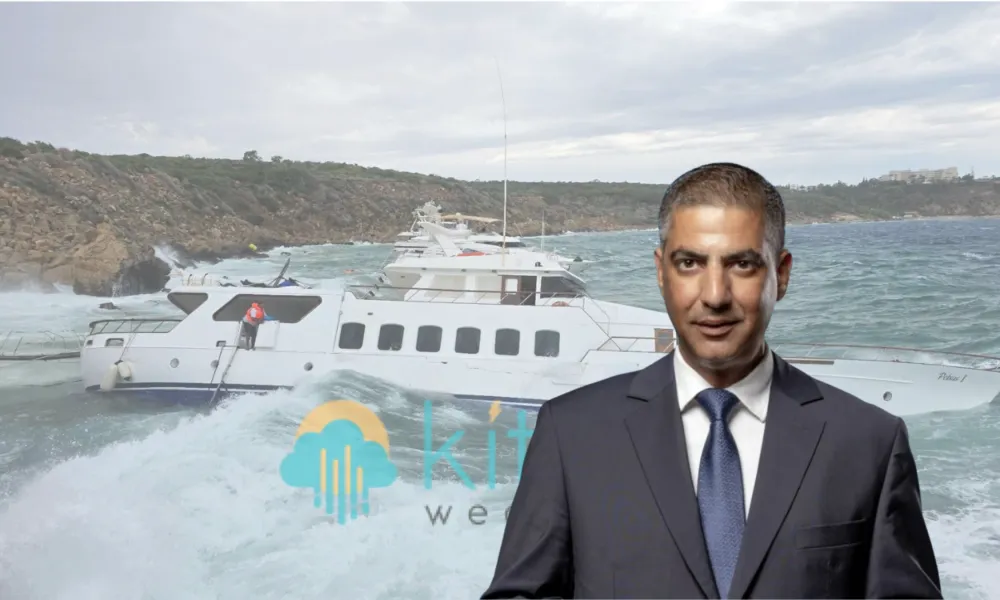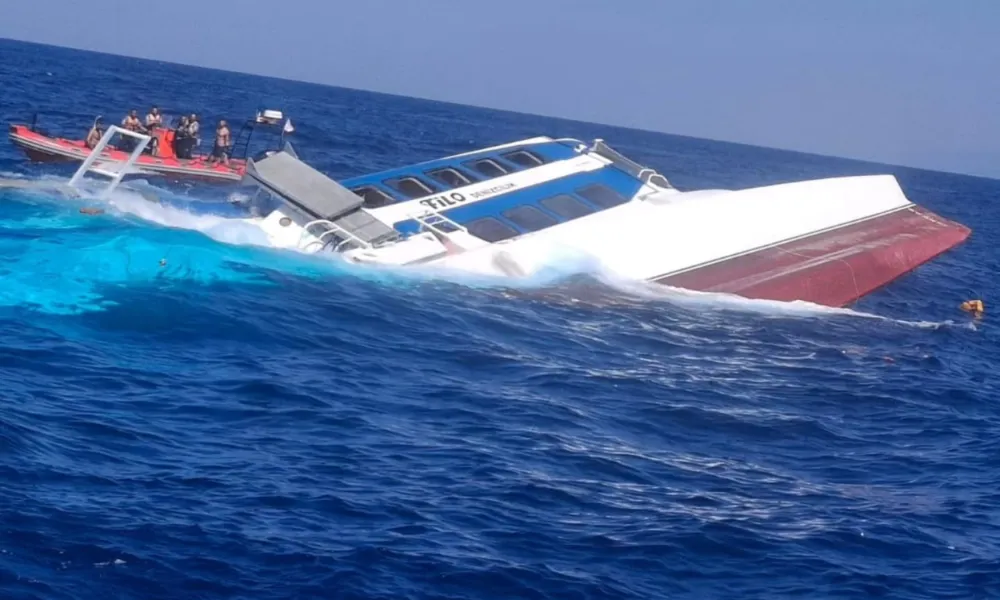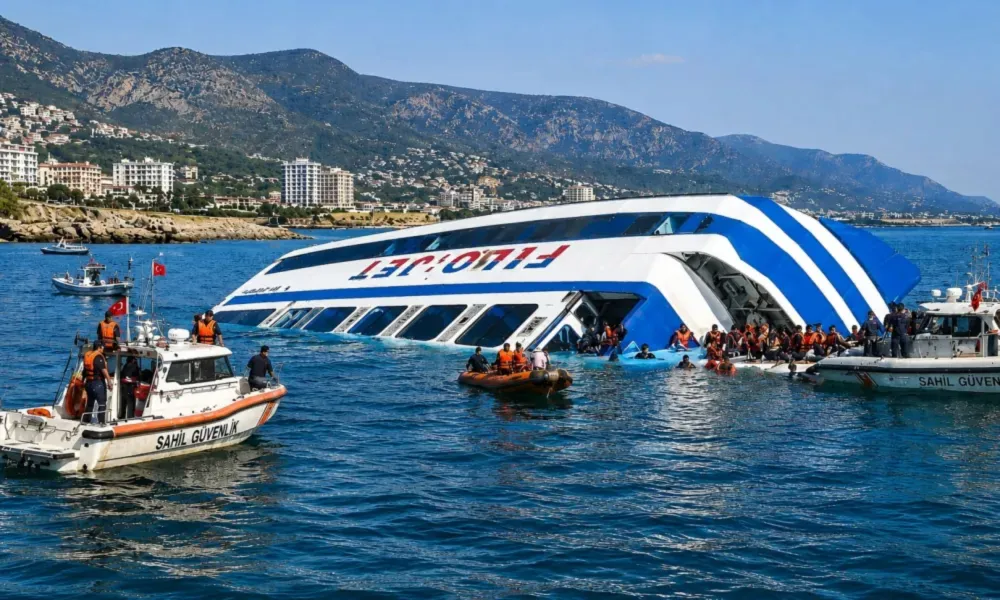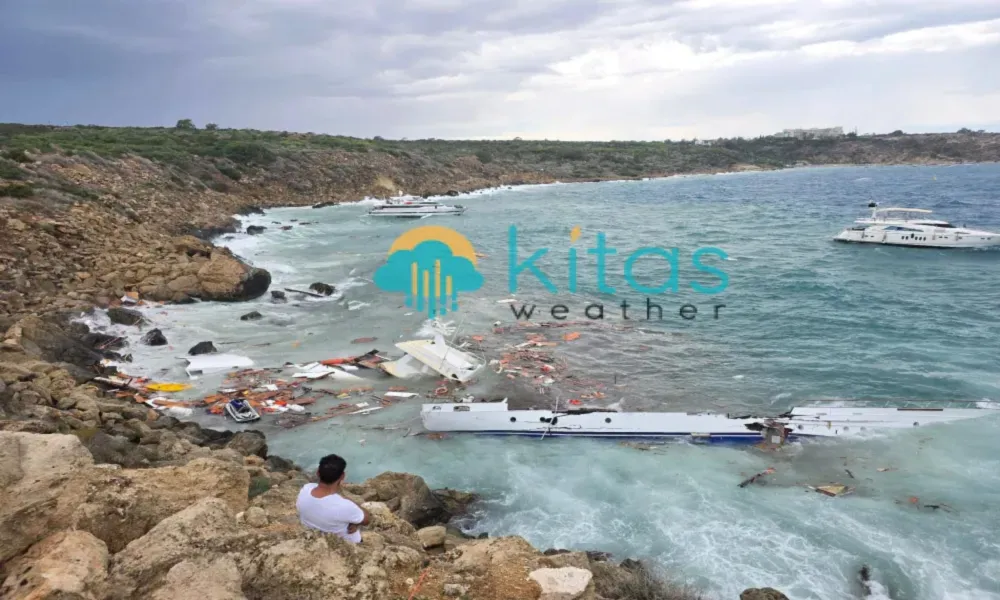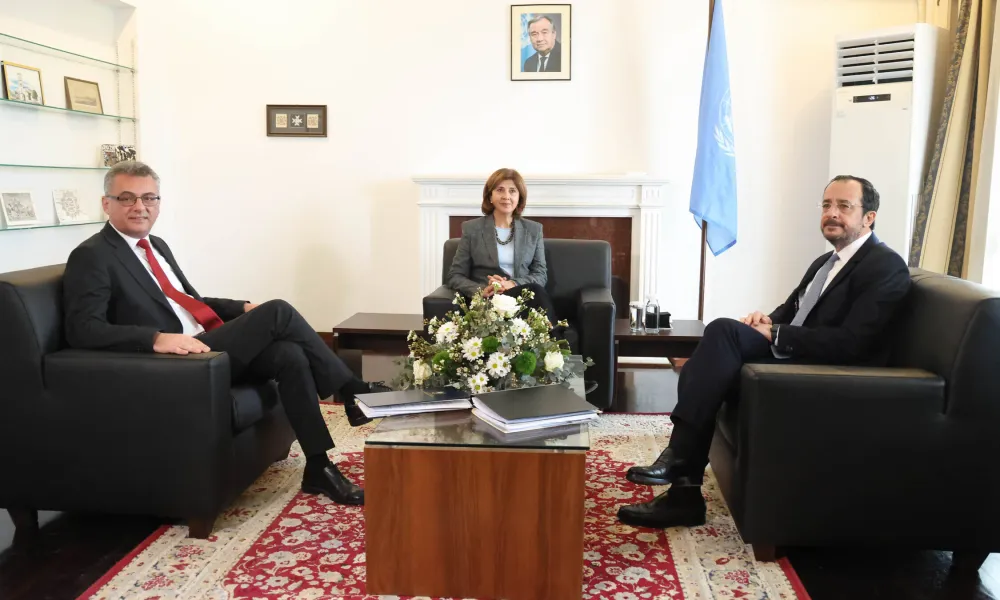

The deadly ferry disaster off Kyrenia understandably interrupted the tentative momentum created by the Aug. 26 meeting between Turkish Cypriot leader Tufan Erhürman and Greek Cypriot leader Nikos Christodoulides. The first follow-up in their newly agreed cycle of weekly meetings, scheduled for Wednesday, was postponed at the Turkish Cypriot side’s request as the leadership concentrated on search operations, mourning and supporting the families of those killed or still missing. The meeting between the two sides’ representatives, Mehmet Dana and Menelaos Menelaou, was also postponed.
This should not be interpreted as a political cancellation or evidence that the weekly-meeting understanding has already broken down. The leaders are scheduled to meet again on Wednesday, Sept. 9, at 10:30 a.m., and both sides have maintained their commitment to the intensified dialogue agreed on Aug. 26. Yet the tragedy has cost the process precious time during an already compressed diplomatic window, with UN Secretary-General António Guterres waiting for evidence of progress before deciding whether conditions exist for another enlarged informal 5+1 meeting.
That timetable becomes particularly important this weekend. Guterres’ Personal Envoy María Ángela Holguín Cuéllar is expected to arrive on the island during the weekend for another round of consultations. Later this month, Erhürman and Christodoulides are expected to brief Guterres separately on the margins of the UN General Assembly in New York. The UN therefore has only a short period in which to establish whether the procedural momentum generated since Guterres’ July visit is producing anything tangible.
Weekly meetings are progress, but not yet a breakthrough
The Aug. 26 encounter produced a process agreement rather than a substantive breakthrough. After nearly three hours under UN auspices, the leaders agreed to meet at least weekly and more frequently if necessary. They also moved ahead with the steering committee of the previously agreed Civil Society Consultative Body. They did not, however, reach agreement on the opening of new crossing points, demining or the methodology for dealing with the accumulated convergences from previous rounds of negotiations.
Those unresolved questions matter because Guterres has effectively established three tests before another enlarged meeting involving the two Cypriot sides and guarantor powers Türkiye, Greece and Britain: progress on practical confidence-building measures, agreement on negotiating methodology and sufficient substantive preparation. Holguín has increasingly treated the first of these, particularly implementable CBMs, as an indispensable condition rather than diplomatic decoration.
Her approach deserves attention because it moves away from the ideological arguments that have consumed the Cyprus problem for decades. CBMs, in this conception, are not “feel-good” exercises intended to generate favourable photographs. They are practical tests of whether the two administrations can develop habits of cooperation and whether Cypriots can experience tangible benefits from working together without feeling that their security or political identity is threatened.
That makes CBMs something more consequential than confidence-building. They become a viability test for whatever political order might eventually emerge. If the two sides cannot jointly manage crossing points, demining, energy projects, environmental challenges or everyday movement, there is little reason to assume that they could successfully operate a much more complicated common constitutional structure.
Yet precisely when the UN is trying to make practical cooperation the engine of renewed diplomacy, another dispute is threatening to contaminate almost every confidence-building initiative. It concerns not territory or constitutional clauses, but whether Turkish Cypriots are entitled to be visible internationally.
The new fault line is visibility
Recent controversies over a planned FC Barcelona-linked football camp, international cultural events, Turkish Cypriot universities and a diplomatic briefing by Erhürman’s undersecretary Mehmet Dana have transformed the familiar recognition dispute into something that increasingly affects everyday life. What previously revolved largely around flags, titles and official diplomatic contacts is spreading into sport, education, culture and ordinary interaction with the international community.
Erhürman has drawn a clear distinction between recognition and contact. A Turkish Cypriot child participating in an international football programme does not constitute recognition of a state. A university appearing in an international ranking does not alter the island’s sovereignty. An ambassador listening to a briefing by a Turkish Cypriot official does not establish diplomatic relations with the northern administration. International musicians performing in the north do not settle the Cyprus problem one way or another.
His concern is that attempts to prevent such activities amount to a policy of making Turkish Cypriots internationally invisible. He has warned that extremist and rejectionist forces on both sides would like Turkish Cypriots to become angry enough to abandon the negotiating table, allowing one camp to declare that federation is impossible and the other to resume presenting itself internationally as the frustrated side seeking reunification. Erhürman has said he will not give either constituency that satisfaction.
Christodoulides approaches the same controversy through a very different political logic. He has publicly stated that he supports confidence-building measures that strengthen the effort to reunify Cyprus but rejects measures that “normalise the current illegal state of affairs.” From the Greek Cypriot perspective, measures that increase the functionality, external connectivity or apparent legitimacy of institutions in the north can gradually make partition more sustainable and therefore reduce incentives for a comprehensive settlement.
The two concerns produce the central contradiction now confronting the UN process. The Greek Cypriot side fears normalisation without settlement; the Turkish Cypriot side fears isolation until settlement. Unless some political space is created between those positions, almost every practical measure can eventually become another status dispute.
Recognition and visibility are not the same thing
There is nevertheless a substantial difference between recognising a state and allowing a community to interact with the world. Failure to maintain that distinction risks making confidence-building logically impossible.
The Republic of Cyprus and the international community can continue to withhold recognition from the northern administration without requiring Turkish Cypriots to become socially, culturally, academically or intellectually invisible. Diplomats can listen to Turkish Cypriot officials without presenting credentials to them. International sports organisations can engage Turkish Cypriot children without deciding sovereignty. Academics can cooperate with universities without changing the international legal status of Cyprus.
Indeed, attempts to obstruct such contacts may ultimately work against the very settlement that Greek Cypriot supporters of reunification say they want. Isolation does not necessarily persuade Turkish Cypriots that federation is attractive. It can produce the opposite conclusion: that even the most moderate engagement with the Greek Cypriot side leaves them dependent on Greek Cypriot permission to interact with the wider world.
This is particularly damaging when the Turkish Cypriot leadership is again explicitly engaging with a settlement process. One cannot easily ask Turkish Cypriots to negotiate as politically equal partners while treating their visibility outside the negotiating room as inherently problematic. The contradiction inevitably feeds Erhürman’s insistence that political equality and effective participation must be established clearly before another open-ended negotiating exercise begins.
Crossings are Holguín’s practical laboratory
The crossing-point dispute demonstrates why Holguín’s practical approach is both promising and difficult. Mia Milia (Haspolat) could ease serious congestion at Agios Dometios (Metehan) and improve commercial movement. The Athienou-Pyroi route addresses a longstanding Greek Cypriot transit and humanitarian concern. Louroujina (Akıncılar) and arrangements around Kokkina (Erenköy) address Turkish Cypriot connectivity concerns.
The UN has tried to prevent the issue from becoming another exercise in cherry-picking by promoting compromise packages, including a formula pairing Mia Milia with the Athienou-Pyroi route. The Greek Cypriot side has indicated willingness to proceed with that arrangement, while the Turkish Cypriot side remains concerned about breaking apart the broader package previously discussed and leaving its own priority routes indefinitely postponed.
There is even disagreement over whether the component links of the Athienou-Pyroi-Aglandjia route constitute one crossing arrangement or several. That may sound like bureaucratic minutiae, but on Cyprus road geometry quickly becomes political arithmetic. Each side calculates reciprocity, territorial implications and the appearance of who conceded what.
Holguín’s underlying logic remains compelling. The sides should not need to settle sovereignty before they can open a road. Nor should they need a final constitution before cooperating on solar energy, demining, environmental protection, digital connectivity or Green Line trade. On the contrary, learning to manage such shared interests may be precisely what makes a constitutional compromise eventually believable.
The ferry tragedy offered an unintended lesson
The Filo Jet disaster has temporarily pushed diplomacy into the background in the north and has inevitably cast a shadow over the coming talks. The loss of life and continuing consequences of the tragedy required the Turkish Cypriot leadership to focus on rescue operations, victims’ families and questions surrounding the disaster rather than another negotiating session. Postponing the meeting was therefore the responsible course, not a diplomatic signal.
Yet the disaster also provided an unintended reminder of why practical cooperation matters. Search-and-rescue operations required rapid mobilisation, coordination, communication and the deployment of Turkish and Turkish Cypriot maritime and air assets. Disasters do not wait for constitutional settlements, and neither do wildfires, earthquakes, environmental emergencies, energy shortages, migration pressures or public-health crises.
That reality reinforces rather than weakens Holguín’s approach. Cooperation need not be the reward received after a Cyprus settlement. It can be the method through which the two communities discover that a settlement is workable.
Political equality remains behind the argument
None of this eliminates the substantive disagreement over the destination of negotiations. Christodoulides continues to declare his commitment to a bi-zonal, bi-communal federation within the established UN framework and says negotiations should resume from the accumulated acquis, including the convergences reached through the final stages of Crans-Montana. Yet questions over the sincerity and practical meaning of that commitment are becoming increasingly difficult to dismiss. The widening effort to prevent Turkish Cypriot diplomatic, sporting, cultural and academic contacts with the outside world sits uneasily with the confidence-building language required of a leadership seeking a renewed partnership with the same community. The issue is therefore no longer simply what Christodoulides says he supports at the negotiating table, but whether policies pursued outside the room are compatible with the settlement he says he wants.
Erhürman, for his part, attaches importance to preserving previous convergences but insists that political equality and effective participation cannot be reopened for bargaining. He wants negotiations to be time-bound and rejects another process that, if it fails, simply deposits Turkish Cypriots back into the same indefinite status quo. Seen against the expanding visibility dispute, these conditions acquire greater significance: confidence in a future partnership cannot easily be built while Turkish Cypriots are simultaneously being told, through restrictions on their international contacts, that even limited interaction with the outside world risks being treated as an unacceptable political upgrade.
The visibility dispute makes those methodological conditions more, not less, important from the Turkish Cypriot perspective. If everyday international interaction can still be portrayed as an unacceptable political upgrade, Turkish Cypriots inevitably ask what guarantees they would have that effective participation and equality would survive inside a future partnership once international attention moved elsewhere.
This is why the current moment requires restraint not only from politicians openly opposed to a settlement but also from institutions and political forces claiming to support one. Attempts to score tactical victories by cancelling a football camp, discouraging ambassadors from attending a briefing or challenging international academic contacts may produce precisely the alienation that opponents of reconciliation on both sides need.
Sept. 9 has become a more important test
Holguín will therefore return this weekend to an island where dialogue has intensified but confidence has not necessarily followed. The postponed meeting means she will have even less time before the New York consultations to determine whether the weekly format can generate substantive movement.
The Sept. 9 meeting therefore needs to begin converting the new rhythm of weekly dialogue into tangible progress. Another declaration of willingness to keep talking would add little unless accompanied by movement on at least one of the issues already before the leaders. A formula for unlocking the crossing-point package, a limited agreement on demining, a common approach to preserving and reviewing past convergences, or even an understanding that sporting, cultural, academic and routine diplomatic contacts involving Turkish Cypriots should not automatically be turned into recognition disputes would provide an important first indication that more frequent dialogue is beginning to produce results.
The central question Holguín is effectively placing before the two leaders is simpler than the constitutional questions that have defeated generations of negotiators. Can the two communities cooperate in ways that make ordinary life better without interpreting every road, football camp, university contact or diplomatic conversation as a victory or defeat in the sovereignty struggle?
There is a large political space between recognition and isolation. That is where confidence-building must take place.
If the two sides cannot inhabit that space, another 5+1 meeting will accomplish little beyond restarting familiar arguments. But if they can, Cyprus may finally begin testing a different sequence: first learning how to cooperate, then determining the constitutional architecture capable of protecting that cooperation.