
By Christos Pourgourides
The state is the foundation of every society. Our own state is relatively young. At its founding, it had the opportunity to draw on the experience of other states with centuries of history and to copy their best practices. It did not do so. As a result, the state gradually developed pathologies that place it among what are often described as "failed states".
The state's pathologies
An entire book could be written about these pathologies. I will mention only a few that I consider among the most important: it favours special interests for party-political and other reasons; it fails to encourage meritocracy and accountability to society within its institutions; it systematically violates its own laws; and the public sector, through its structures, has become a breeding ground for corruption.
In its early years after 1960, the state had no organised political parties apart from AKEL. The fact that the first president was extremely powerful represented a potentially significant factor for political stability and the creation of enviable institutions. Unfortunately, the prevailing view was that EOKA fighters should be promoted to key positions. The results are well known.
Parties and the Cyprus problem
The creation of political parties followed. All were personality-driven and leader-centric. They became known more by the names of their leaders than by their party titles.
After the death of Makarios in 1977, the parties were called upon to manage the enormous challenges arising from the Turkish invasion and the Cyprus problem. Domestically, the situation was rescued by the diligence and hard work of the people. On the Cyprus issue, however, the first years after Makarios' death, under the 11-year presidency of Spyros Kyprianou, were characterised by adherence to Makarios' legacy and the policy of a long-term struggle.
Meanwhile, waves of settlers began arriving in the north, making a settlement of the Cyprus problem increasingly difficult with each passing year.
And so we have arrived at 2026, sailing in mid-ocean without knowing what we want, while the political class remains devoid of the skills and modern outlook needed to address contemporary challenges.
Statements after the National Council
I read the statements made by political leaders after the National Council meeting held earlier this week. They reminded me of the statements made by political leaders in the 1980s.
In 2026, we continue to find ourselves at a critical juncture, awaiting important visits and discussing Turkish intransigence. Yet not a word is said about the substance of the deadlock. There is complete silence regarding the responsibilities of our own side.
Myths and rigidities
The overwhelming majority of our political leadership continues to cultivate myths and stubbornly refuses to abandon its familiar rigidities.
It continues to distort realities by refusing to recognise the significant responsibility borne by our own side for the failure to resolve the Cyprus problem.
One major stumbling block, to cite just one example of our own intransigence, is our stance on political equality. The United Nations has repeatedly made clear what its resolutions mean by the term political equality.
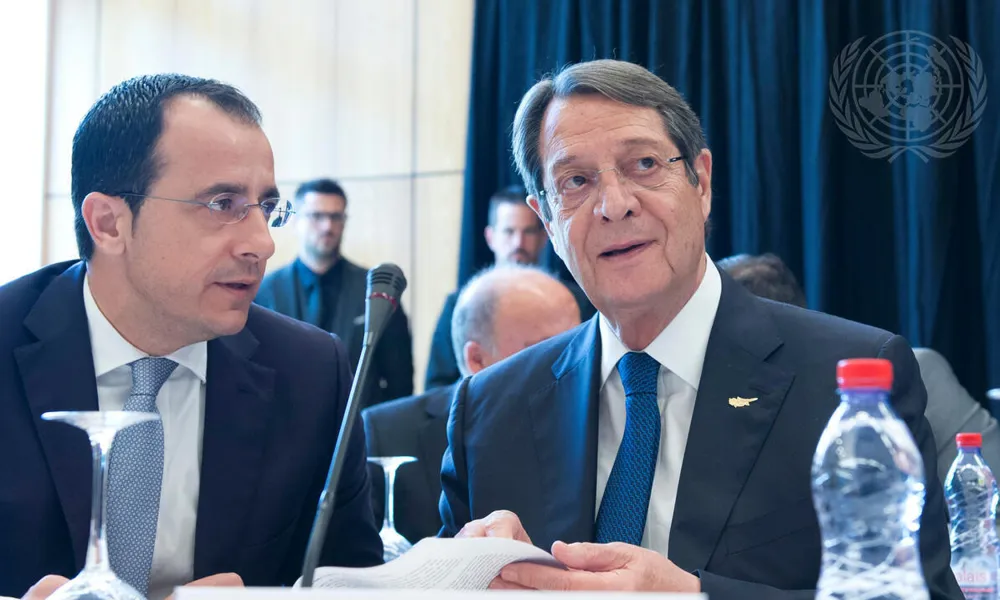
Our side, including Anastasiades, Christodoulides and most of the political leadership, including the president of DISY, appears to agree with the interpretation advanced by that duo. By insisting on our own interpretation and position, there is no possibility of negotiations.
Nor does any of these political leaders dare point out to those responsible at CyBC that the Turkish Cypriot leader, whoever he may be, is not an "occupation leader". He is the leader of our partners in the Republic of Cyprus. And the leader of our partners in the Federal Republic of Cyprus that we seek to establish.
This political leadership has clearly embraced Anastasiades' doctrine of "zero troops, zero guarantees", which led reunification talks over Cyprus to the edge of a cliff, with permanent partition now more likely than ever.
The statements made by political leaders after the National Council meeting leave me in no doubt that there is no political will for bold decisions leading to a compromise settlement.
This political leadership, led by Nikos Christodoulides, is setting the bar at an excessive and wholly unrealistic level, based on "zero-sum" terms that leave no room for negotiations with any prospect of a successful outcome.
Fidias Panayiotou
In the end, Fidias Panayiotou made the most thoughtful remark following the meeting:
"Christodoulides has not solved it all these years; will he solve it now?"
The authors of the book Ethnocentrism identify 23 aspects of ethnocentric syndrome, including the tendency to view ourselves as virtuous and superior, while seeing others as contemptible, immoral and inferior; to regard our own value systems as universal; to attribute our difficulties to others; to distrust, hate and fear them; and, in the event of armed conflict, to regard killing them as a virtue and an act of bravery.
Who do you think the authors had in mind?