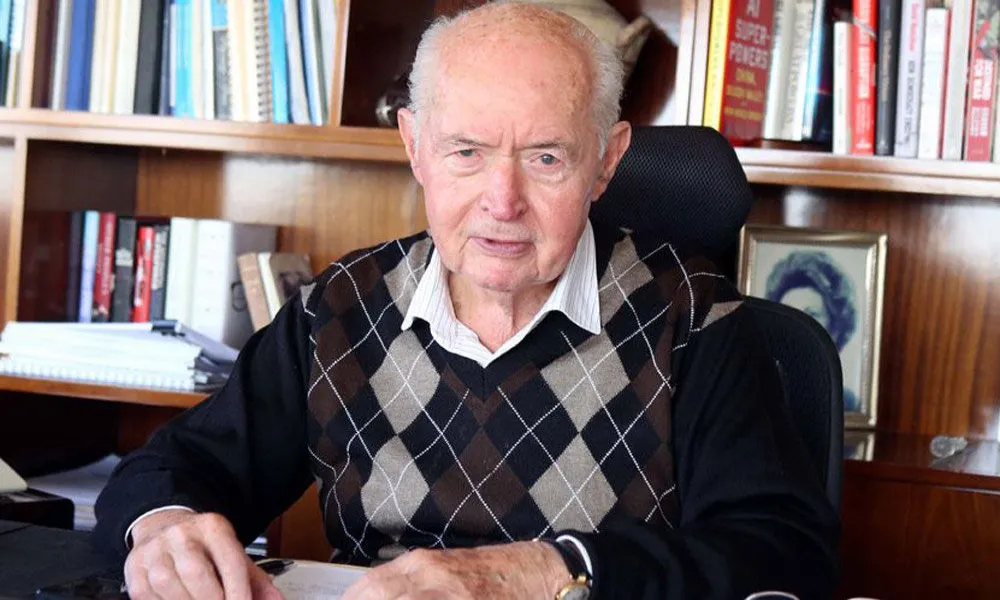

Cyprus is mourning the loss of one of the most influential political and intellectual figures of its modern history. Former President of the Republic George Vassiliou passed away on the evening of January 13, at the age of 95, leaving behind a legacy defined by dialogue, pragmatism and a long-term vision for the country.
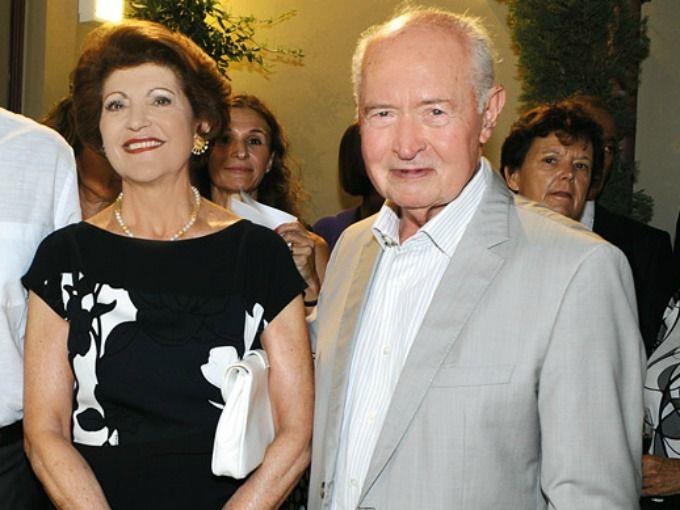
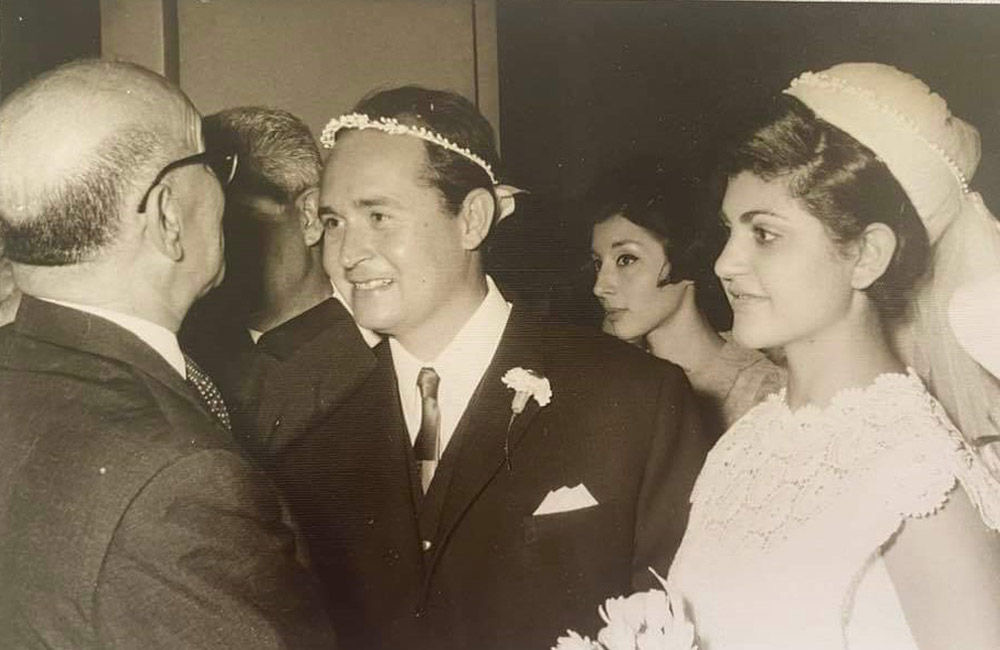
Former President Vassiliou died after being hospitalised at Nicosia General Hospital with a respiratory infection, his wife of 59 years, Androulla Vassiliou, announced.
Μετά από 2 χρόνων ταλαιπωρία, ο αγαπημένος μου Γιώργος, σύντροφος τ ζωής μου γ 59 χρόνια, έσβησε ήσυχα στην αγκαλιά μας απόψε σ ΓΝΛ. Είναι δύσκολο ν αποχωριστώ αυτό τ άνθρωπο π υπήρξε ένας εξαιρετικός σύζυγος κ πατέρας, άνθρωπος γεμάτος καλωσύνη κ αγάπη για τ τόπο κ τ λαό του.
— Androulla Vassiliou (@VassiliouEU) January 13, 2026
The third President of the Republic of Cyprus, George Vassiliou leaves an imprint that extends well beyond electoral contests and terms in office. His public life was closely linked to efforts for a comprehensive settlement of the Cyprus problem, the modernisation of the state, and the strategic choice of Cyprus’ European path. His political journey combined technocratic expertise, political realism and a deep belief in dialogue as a tool for progress.
His political path
George Vassiliou was the third President of the Republic of Cyprus, following Archbishop Makarios III and Spyros Kyprianou. He was elected on February 21, 1988, and served until February 28, 1993.
He was born in Famagusta on May 20, 1931, the son of Vassos and Fofou Vassiliou. He studied economics at the universities of Geneva, Vienna and Budapest, where he obtained a doctorate. He later specialised in marketing and market research in London.
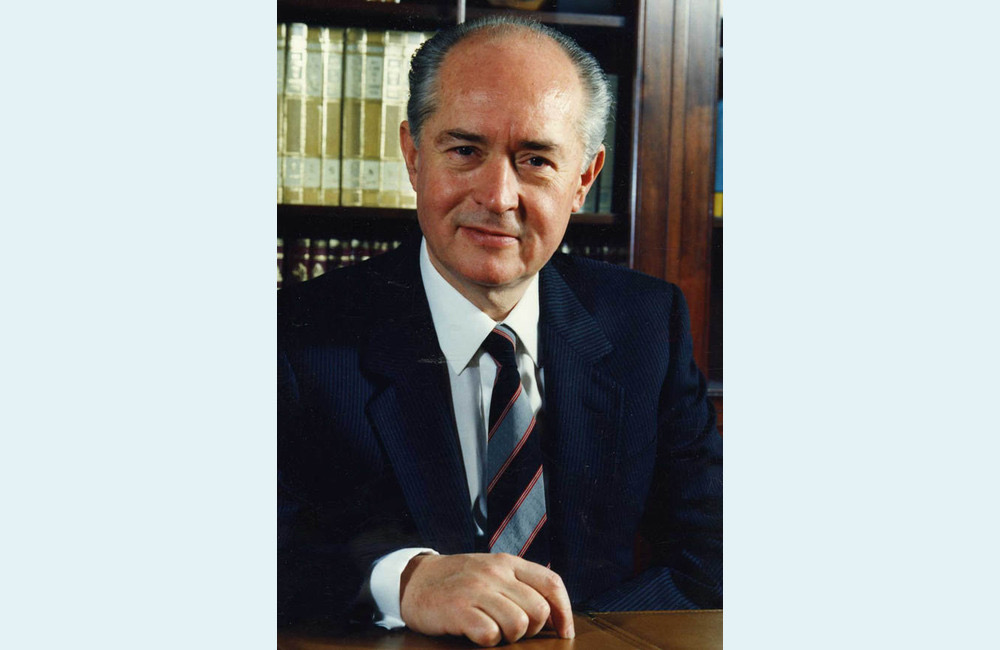
Together with Androulla Vassiliou, he raised two daughters and one son.
According to polignosi the online encyclopaedia, his professional career began in the United Kingdom. In 1962, he returned to Cyprus and founded the Middle East Research Centre, which evolved into one of the largest research and consultancy organisations in the Mediterranean and the Middle East. At the same time, he developed significant academic and literary activity and collaborated for many years with the Cyprus Broadcasting Corporation, presenting economic programmes.
He was never a member of a political party. In the 1988 presidential elections, he ran as an independent candidate, supported by AKEL and a number of independent personalities. In the second round, he prevailed over Glafcos Clerides and assumed the presidency during a period of heightened challenges for the Republic.
During his term, he made systematic efforts to achieve a just and viable settlement of the Cyprus problem through the United Nations and direct negotiations with the Turkish Cypriot leadership. The framework of initiatives known as the Ghali Set of Ideas did not lead to an agreement but marked a period of intense diplomatic activity.
At the same time, his government placed emphasis on economic development, strengthening defence capabilities and improving social benefits, with particular focus on healthcare.
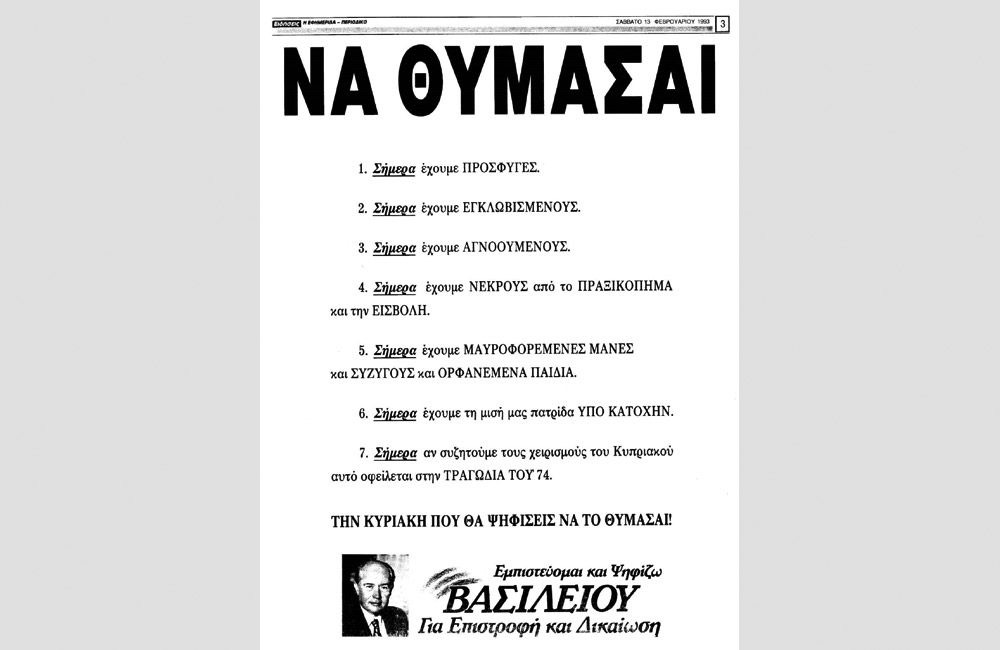
In 1993, he lost the presidency in one of the most closely contested electoral races in the history of the Republic of Cyprus. He nevertheless remained active in political life, founding the Movement of Free Democrats and later the United Democrats. He served as a Member of Parliament for Nicosia and later as honorary president of the movement.
The man who believed in a European Cyprus
His role in Cyprus’ European course was decisive. During his presidency, Cyprus submitted its application for accession to the European Union. He later served as head of the negotiating team for EU accession and the adoption of the acquis communautaire.
For his contribution, he was awarded the Grand Cross of the Order of Merit of the Republic of Cyprus in 2002.
During his presidency, the University of Cyprus was founded. In 2007, the university established a Chair in Marketing and Market Research through his personal sponsorship.
His written work was extensive, including studies on economics, politics and European integration, as well as his autobiography. Giorgos Vassiliou received numerous international distinctions and was awarded honorary doctorates by universities in Cyprus and abroad.
With his passing, Cyprus bids farewell to a President who associated his public presence with dialogue, realism and a long-term vision for the country.
He is survived by his wife, former European Commissioner for Health Androulla Vassiliou, and their two daughters and one son.
With information from the Great Cypriot Encyclopaedia