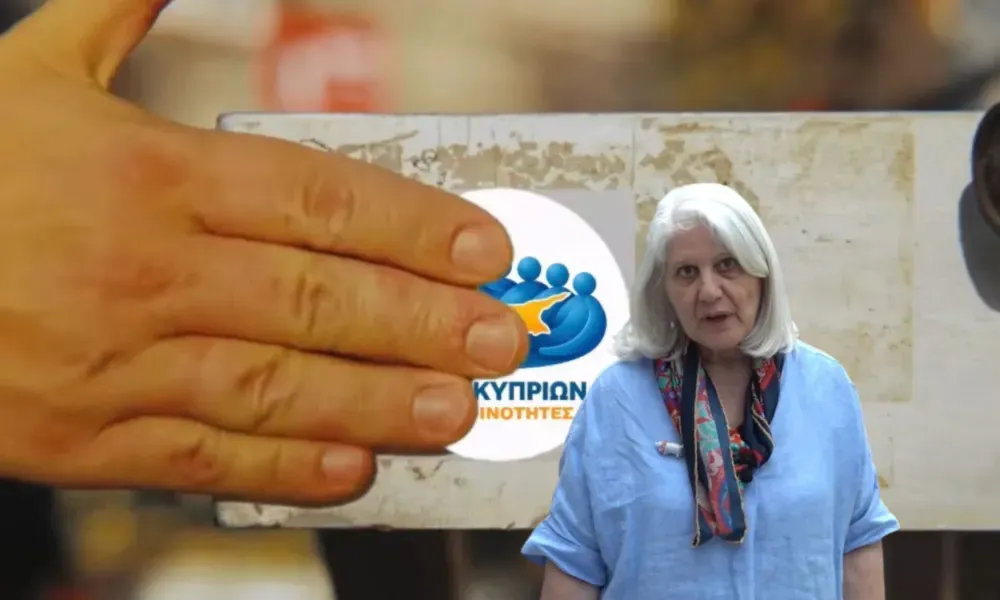



Agriculture Minister Maria Panayiotou has assured farmers that environmental charges on water boreholes will be introduced only after consultation and proper arrangements, stressing that growers will not face accumulated retroactive fees.
Speaking to reporters after a tree-planting event, Panayiotou said the issue would first be addressed through dialogue with agricultural organisations to agree on both payment arrangements and the methodology used to calculate the charges.
Consultation before implementation
Panayiotou said that from the moment she was informed of the issue, she instructed officials to prioritise settlement mechanisms and consultation, noting that the timing of the charges arriving in a lump sum was “extremely poor”.
She clarified that the fees are not new, but stem from a technical obligation dating back to 2017. However, she said consultation should have preceded implementation and that she has asked the ministry’s director general and technical team to work closely with farming organisations to avoid disproportionate or cumulative financial pressure on farmers.
Responding to concerns that some farmers are refusing to pay anything due to both retroactive charges and water shortages, Panayiotou said that only one case involved particularly high amounts, reflecting the scale of land and production. She said the outcome of the consultation process would address such discrepancies.
Desalination programme and water strategy
Turning to the broader water crisis, the minister outlined six packages of measures approved by the Council of Ministers, implemented under a three-pillar strategy.
The first pillar, she said, is the expansion of desalination capacity to meet demand. The second focuses on water infrastructure projects, with works worth around €200 million currently under way. Panayiotou described this as the largest and most extensive desalination programme ever undertaken by the Republic of Cyprus.
She stressed that the government is planning not only for the current crisis but for water needs through to 2050, with the aim of preventing a repeat of the shortages now facing the country. The third pillar, she said, is water awareness and responsible use.
Call for responsible consumption
Panayiotou underlined that the target of reducing water consumption by 10 percent is a Europe-wide goal and said Cyprus must use water more responsibly. She noted that abuse of water resources has been recorded in certain areas, to the detriment of the wider public and especially farmers.
She recalled that since the 1990s, farmers have received their full water allocations in only two years, saying this pattern must end. Permanent resolution of the water issue, she said, is a core priority of the Christodoulides government and requires collective effort.
No cuts planned, minister says
Asked about potential supply cuts in areas such as Larnaca, Panayiotou said no cuts have been made and none are planned. She said calls for responsible use are intended precisely to avoid such measures.
The volumes allocated to district water organisations can be delivered without reductions, she said, adding that water management is now being handled at a technical rather than political level through coordination between the Water Development Department and district authorities.
The goal, she concluded, is achievable, but depends on cooperation from all sides.
Source: CNA