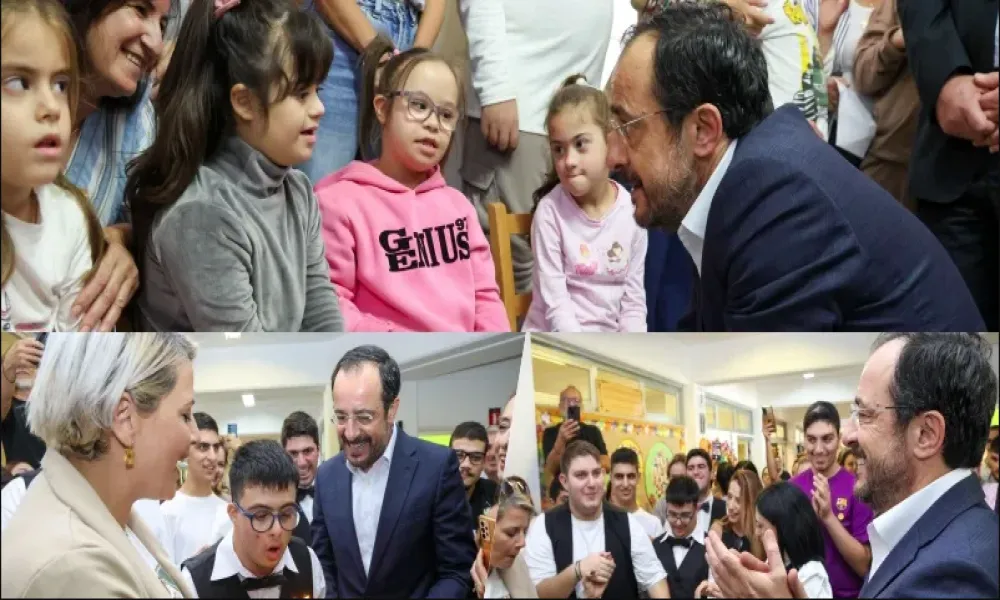
Despite repeated pledges, Cyprus has yet to submit a long-awaited bill reforming special education, with contradictions emerging between government statements and the actual state of consultations.
On 5 February 2026, President Nicos Christodoulides, presenting the government’s annual programme for 2026, stated that a bill on special education would be submitted within the year following consultations with stakeholders. Just one day earlier, however, officials from the Ministry of Education told the House education committee that consultations on amending the legislation had only just begun.
The discrepancy reflects a longer pattern of announcements, delays and shifting timelines that have yet to result in new legislation.
From pre-election pledges to shifting timelines
During the 2022 presidential campaign, Christodoulides pledged to promote inclusive education ensuring equal access and participation for all pupils, with multidisciplinary support teams and cooperation with disability organisations. However, no timetable for legislative reform was set.
In September 2023, shortly after taking office, the president announced the launch of dialogue on special education, echoed by education minister Athina Michaelidou, who acknowledged gaps in support for children with special needs. Again, no deadline was provided.
In July 2024, the cabinet approved the recruitment of nearly 260 school escorts for the 2024–2025 school year. On the same day, the minister said a draft bill was expected in early 2025. That timeframe was later replaced with vague assurances that legislation would be submitted “as soon as possible”.
Clear commitments followed in 2025, with repeated statements that the bill would be tabled within the year. Nevertheless, 2025 ended without any draft law being submitted, leaving the 1999 Special Education Law—despite amendments—still in force.
Questions over consultation process
Beyond the absence of legislation, concerns have been raised over the substance of the consultations themselves.
At a 4 February 2026 meeting of the parliamentary education committee, ministry officials said consultations were continuing “at an intensive pace”. Teacher unions POED and OELMEK, along with disability organisations, disputed this, saying they were only asked to submit written positions in May 2025, with minimal follow-up.
They added that since January 2025, only one meeting had been held with POED, while talks with OELMEK were still pending.
Disability organisations raise concerns
Disability organisations, led by KYSOA, have submitted detailed position papers warning that the transition to inclusive education cannot be achieved through blanket measures or without individual assessments.
They stress that special education is not a policy choice but a protected right, linked to Cyprus’s international obligations. They call for a clear legal framework, meaningful stakeholder participation, and the creation of adequate support structures before any systemic change. Without these safeguards, they warn, reform risks remaining symbolic or creating new inequalities.
What happens after age 22?
An additional unresolved issue concerns students after they leave special schools at age 22. While the government extended school attendance from 21 to 22 as an interim measure, plans for post-school structures - such as day centres and care facilities under the Deputy Ministry of Social Welfare - remain unclear.
Despite the ministry’s presence at the February 2026 committee meeting, no concrete answers were given on the status of these plans. As a result, students who benefited from the one-year extension may face a lack of alternatives from September.
What was presented as a reform offering relief to families now risks proving to be little more than a temporary postponement of a problem still lacking long-term planning and infrastructure.
This article was originally published on the Greek-language Politis website.