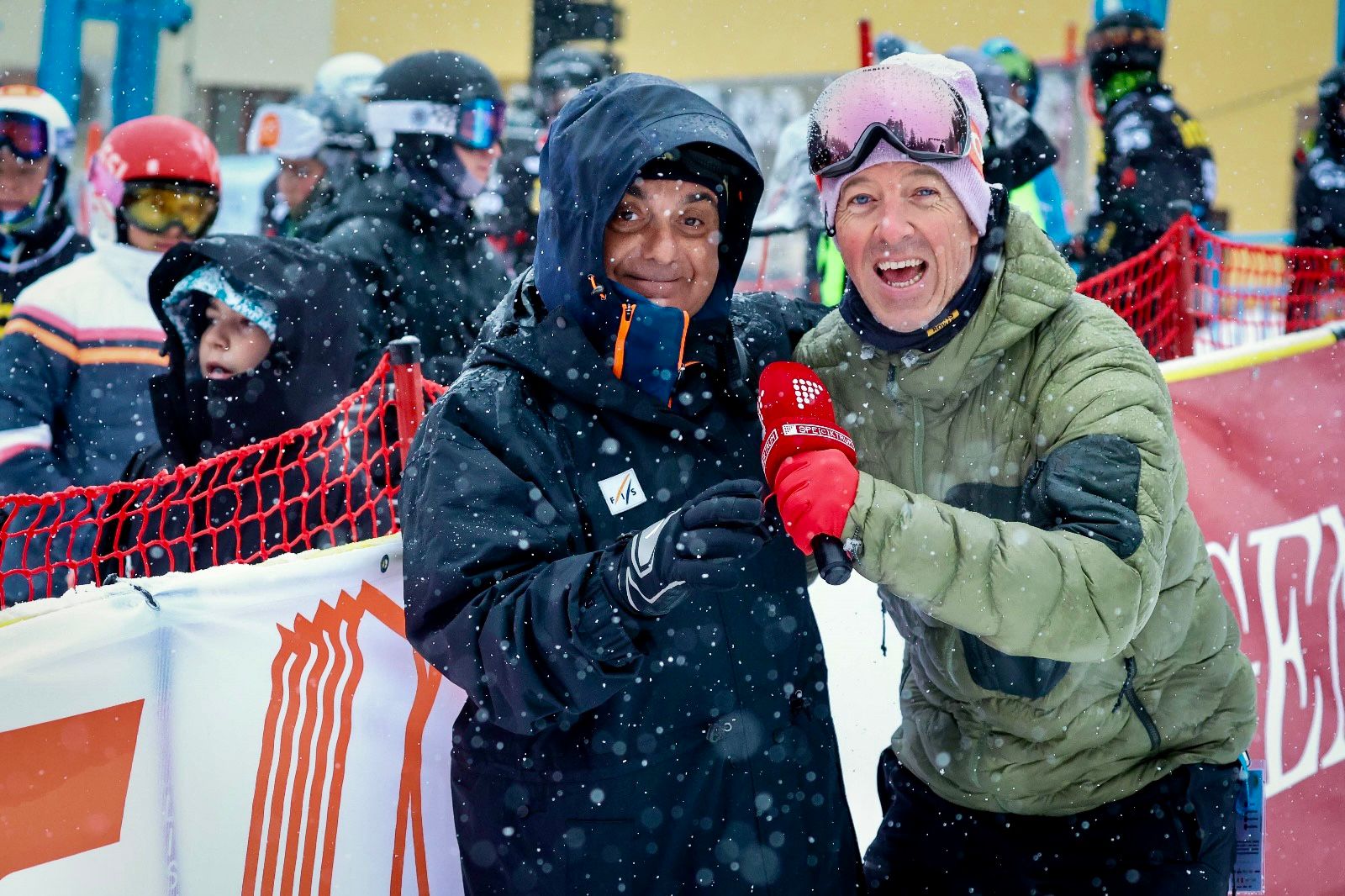

One of the most experienced technical representatives of the International Skiing and Snowboarding Federation on alpine events, is a Cypriot, part of an elite group of 400 individuals. Kyriakos Kyriakou's career spans 23 years, including a decade of approving race courses around the world, one of 40 inspectors globally.
In other words, he’s nothing short of FIS eyes on rule breakers in major alpine sport events such as Winter Olympics and World Cups and is also one of the people in international skiing who approves race courses.
Twice a year, he also participates in FIS Committee meetings held mostly in Zurich but also other major cities around the world, with an agenda that includes decisions to amend, review or change regulations. Kyriakou, born in Platres, wore his skis for the first time in the 1970s on the island’s highest peak, Olympus, as a member of the Cyprus Skiing Club. He gradually catapulted himself to race courses around the world, representing Cyprus and importantly, the FIS.
Face to face with climate change
As an inspector, Kyriakou often finds himself facing the consequences of a worsening climate crisis, forcing organisers to move pistes at higher altitudes every time, requiring further FIS approvals.
Last November he was in Lebanon, where he certified two new race courses at the top of the popular Mzaar Ski Centre at an altitude of 2465 metres. As he tells ‘Politis’, governments and organisations have stopped funding ski centres at low altitudes.
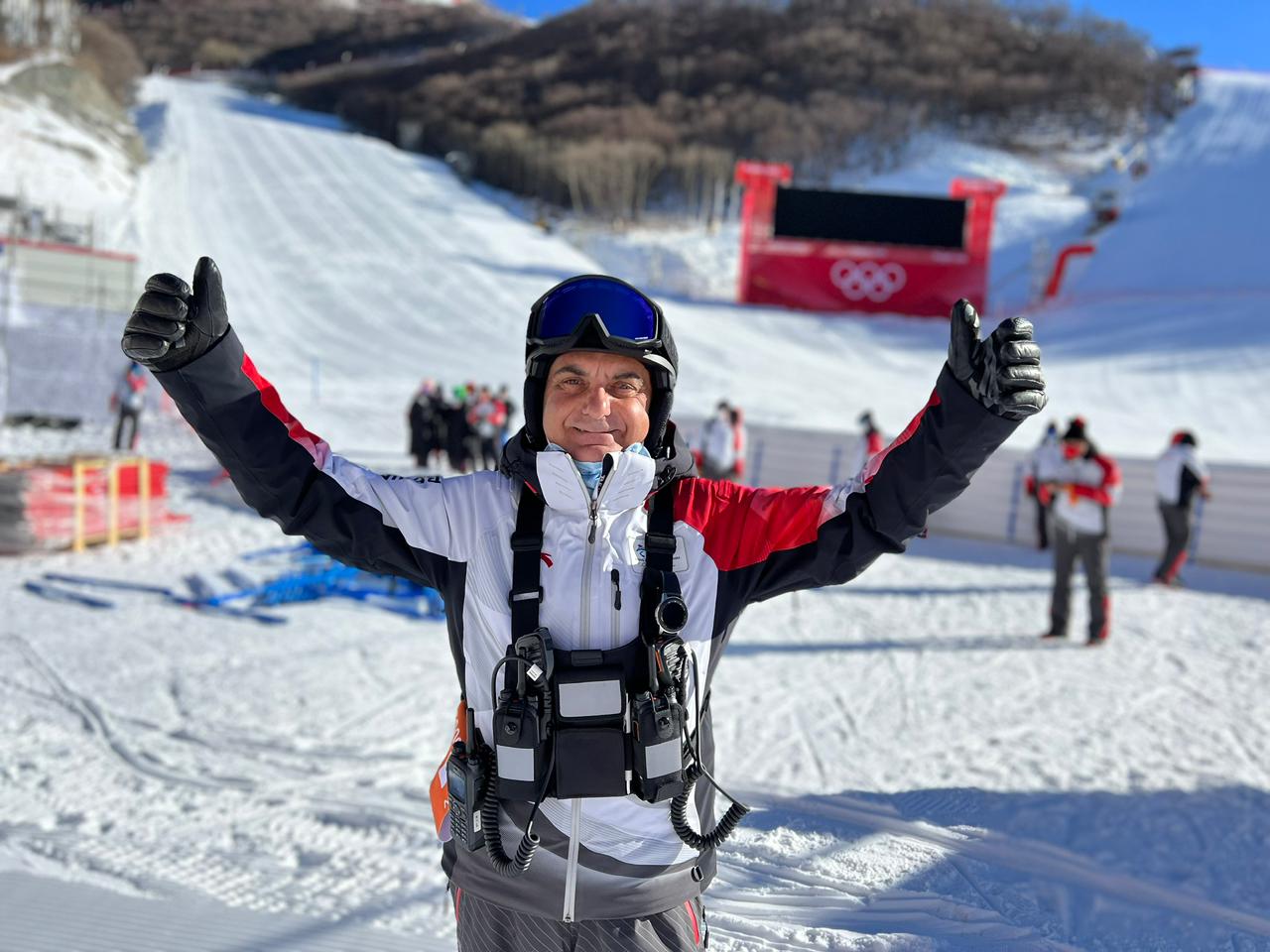
Photo 1 – Kyriakos Kyriakou at the 2022 Beijing Winter Olympics where he participated as an FIS representative.
Artificial snow is the future
Kyriakou believes that artificial snow and closed ski centres, operating all around the year, such as Dubai, Shanghai and soon in Saudi Arabia and Australia, are the future of skiing. Following FIS invitations over the past six years, he has taken part in organising FIS ski races in Dubai, as the UAE has now officially become a member of the skiing countries family. Saudi Arabia, which became an FIS member in 2024, organised games in Dubai for the first time and is also building two closed ski centres.
Artificial snow was first used at the 1980 Lake Placid Olympics in New York. But much further down the line in 2022, when Kyriakou represented FIS at the Beijing Winter Olympics, was the first occasion in which snow was almost exclusively produced for the Games.
In the upcoming Olympics to be held from 6th to 22nd February at Milan and Cortina D’Ampezzo, the organising committee will be producing 2.4 million cubic metres of snow. Compare that to 1956, when Kortina once again hosted the Games. There was no artificial snow back then, though the Iralian army did transport truckloads of snow from the Dolomites.
Kyriakou tells Politis that when it comes to all the major races, all courses prepare themselves for artificial snow additions, to make conditions the same and equally fair for all athletes. On the contrary, in the 80s and 90s, race courses did contain bumps and dips, which slowed down the skiers.
Citizen of the world
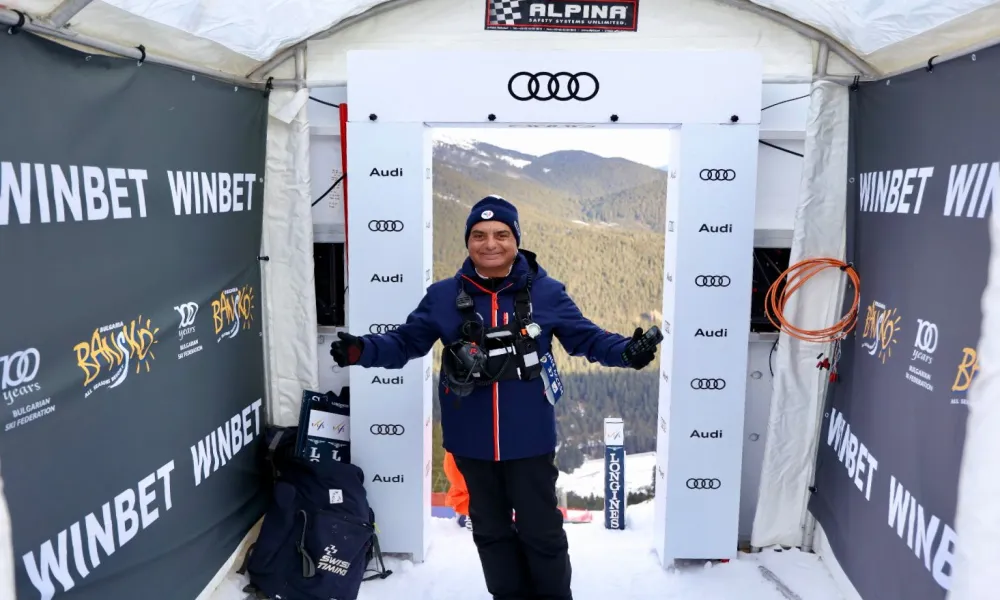
Providing services as a technical representative, both on alpine skiing and snowboard (since 2024) demands quite a bit of travelling, particularly over this period, where all winter sport major races take place. Over last year, he was away for over 50 days, taking short breaks at home. He expects the same this year. On January 12th he arrived at Bansko in southwestern Bulgaria, where he was race start referee yesterday and today (January 18th) at the FIS Alpine Snowboard World Cup. 127 athletes from 20 countries took part in the event. Bansko is important to athletes. It’s their last opportunity to secure a place in the Winter Olympics.
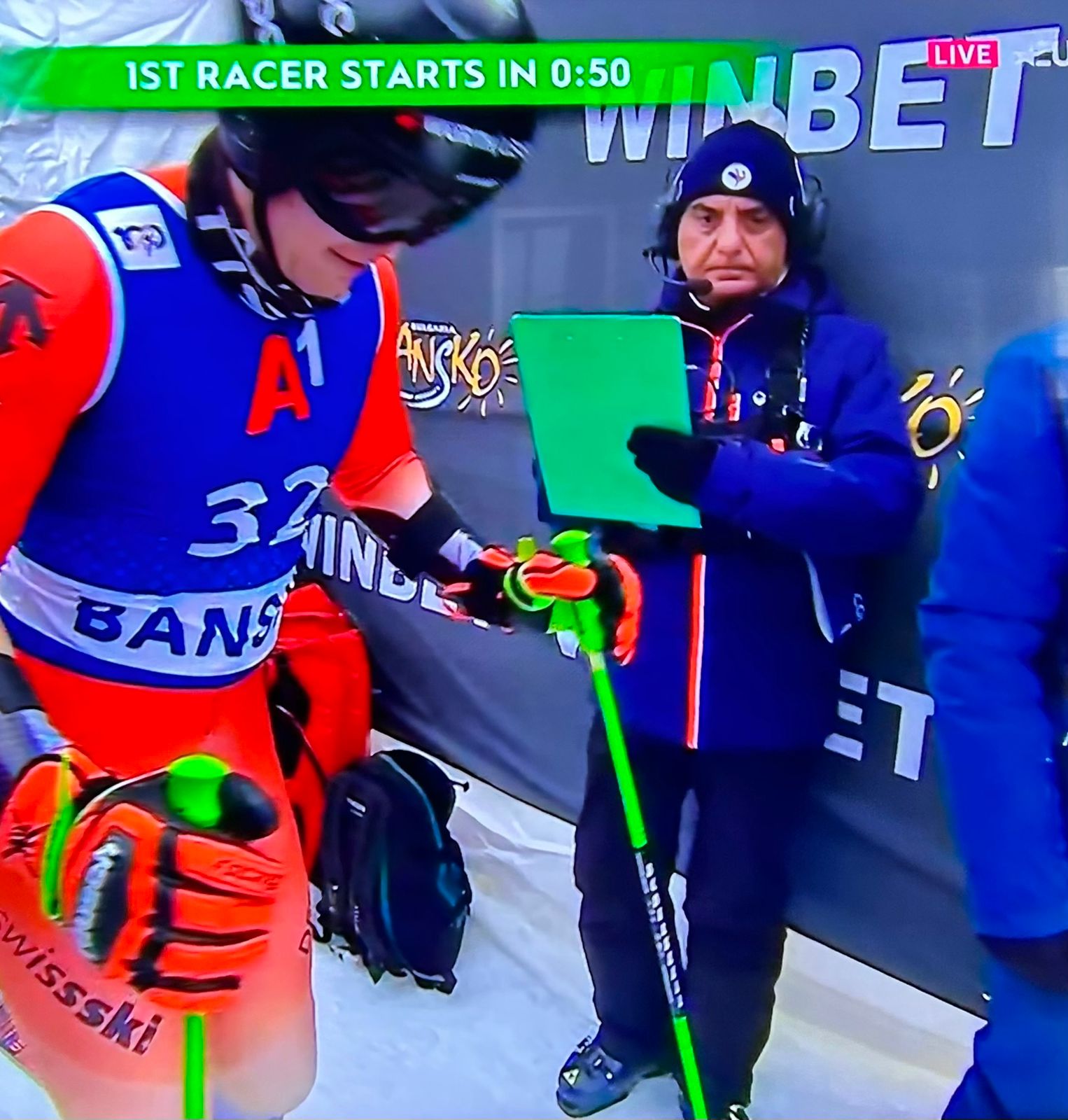
Photo 2 – A start line referee in Bansko, Bulgaria.
The highlight of this year’s travelling will be Norway in mid-March, where Kyriakou will be race security assistance at the Alpine Ski World Cup. The top fifteen men and women will battle it out for the crystal ball, an all-season ranking points competition.
FIS Committees
Kyriakou also participates in International Skiing Federation five committee meetings taking place twice a year. One of them traditionally takes place in Zurich in the fall, pre-season and the 2nd is hosted in the summer around the world. Last year, following his own proposal, a race regulation changed, so that an alpine ski athlete, hampered by a door during downhill (i.e. it gets twisted in their feet), have the opportunity of a second downhill.
The Troodos academies
He harks back to 1974, a 12 year old pupil at the Omodos high school, when he was first introduced to skiing. His home community, Pano Platres, is on the villages around Olympus which used to produce international caliber athletes for the Cyprus Skiing Club. Around this time of the year, a bus would set out from every high school in the area, taking pupils to training. On the weekends, he remembers himself walking uphill in the freezing cold and fog, as did the rest of the kids from nearby villages, their target being Chionistra, the training ground in the 1960s through to the 80s. That’s where he met seasoned athletes and ski coaches Philippos Ksenofontos and Lambros Lambrou, sharing the most participations in major FIS races, the former in the Lake Placid Olympics and the latter Garmisch Alpine Ski World Cup back in 1978.
He remembers that both training and races involved athletes setting the snow on the piste themselves, as there where no special vehicles back in those days.
The first Cyprus SES Games and the vrakades skiing
Kyriakou played a leading role in the history of Cyprus skiing and a significant chapter of that was the establishment of SES, which initially meant the Ski Organisation of the Small States of Europe, later changed to the Organisation of the Rising States of Europe. The late Cyprus Ski Federation President Pavlos Michaelides also played a pivotal role in pushing this through. To this day, SES is the only international sports organisation registered in Cyprus and operating under local legislation.
The first SES cup games took place in Cyprus back in 1990, with Kyriakou also taking part. As Pavlos Michaelides has told Politis, these games ‘were quite significant, as they gave Cyprus the opportunity to prove both to the SES and FIS, how the country could organise international ski races that equalled alpine country games.’ The CyBC carried the first SES cup race live, across the countries taking part.
Kyriakou remembers there were issues that year with the quantities of snow on the race course, so they needed to bring in snow from other parts of the mountain. Men in traditional costume took part in the opening ceremony, including himself, offering a unique spectacle in an Olympus downhill.
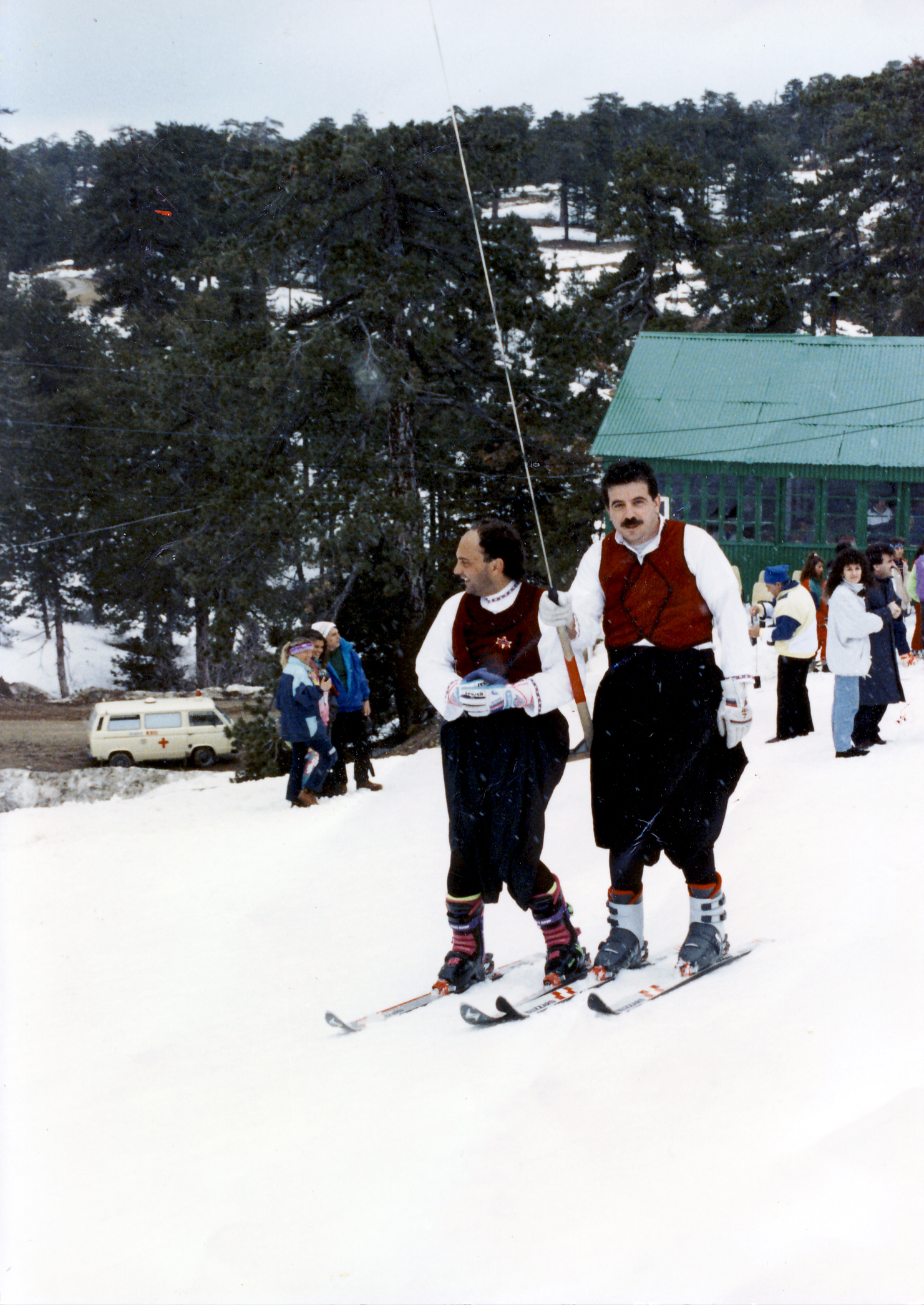
Photo 3 – The first SES cup games took place in Troodos back in 1990. The opening involved men in traditional costume (vrakades), including Kyriakou, pictured left, in a downhill off the top of Olympus.
At FIS since 2003
Kyriakos admits he wasn’t the best athlete. His level was not good enough to represent Cyprus at Olympic Games and World Cups. So he retired early, on a high, following a win. But he never left skiing, as he grew into the idea of representing Cyprus at FIS, in a technical capacity. Pavlos Michaelides encouraged him from the soutset and Kyriakou started visiting ski centres in Greece where he watched races, as all the while, many friends offered guidance. So in 2000, he was proposed by the Cyprus Ski Federation to the FIS. It took 3 years of written and on field exams, but he came through as the first Cypriot to become an FIS technical representative.
Kyriakou feels immense gratitude to the Cyprus Federation and extends warm thanks for all their support, no less to its President, Dinos Lefkaritis.