
Fazıl Küçük was a Turkish Cypriot politician and medical doctor who became a defining figure in his community’s political evolution, serving as the first Vice President of the Republic of Cyprus at the moment of the island’s independence.
Born in Nicosia on 14 March 1906, Küçük pursued medical studies in Istanbul, Lausanne and Paris, specialising in pathology. He returned to Cyprus in 1938 to practise medicine, quickly gaining public recognition both as a physician and as a community leader.
That same year, he entered politics and soon emerged as a leading voice among Turkish Cypriots. In 1943, he was elected to the Nicosia Municipal Council, while also founding and editing the daily newspaper Halkın Sesi (Voice of the People), which he continued to publish until his death. Through journalism and political organisation, he shaped Turkish Cypriot public opinion for decades.
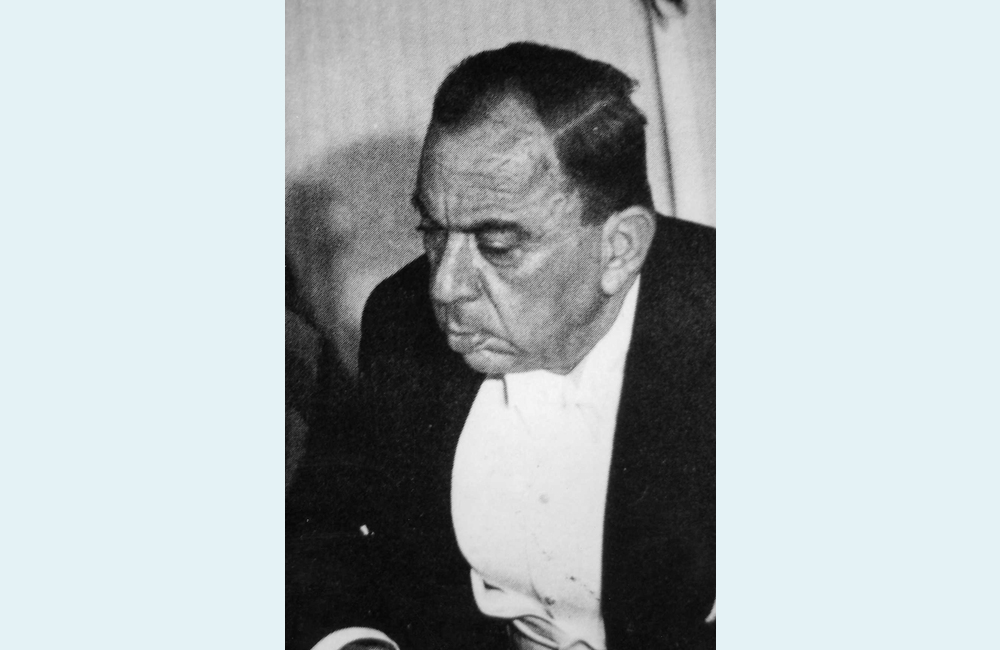
Küçük founded the Cypriot Turkish National People’s Party in 1943, later renamed the Cyprus Turkish National Union, and was instrumental in mobilising Turkish Cypriot nationalism. During the post-war period, as Greek Cypriot demands for enosis (union with Greece) intensified, Küçük led opposition to that objective, advocating instead the policy of taksim, the partition of the island, aligned closely with Turkish state policy.
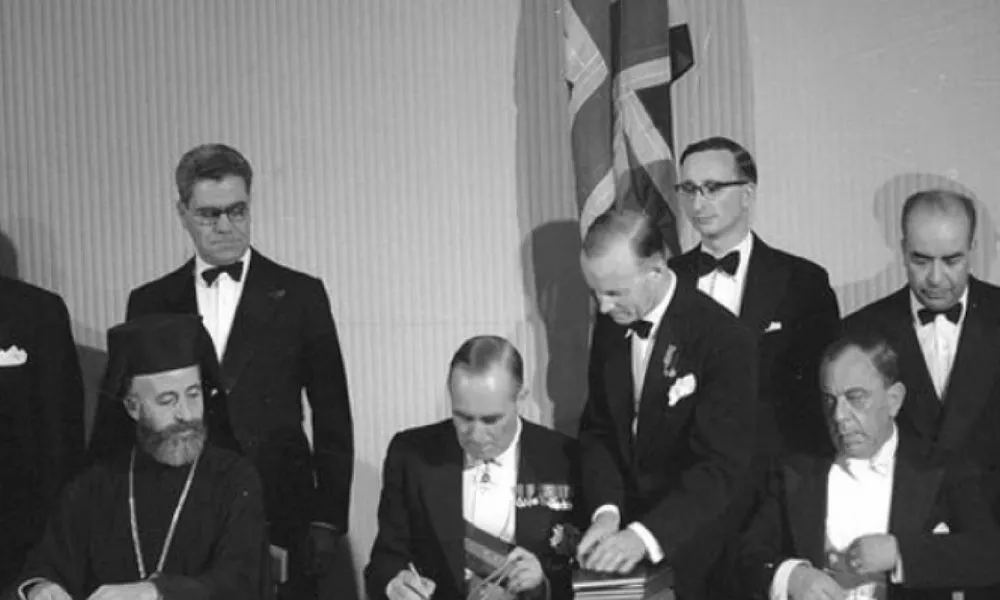
An active international campaigner, Küçük represented Turkish Cypriot positions in London, Turkey and at the United Nations, and co-signed the Zurich and London Agreements of 1959, which paved the way for the establishment of the Republic of Cyprus.
In December 1959, he was appointed Vice President of the Republic of Cyprus, a post reserved for a Turkish Cypriot under the Constitution. He took part in the formation of the new state and the transfer of power from Britain in August 1960. However, following the intercommunal crisis of 1963–64, he aligned with Ankara’s strategy as Turkish Cypriot officials withdrew from state institutions.
Although often portrayed as more moderate than his successor Rauf Denktaş, Küçük consistently supported Turkey’s strategic objectives in Cyprus, even when these diverged from broader prospects for intercommunal reconciliation. He remained Vice President in title until 1973, when he stepped aside in favour of Denktaş.
Fazıl Küçük lived to witness the Turkish military intervention of 1974 and the island’s subsequent division, an outcome that closely reflected the partition-based solution he had advocated decades earlier.
He died on 15 January 1984, leaving behind a legacy that continues to shape debates over Cyprus’s past and future.