
For more than three decades, Ayatollah Ali Khamenei was the enigmatic yet all-powerful Supreme Leader of the Islamic Republic of Iran. Unchecked and accountable to no one, except to God, as he would say, he quietly pulled the levers of power in a 90-million-strong oil-rich nation. One observer described him as “part Pope, part commander-in-chief and part Chief Justice, all in one”.
From the 50-building compound known as Beit-e Rahbari in the heart of Tehran, he skilfully balanced reformists and hardliners. Although conservative himself, he consistently favoured the latter, using the former as a “pressure valve”. He repeatedly denounced the United States and Britain as the “Great and Little Satan” and supported armed anti-Western Islamist groups in Iraq, Lebanon and Syria. At the same time, he approved the development of a covert nuclear programme that could threaten Israel’s existence and destabilise global energy markets.
A life in obscurity and austerity
The astute cleric with the thick white beard kept the world guessing about his true intentions, largely because little was known about him. He never travelled abroad, rarely met foreign leaders, especially from the West, granted no interviews and made limited public appearances.
Even his personal life remained private. He was said to live modestly and ascetically, enjoying gardening while overseeing the country’s oil wealth and vast Islamic foundation funds. Although married with six children, very few photographs of the women in his family were ever published.
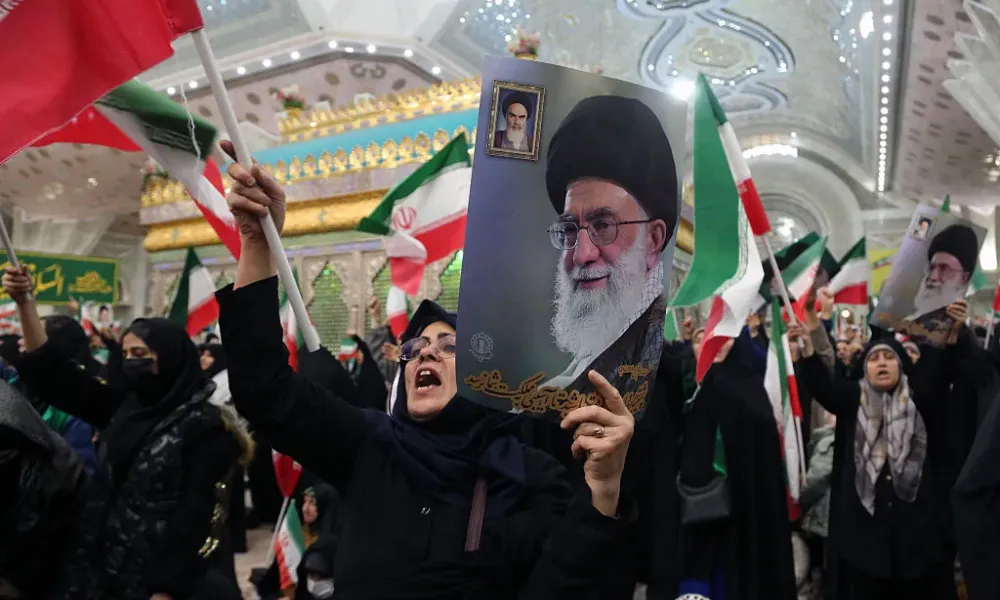
Initially perceived as relatively progressive, his rule became increasingly authoritarian. He used security forces to suppress popular uprisings against disputed elections, a collapsing economy and the enforcement of strict Islamic laws. Over time, any semblance of popular legitimacy faded, with chants of “Death to the dictator” replacing the earlier “Death to America”.
From Mashhad to the pinnacle of the revolution
Born in 1939 in the holy city of Mashhad, Khamenei came from a clerical family. In his youth, he loved Persian poetry, played the traditional tar instrument and read Western authors such as Tolstoy and Sartre.
His political radicalisation came through Ayatollah Khomeini, who strongly opposed the Shah’s modernisation policies. During Khomeini’s exile, Khamenei built a network of militant clerics in Iran. He was arrested six times and tortured by the Savak secret police.
After the 1979 Revolution, his rise was swift. In 1981, he survived an assassination attempt that left his right arm paralysed. “I do not need the hand, as long as my mind and tongue work,” he reportedly said. Shortly afterwards, he became President of Iran, a post he held throughout the bloody war with Iraq.
When Khomeini died in 1989, Khamenei was chosen as his successor, despite lacking the required theological stature. To consolidate his position, he strengthened the Islamic Revolutionary Guard Corps, granting it control over large segments of the economy.
In the years that followed, he neutralised reformist efforts, including those of Mohammad Khatami, and backed the ultra-conservative Mahmoud Ahmadinejad. The latter’s re-election in 2009 sparked the Green Movement, the most significant challenge to the regime, which Khamenei suppressed forcefully.
The final years of his life were marked by strict international sanctions, the pandemic and renewed mass protests, culminating in demonstrations following the death of Mahsa Amini in 2022. Khamenei remained uncompromising, aligning Iran with Russia and China in what was described as an “axis of resistance”.
His legacy is a nation simmering with anger and a younger generation yearning for freedom. Seyyed Ali Khamenei died on 28 February 2026 at the age of 86 during US and Israeli air strikes, leaving behind a country at a critical crossroads.