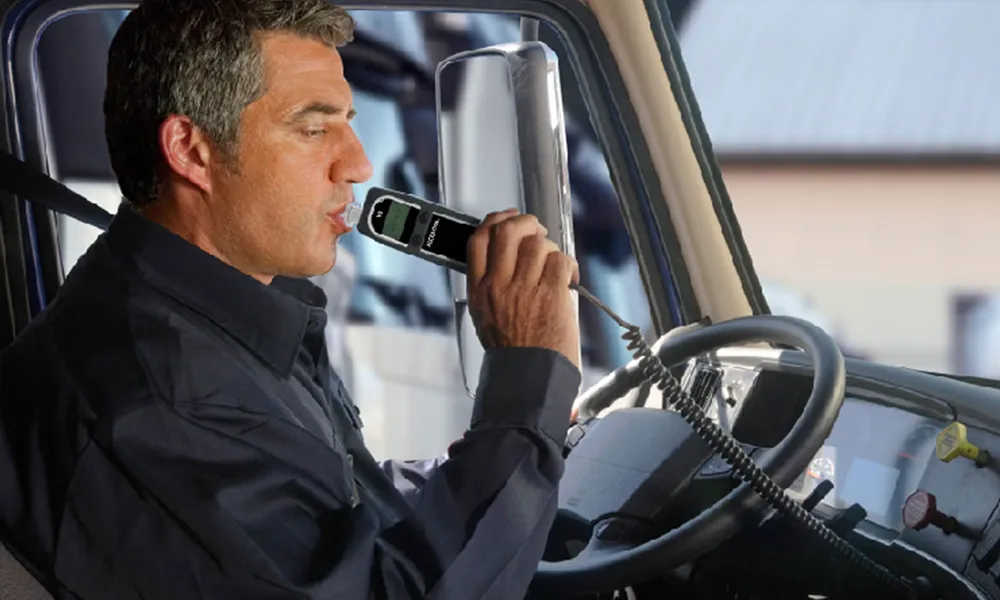

The operation of the system is simple. The driver blows into a breathalyser device and if alcohol is detected, the vehicle simply will not start. This is the response given to Parliament by Alexis Vafeadis.
In European countries such as Finland, France, Spain and others, school buses and public transport vehicles are equipped with alcohol interlock systems. These are breathalyser devices connected to the vehicle’s ignition system, which prevent the vehicle from starting if the driver’s breath alcohol level exceeds the legal limit.
The Minister of Transport, Alexis Vafeadis, was called to inform Parliament following a question by MP Charalambos Theopemptou regarding the reasons why such systems have not been installed in public transport in the Republic, particularly on school buses, and whether there are plans to install them in the future, given that they can save lives.

According to the Minister’s response, there are currently no such plans. Specifically, Mr Vafeadis informed MPs as follows:
-
The installation of alcohol interlock systems in public transport was considered in the past but was not adopted due to inherent weaknesses and the conditions that existed at the time.
-
The installation of these devices is possible under specific conditions: when required by law, as part of a penalty for drivers convicted of driving under the influence, possibly as an alternative penalty, as an obligation for professional vehicles and school buses, or as part of incentives for private individuals and companies to voluntarily install such systems.
-
Mandatory implementation would require amendments to several laws in order to change the current approach to controlling driving under the influence, as well as the framework for out-of-court settlements for offences, including increasing penalties or restricting the scope of such settlements.
-
A key inherent weakness previously identified was the age of the vehicle fleet in Cyprus, which did not allow for the installation of such systems. This weakness still exists but is expected to decrease gradually, as new vehicles now come with the ability to install alcohol interlock systems.
-
In addition, the cost of purchasing, installing and managing the devices, including maintenance and monitoring, is significant. For example, the first-year operating cost is estimated at around €2,000, while ongoing inspection and maintenance costs in subsequent years are a few hundred euros per bus. These costs would need to be covered by the State.
-
It is noted that, for both school buses and buses operating under Public Passenger Transport contracts, there is no contractual obligation for operators to install such systems.
-
For mandatory use of the system for drivers with a history of driving under the influence, legislation would need to be updated and appropriate monitoring mechanisms created to ensure the system works correctly and to detect any violations by the driver. Offending drivers would also require medical or para-medical monitoring to determine whether they are fit to hold and maintain a driving licence under supervision of the system.
The Ministry of Transport, Communications and Works, taking all of the above into account, intends to re-examine the issue in collaboration with all relevant authorities, concludes Vafeadis in his letter.