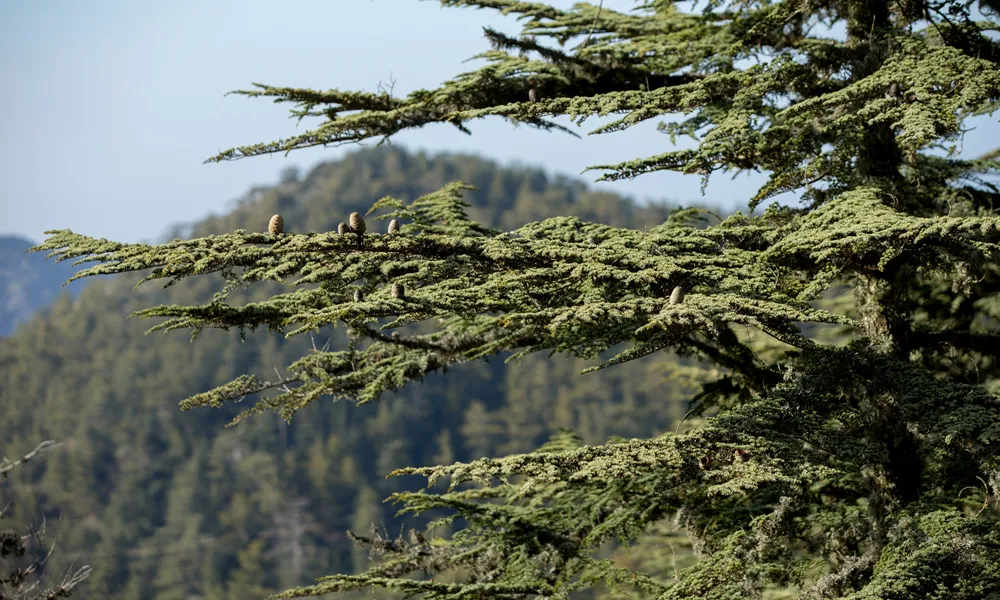
Forestry Department officer Thomas Kyriakou highlighted the vulnerable position of the Cyprus Cedar, exposed to other antagonistic species of trees, as well as wildfires, and the effects of climate change, such as drought and extreme temperatures.
Speaking to CNA, Kyriacou said that the Cypriot Cedar is mostly found in Cedar Valley and at the Tripilos mountain peak in the Paphos forest and in the Madari area. The Cyprus Cedar, Kyriakou added, covers a total area of 300 hectares, of which 100 hectares form pure Cedar forests. The number of trees today is estimated at around 50,000.
Cedar habitats are considered important and have been included in Natura 2000 protected areas, as priority habitats. The Cedar, according to Kyriakou, is protected under the national forest legislation.
He added that "programmes like LIFE-KEDROS promote sustainable management, with actions that include population monitoring, fire prevention and suppression, enhancement of natural regeneration, scientific research and environmental education."
Kyriakou underlined the urgency of constant vigilance, proper management and civil participation towards the protection of this heritage.
He identified wildfires as the main threat for the Cyprus cedar. "The limited spread of cedar means that a widespread fire could cause irreparable damage," he said. Hence, the permanent operation of a fire observatory in Tripilo, he added.
Kyriakou also noted that pine trees are an antagonistic species to the cedar, as they grow at a faster pace. At the same time, climate change, drought and extreme temperatures are making is harder for the cedar to grow. In fact, the cedar is considered a vulnerable species of the Cyprus flora.
While cedar wood used to be a popular material for shipbuilding and religious artifacts during ancient times, its use is now forbidden and its value is purely environmental, cultural and symbolic. "The longevity of the Cyprus cedar established it as a symbol of endurance, durability and continuity," Kyriakou said.
Source: CNA