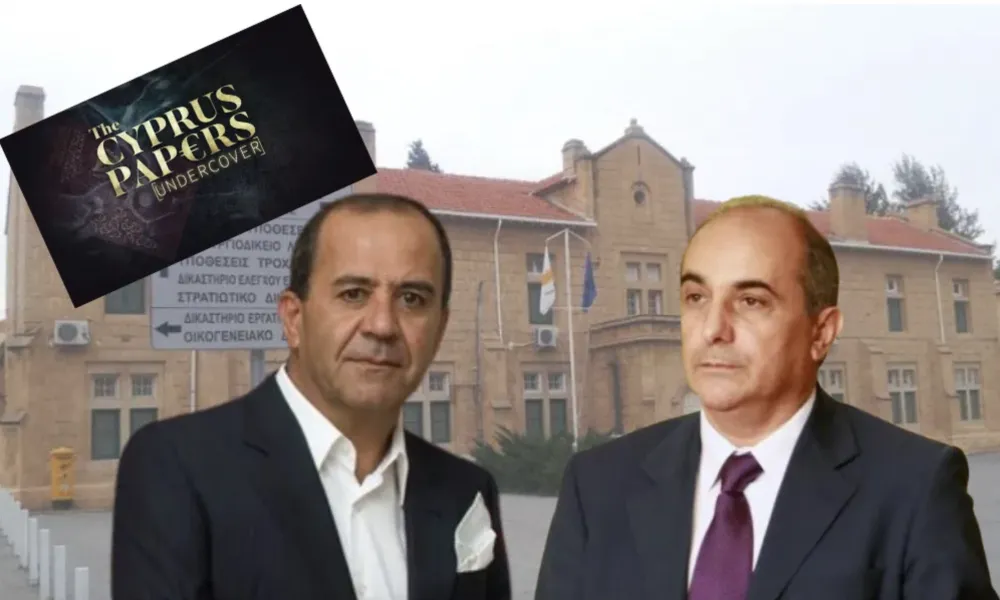
We live in a country where what we see may not exist. Not because it did not happen, but because it cannot be proven — at least not in a way the court accepts. Reality yields to procedure. That, in essence, was the message of the Criminal Court’s ruling in the Al Jazeera “golden passports” case, which acquitted former House president Demetris Syllouris.
There is no personal animus here — quite the opposite. Syllouris paid a political price. He resigned as Speaker, became a target of ridicule and saw associates distance themselves for months. The issue is not the man. It is the precedent.
The message sent to society is stark: what you saw does not exist — not because you imagined it, but because it was not recorded in the “correct” way. Justice may be blind; in this case, critics argue, it risks becoming blind to context.
The video that shook Cyprus was not dismissed because it was proven fake or manipulated. It was excluded because the journalists who filmed it did not appear in court to testify about the circumstances of its recording. It was also ruled inadmissible because the central figure had not consented to being filmed — meaning, according to the court, his personal data rights were violated.
Put bluntly: if you are recorded discussing favours, connections and business touching the heart of corruption, but no one asked your permission to film you, then legally the problem is not you — it is those who recorded you. That may be doctrinally defensible. Institutionally, it feels alienating.
The shield of procedure
The counterargument is serious and not easily dismissed. Criminal justice does not operate on moral outrage or collective perception. It rests on evidential rules, fair trial guarantees and strict conditions governing how evidence is obtained and introduced.
If courts begin admitting material gathered unlawfully or dubiously, the door opens to dangerous precedents: arbitrary recordings, entrapment, limitless surveillance.
The absence from court of the Al Jazeera journalists and the intermediary who featured in the footage created a genuine chain-of-custody problem. Who filmed it? Was it edited? What was said before and after? A court cannot rely solely on a visual product without live testimony about how it came into being.
There is also the issue of personal data protection. If the state ignores such violations entirely, it risks legitimising practices that could tomorrow be turned against any citizen, not just powerful political figures.
All of this is legally coherent.
And yet something remains deeply troubling.
Public office and public interest
This was not a private citizen. It was the Speaker of the House — a pillar of the Republic. The case did not emerge from gossip or a hack, but from an international journalistic investigation that led to resignations and reputational damage abroad.
When the judiciary responds to all this with a dry invocation of procedure, it does more than safeguard defendants’ rights. Critics argue it empties the concept of public interest of substance.
The gap, therefore, is not merely evidential. It is institutional. When courts cannot make use of what society considers self-evident, responsibility shifts elsewhere: to a political system that failed to self-correct, to oversight mechanisms that broke down long before the courtroom stage.
Cyprus as an outlier?
In other European jurisdictions, the clash between privacy rights and public interest is not resolved through automatic exclusion.
In Germany, courts apply a balancing test, weighing the seriousness of the offence, the status of the individual — especially if holding public office — and the public interest in disclosure. In corruption cases, problematic recordings are not automatically discarded if the stakes transcend the private sphere.
French jurisprudence has likewise allowed evidence submitted by third parties, including journalists, provided it was not produced at the direction of prosecuting authorities — drawing a distinction between unlawful state surveillance and investigative reporting.
In the United Kingdom, courts retain discretion to admit improperly obtained evidence if excluding it would damage the administration of justice more than the original violation.
And the European Court of Human Rights assesses fairness holistically: the question is not simply how a piece of evidence was obtained, but whether the trial as a whole was fair and whether the accused had the opportunity to challenge it.
Against that backdrop, Cyprus appears to have opted for the narrowest, most formalist path.
The real risk
The problem is not the acquittal itself. It is what follows.
An acquittal can become a political laundering device — a definitive answer, the end of debate. No political responsibility is assumed. No institutional introspection follows. No systemic reform materialises.
Society is left with a bitter perception — right or wrong is almost beside the point — that everyone saw the same thing, yet the state insists it did not happen, or that it does not matter because it does not fit the judicial mould.
When justice can claim legal correctness yet lose the battle for public trust, something fractures. In a democracy already strained by perceptions of entanglement between power and privilege, rigid formalism without parallel institutional self-cleansing weakens confidence rather than strengthens it.
And when citizens are asked to doubt what they saw in order to preserve the system, the result is predictable: waves of self-styled anti-system actors who seek to tear it down, often without offering anything coherent in its place.