By Yusuf Kanli
As UN Secretary-General’s personal envoy María Ángela Holguín Cuéllar prepares yet another round of consultations, this time in Nicosia, Ankara, Athens, and London, the Cyprus question once again hovers between déjà vu and disruption.
Yet something feels different. The question haunting diplomatic corridors is no longer “Will the talks resume?” but “Can they resume without collapsing back into the same abyss of mistrust and semantics?”
After decades of circular dialogue, Cyprus is facing a moment of conceptual exhaustion. The vocabulary of “federation,” “bi-communality,” and “political equality” still echoes in UN corridors, but for many on the island these words have become liturgical rather than functional. What used to inspire has ossified into ritual.
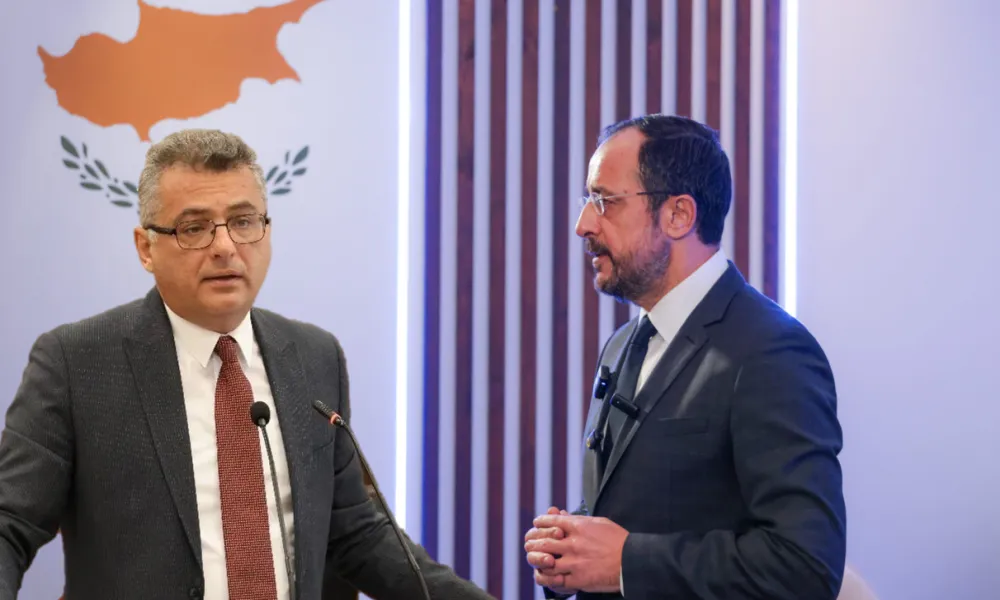
To understand where things might, or might not, go next, it is instructive to listen to three men who have spent their careers trying to define what peace could look like: Ergün Olgun, Özdil Nami, and Andreas Mavroyiannis.
Each served as a chief negotiator for their respective sides. Each carries the scars and insights of years spent across the negotiating table. None of them speaks officially today, but all three articulate, in different registers, the same unspoken truth: the status quo has reached its breaking point.
The last round of illusions
The Cyprus talks have long been the diplomatic world’s most polite tragedy: eloquent, cyclical, and perpetually inconclusive. Since 1968, every decade has witnessed a “final effort,” every UN envoy a “last chance.” And yet, the island remains divided, its political narratives diverging as much as its demography.
Özdil Nami, the measured, policy-driven former chief negotiator under President Mehmet Ali Talat, calls this phenomenon “negotiation addiction.” “We’ve been negotiating the act of negotiating,” he says. “The process became an end in itself.”
To him, the 2004 Annan Plan and the 2017 Crans-Montana Conference were defining moments that exposed a structural flaw: the international community’s tendency to reward Greek Cypriot intransigence and to isolate the Turkish Cypriots despite their constructive engagement.
When the Turkish Cypriots voted “yes” in 2004 and the Greek Cypriots voted “no”, the EU welcomed the latter and punished the former. That, Nami argues, “destroyed the moral symmetry of the process.”
Andreas Mavroyiannis, who served as the Greek Cypriot negotiator under Nicos Anastasiades, approaches the problem from the mirror side.
He acknowledges that the federal model has lost resonance, even within his own community. “People no longer believe the words,” he concedes. “They believe actions, and there have been none.”
For Mavroyiannis, the core issue is not ideological but existential: credibility. “Each side doubts not only the other’s sincerity but also whether the UN can still deliver,” he says.
And then there is Ergün Olgun, Denktaş’s last presidential undersecretary and one of the most strategic minds of Turkish Cypriot diplomacy. For him, the matter is settled: federalism didn’t fail because it was sabotaged, it failed because it expired.
“Federalism was not killed,” he says with his trademark bluntness. “It died of exhaustion.”
Where Nami speaks in terms of process and Mavroyiannis in terms of principle, Olgun speaks in the language of power. His realism, sometimes unsettling in its clarity, cuts through the nostalgia that still shapes so much of the discourse.
Three lenses, one reality
Each man represents a distinct school of thought born of a different political moment:
• Mavroyiannis is the European federalist, an intellectual anchored in the belief that a bi-zonal, bi-communal federation remains the only path compatible with international law and European norms.
• Nami is the functional pragmatist, who still believes in the UN parameters but insists the process must be finite, measurable, and time-bound.
• Olgun is the sovereigntist realist, for whom peace can only begin once the world accepts that two States already exist on the island.
Yet beneath their differences lies a shared conviction: the island’s status quo has become untenable.
Mavroyiannis, despite his federalist convictions, concedes that the psychological contract between the two communities is broken.
“The Turkish Cypriots see every call for federation as a demand for subordination,” he admits. “The Greek Cypriots see every talk of equality as a threat to the state they control.”
It is, he says, “a dialogue between ghosts, both sides negotiating with the memory of 1960.”
Nami agrees. “You cannot keep asking people to negotiate on the same blueprint that failed for fifty years,” he notes. “If the framework stays static, the only thing that changes is trust, it erodes.”
And Olgun drives the argument home: “You cannot share what one side refuses to acknowledge the other possesses.”
This is not simply cynicism. It is the distilled realism of three men who have all seen good intentions die in committee rooms.
The Denktaş doctrine reimagined
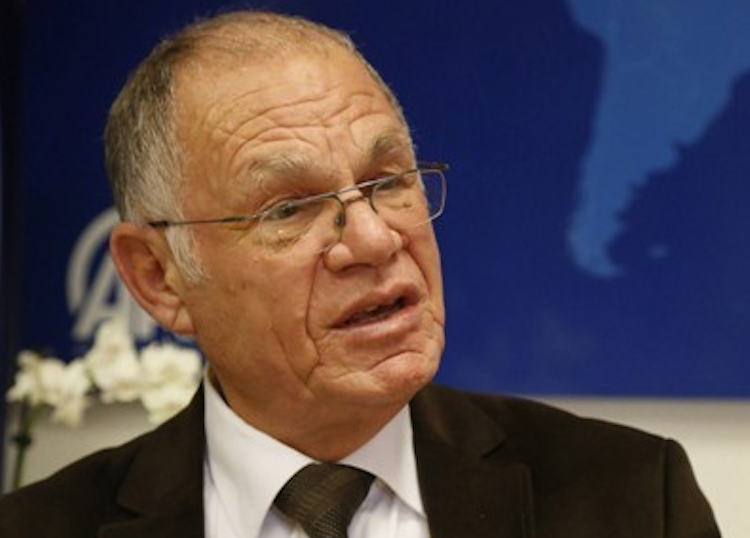
Ergün Olgun, more than anyone, represents the continuation of the Denktaş legacy, but without the dogmatism often associated with it. Where Rauf Denktaş built his doctrine around “political equality,” Olgun updates it to the principle of sovereign equality: the assertion that coexistence is possible only between entities that recognize each other as equals.
“Federalism,” he argues, “is a partnership of necessity. In Cyprus, necessity never existed.”
Since 1963, he notes, the Greek Cypriot administration has operated as the internationally recognized “Republic of Cyprus.” EU membership further reinforced its monopoly on legitimacy. “Why,” Olgun asks, “would a side that already enjoys full recognition share sovereignty with one that doesn’t?”
In his telling, the 1960 Republic was “hijacked,” and the UN’s 1964 Resolution 186 effectively ratified that hijacking, cementing a one-sided state. The repeated calls for “power-sharing” thus ring hollow: the Greek Cypriot elite, in his view, never intended partnership, only absorption.
Olgun’s conclusion is stark but surgical: “Partition is a slogan. What matters is structured coexistence without subordination.”
He envisions two sovereign States cooperating through formalized mechanisms on environment, energy, policing, cultural heritage, and water management.
This vision, he insists, is not secessionist; it is pragmatic recognition of what already exists.

Nami’s functional realism and the quest for a credible process
Where Olgun advocates recognition before negotiation, Nami demands credibility before negotiation.
For him, any new process must break from the “eternal loops” of UN diplomacy. “We’ve reached the end of open-ended talks,” he says. “Any future round must have a defined mandate, a timeline, and an arbitration mechanism.”
He believes Erhürman’s leadership can bring this clarity. “Tufan Erhürman is calm, analytical, and grounded in law,” Nami observes. “He can restore discipline to the process, but only if the UN and the guarantor powers accept that time is not infinite.”
Nami’s thinking intersects subtly with Olgun’s: both demand accountability and closure. The difference is that Nami still envisions this closure within a reformed UN framework, while Olgun has moved beyond it.
For Nami, the double-referendum formula could serve as a democratic endgame, asking both peoples simultaneously whether they want a partnership or separation. “It is the only way to anchor legitimacy in popular will,” he says.
in trust and the acquis.
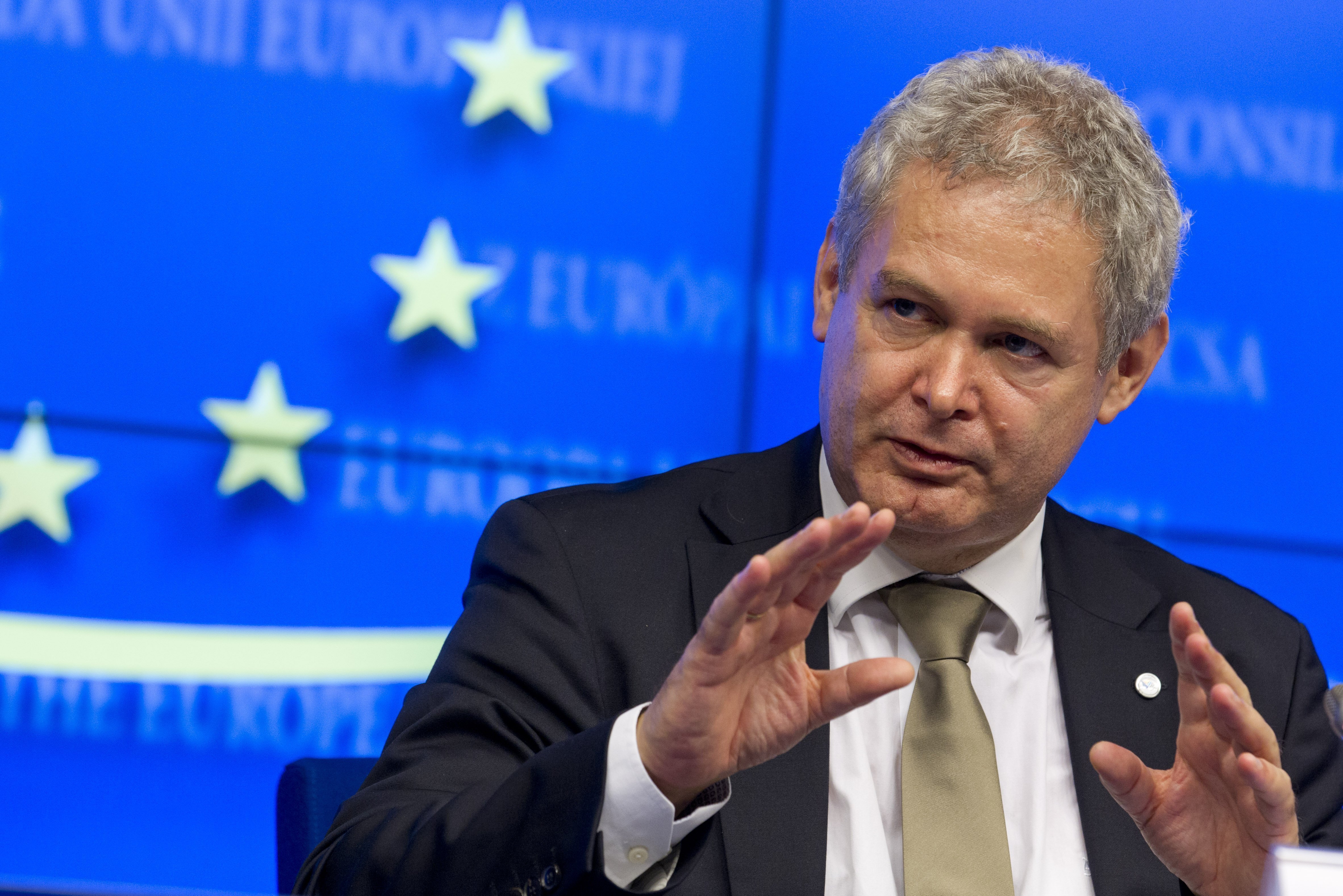
Mavroyiannis: Between idealism and isolation
Of the three, Andreas Mavroyiannis remains the most loyal to the classical federalist model, yet he is also its most honest critic.
He sees Cyprus’s European identity as both its salvation and its curse. “The EU is the only framework where equality and security can coexist,” he says. “But the way the Republic joined, unilaterally, without the Turkish Cypriots, poisoned that opportunity.”
In private moments, Mavroyiannis admits that many Greek Cypriot politicians treat federation as “a necessary slogan, not a genuine vision.” The Greek Cypriot political class, he says, “never internalized the idea of sharing power with the Turkish Cypriots as equals.”
He is equally critical of how international actors handle the issue: “The world indulges the illusion that the Republic of Cyprus represents both communities. That fiction has allowed paralysis to masquerade as policy.”
His frustration is palpable: “Every decade, the same people write the same communiqués. The words change, the outcome doesn’t.”
The homegrown origins of the two-state idea
Olgun is often accused of articulating Ankara’s policy. He rejects that notion flatly. “The two-state idea was not imported; it was incubated,” he says.
He recalls the Beşparmak Think Tank Group, where former diplomats and politicians, including Osman Ertuğ, İsmail Bozkurt, and Hakkı Atun, crafted the intellectual foundation for a two-state arrangement long before it became Türkiye’s official position.
For him, Ersin Tatar’s election in 2020 merely formalized what had been maturing beneath the surface: a recognition that the bi-zonal, bi-communal federation (BBF) had reached its shelf life.
By the time of the 2021 Geneva Informal 5+UN Meeting, Ankara’s endorsement of “two sovereign States” was, in Olgun’s view, not a rupture but a belated admission of reality.
Controlled ambiguity and the double referendum vision
The intersection of these three perspectives points to what might be the next logical step: a controlled-ambiguity formula, a transitional framework that neither abandons the UN nor denies reality.
In this model, the Turkish Cypriot side could accept negotiations under the UN umbrella but with a clear endpoint, a double referendum that allows both communities to determine their future.
Greek Cypriots would be asked:
“With this plan, do you prefer a partnership-based federation or a two-state settlement?”
Turkish Cypriots would answer:
“Do you prefer a federation or continuation of the current status quo?”
If both sides vote for federation, the framework gains democratic legitimacy. If the Greek Cypriots say no, as in 2004, the international community faces a moral imperative: to end the isolation of the Turkish Cypriots and engage with them as a self-governing entity.
Olgun himself would likely accept such an approach, provided it is time-bound and anchored in sovereign equality. Nami would see it as the culmination of a results-oriented process. Even Mavroyiannis, though wary, concedes that such a referendum might be “the only way to settle the argument of legitimacy once and for all.”
Diplomacy beyond rhetoric: The carrot and the stick
Olgun’s prescriptions extend beyond structure to strategy. He urges a joint Türkiye–TC roadmap that combines persuasion and pressure, the “carrot and stick duality.”
• The Carrot: demonstrate the benefits of cooperation, energy integration, joint management of resources, maritime coordination, and shared tourism development.
• The Stick: raise the costs of inertia through regional partnerships, trade diversification, and diplomatic exposure of the international community’s double standards.
“Soft power,” Olgun says, “is not propaganda. It is strategy.”
This approach, echoing Denktaş’s motto “respect through resistance,” becomes in Olgun’s modernized lexicon: “recognition through relevance.”
Holguín’s paradox: Fidelity to resolutions or to reality
Holguín Cuéllar’s mission will test the very foundations of UN orthodoxy. To revive the process, she must first redefine it.
If she treats Cyprus as “one state divided,” she will repeat her predecessors’ failures. If she acknowledges two polities, she will break with UN precedent, yet perhaps for the first time, speak the truth.
Olgun warns that “constructive ambiguity” has become the international community’s fig leaf.
Nami calls instead for “constructive precision,” a process with measurable outcomes.
Mavroyiannis fears that abandoning the UN resolutions could “de-Europeanize” the problem, yet even he concedes that a 1970s framework cannot sustain a 2025 reality.
The UN, in short, faces its own existential dilemma: loyalty to resolutions or loyalty to results.
From Denktaş’s shadow to Erhürman’s horizon
The Oct. 19 election of Tufan Erhürman in the north, followed by Türkiye’s careful acknowledgment of the outcome, may mark a subtle realignment.
President Erdoğan’s congratulatory message, brief, balanced, and deliberate, emphasized respect for the Turkish Cypriot people’s democratic will.
By contrast, Devlet Bahçeli’s “82nd province” remark was met with near-universal dismissal, underscoring Ankara’s determination to avoid symbolic blunders.
For Erhürman, this new political climate offers both opportunity and peril. He must navigate between Ankara’s strategic pragmatism, the UN’s cautious optimism, and the Greek Cypriot leadership’s hesitancy.
His likely approach will blend Nami’s results-based method, Olgun’s sovereign parity, and, paradoxically, Mavroyiannis’s insistence on procedural integrity.
In doing so, he might craft what the island has long lacked: a process not defined by hope alone, but by structure, accountability, and an endgame.
The road ahead: Between idealism and acceptance
After half a century of broken promises and recycled communiqués, Cyprus stands at the threshold of decision. The old dichotomy, “federation or partition,” has collapsed under its own weight. What remains is a spectrum of pragmatic coexistence.
The three former negotiators, though divergent in language, converge in purpose:
• Mavroyiannis demands a Europeanized federation grounded in trust and the acquis communautaire.
• Nami calls for a time-bound process with arbitration and referenda to guarantee closure.
• Olgun envisions sovereign equality and functional cooperation between two self-governing states.
Together, they sketch the architecture of a post-federal Cyprus, one where coexistence matters more than constitutional design, and legitimacy derives not from treaties but from consent.
As Holguín prepares her mission, she faces a task as delicate as it is decisive: to bridge idealism and realism, law and legitimacy, recognition and reconciliation.
In the words of Ergün Olgun:
“Let us begin not from what we wish to be, but from what we already are.”
If that principle guides the next round, the Cyprus issue may finally step out of the fog of illusion, not to reunite what history has separated, but to normalize the coexistence of two peoples who, after half a century apart, might at last learn how to live side by side.