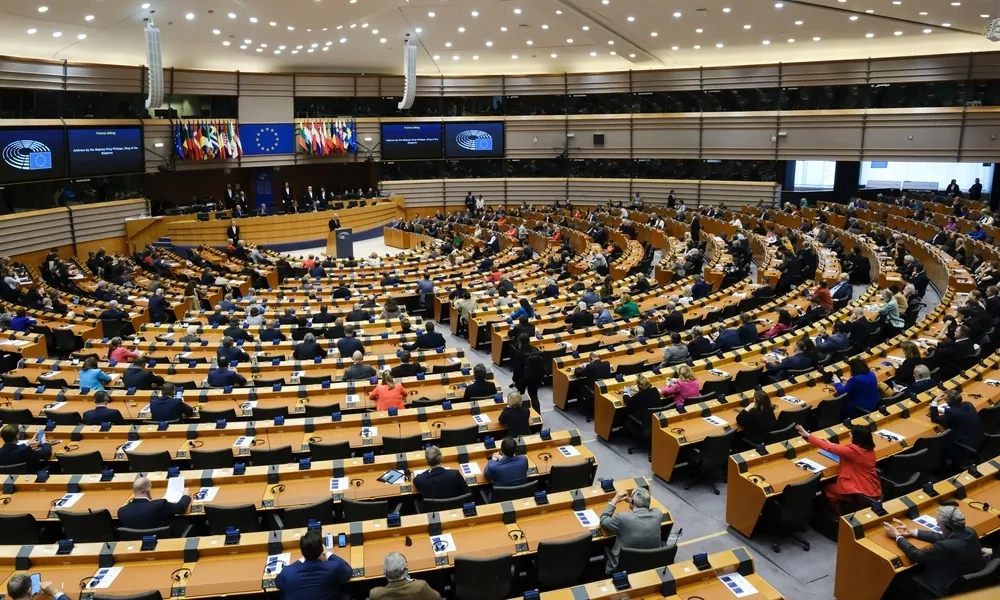
I still remember the first time I visited the European Parliament decades ago. The ceiling seemed impossibly high, a labyrinth of chairs, mediocre coffees, and countless grey suits, as if Europe itself were watching from a distance. I recall the celebrations we held for Greece’s accession and how I believed, and still believe, that its entry changed its place on the map. I remember how Cyprus’ accession finally gave us hope for a solution.
Decades later, in 2026, back in the hemicycle, Europe feels more tangible and yet uncertain once again. Accession brought opportunities, but successive crises, economic and otherwise, still make citizens wonder whether Europe is worth the effort. Opinions are still filtered through the lens of progressives and conservatives. For some, Europe is a project of values and solidarity, for others, it is a distant, rigid structure.
This week in Strasbourg, the first plenary under the Cypriot presidency of the EU brings all these contrasts back to the surface. Outside, farmers block the roads over the Mercosur agreement. Inside, MEPs face an explosive agenda. The agreement is being referred to the Court of Justice of the European Union, while regulations on artificial intelligence and digital security against deepfakes are under discussion.
Negotiations on EU–US trade relations, as well as debates on the defence of human rights, including the brutal repression of protests in Iran, are taking place. There is a motion of censure against the President of the Commission, while turmoil over tariff threats and the so-called Greenland gambit, with Donald Trump causing embarrassment among Europeans, how trade and geopolitics move together.
For Germany, the discussions mean influence. For small Cyprus, the issues are existential, such as the survival of halloumi cheese. It is clear that Cyprus cannot navigate the world alone. A president, receptions, a national anthem, and an atmosphere of pride, Cyprus takes part in the discussions. Small voices carry a certain weight.
Strasbourg remains cold and distant, yet a small country can feel the warmth of perspective. Europe is chaotic and sometimes exasperating, but it is a structure where farmers, small countries, defenders of digital rights or human rights meet to make collective decisions. Europe does not solve everything, but it compels negotiation, debate, and, occasionally, solutions, a moderate kind of hope.