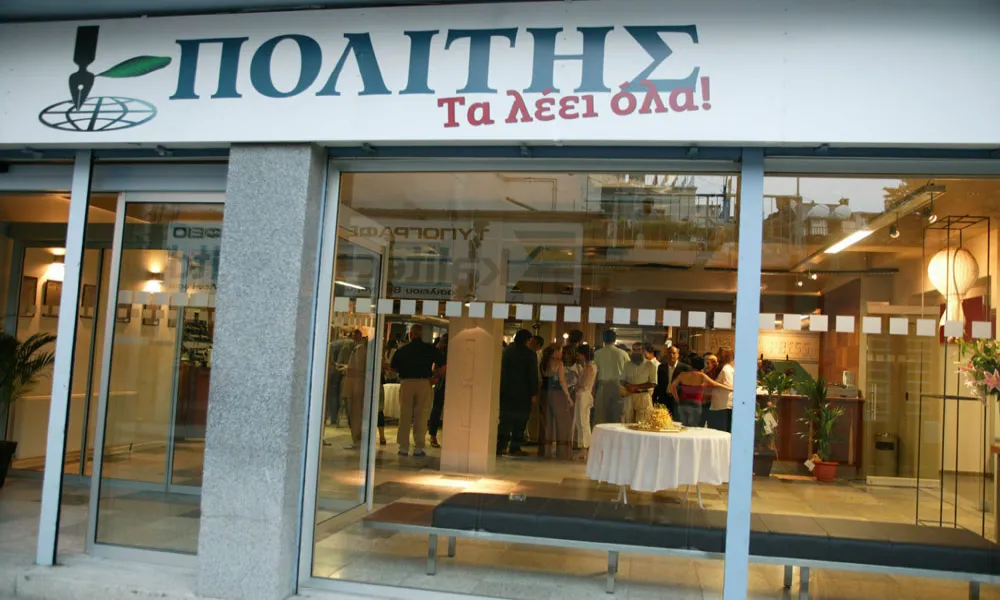
All citizens have a birthday. So does ours. Another year of life: at times tired, at times optimistic, certainly wiser. Some things are not as they used to be. In life you marry, you divorce, you educate yourself, you grow up, you mature, you make new friends, some people turn their backs on you, you go through crises, sometimes you overreact, sometimes you lose. So it is with Politis, our newspaper, a living organism that changes as time moves on.
We first went to print on 12 February 1999. A television advert had preceded it, showing a stone smashing through a shop window: “On 12 February we’ll talk.” Another declared: “On 12 February you will find me in front of you.” It set out to disturb still waters, and it did so with audacity. The promise was impartial reporting, revealing and independent.
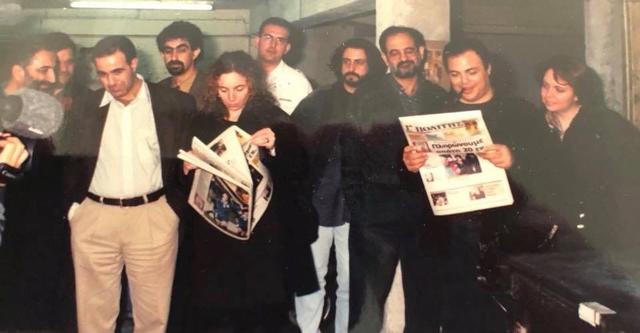
Back then there were political party newspapers, in a secretive society, with no websites, no social media. Every page had to be built, with your hands, statements had to be secured, balances kept with other outlets and public figures, deadlines were non-negotiable. Today everything feels different. News is dominated by social media, by TikTok, and for the past month these sources have comfortably occupied the front pages. Stories light up the scene for a fraction of a second, striking flashes of lightning, soon forgotten. Nothing surprises us anymore. We adapted. From print to digital platforms, and this year to an English-language presence with Politis: To the Point.
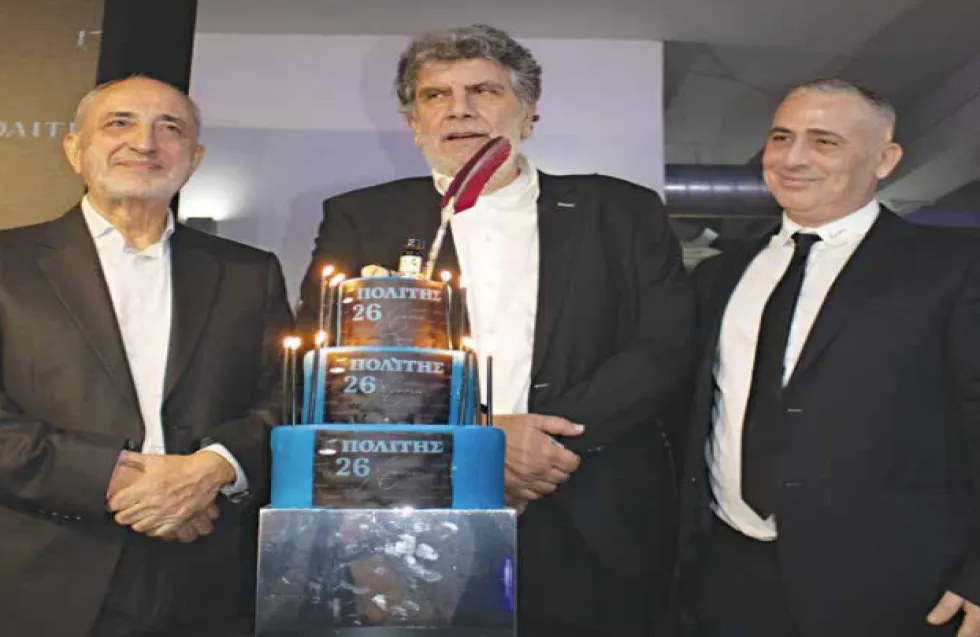
Chris Panayiotou, presented a vision steering the media
into a new era, alongside General Director Dionysis Dionysiou.
The eventserved as a farewell to Yiannis Papadopoulos,
who kept his promise: that this newspaper "would tell it all".
I am not one to romanticise the “good old days”, but journalism as a profession is having a hard time: low wages, still constrained by the haircut and the pandemic, relentless pace, pressure from websites and clicks. It no longer carries the authority or the influence it once did, it struggles to survive. But the need to hold power to account remains the same.
Perhaps one day a printed newspaper will no longer be necessary. That will be fine. The point was never the paper, the point was to exercise scrutiny over power and to inform the citizens. And in spite of many, that will never stop. Which is why there will always be some who want to know the truth behind events, and some who house them, the publishers, at considerable cost but with vision.