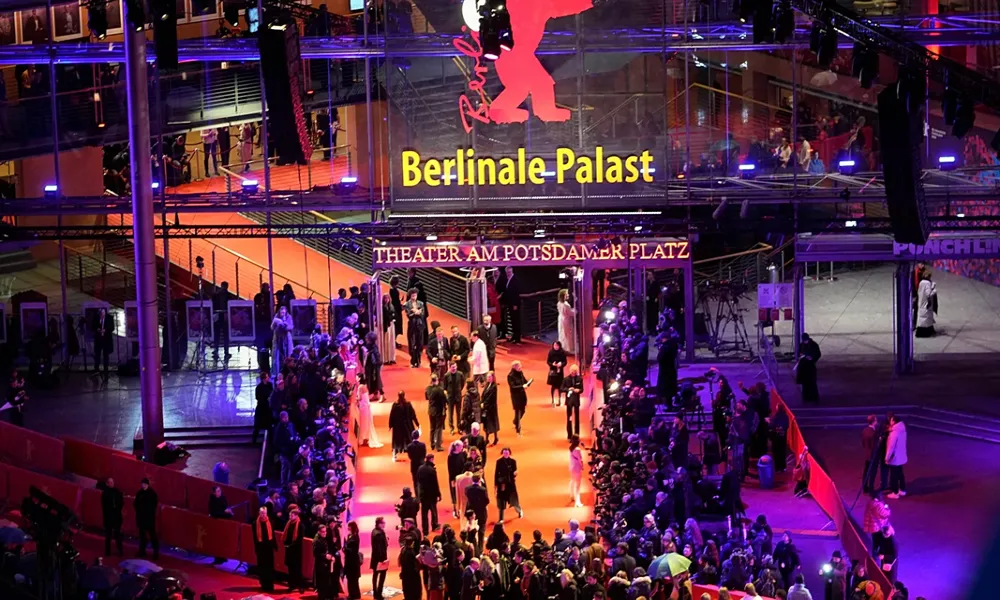

The 76th Berlin International Film Festival did not end with applause. It ended with questions that cut to the core of what cinema is and what it dares to be. Can art claim neutrality in a time of war? Is a film ever only a film? Where does storytelling end and political position begin. And when artists speak, are they betraying cinema or fulfilling its most essential function.
What unfolded in Berlin operated on several levels at once. On screen, films grappled with violence, displacement and fractured identities. Off screen, statements, silences and speeches became part of the narrative. When jury president Wim Wenders suggested that filmmakers should stay out of politics, arguing that cinema can change the world but not in a political way, the comment was read by some as a defense of artistic purity and by others as an impossible separation. Days later, Palestinian-Syrian director Abdallah Al-Khatib used his acceptance speech to directly challenge Germany’s stance on Gaza, prompting political reactions within the auditorium itself. The debate expanded further when more than 500 staff members publicly supported festival director Tricia Tuttle amid reports of political pressure.
The Berlinale became a stage not only for cinema but for the tension between official narratives and those who seek to confront them. Between provocation and respect. Between realism and the question of how much reality audiences can or should endure when reality itself is already harsh. There is an apparent oxymoron at play. Films are celebrated as autonomous works of art, yet their creators are asked to separate their artistic voice from their civic conscience. Festivals insist on freedom of expression, yet that freedom is tested when expression becomes uncomfortable.
In this layered atmosphere, metaphor and literal meaning collided. What was projected on the screen could not be disentangled from what was unfolding in the world outside the theater doors.
To reflect on these tensions, I spoke with four Cypriot filmmakers and cinema professionals, Argyro Nicolaou, Marios Piperides, Andreas Kyriakou and Elena Christodoulidou, some of whom experienced the climate in Berlin firsthand. Coming from Cyprus, a country shaped by division and unresolved conflict, they understand that the line between art and politics is rarely clear and never neutral.
Our conversations explore the independence of the film industry, the fine line between provocation and responsibility, the pressure on cultural institutions, and the enduring question of whether cinema in times of war can afford silence or whether silence itself becomes a statement.
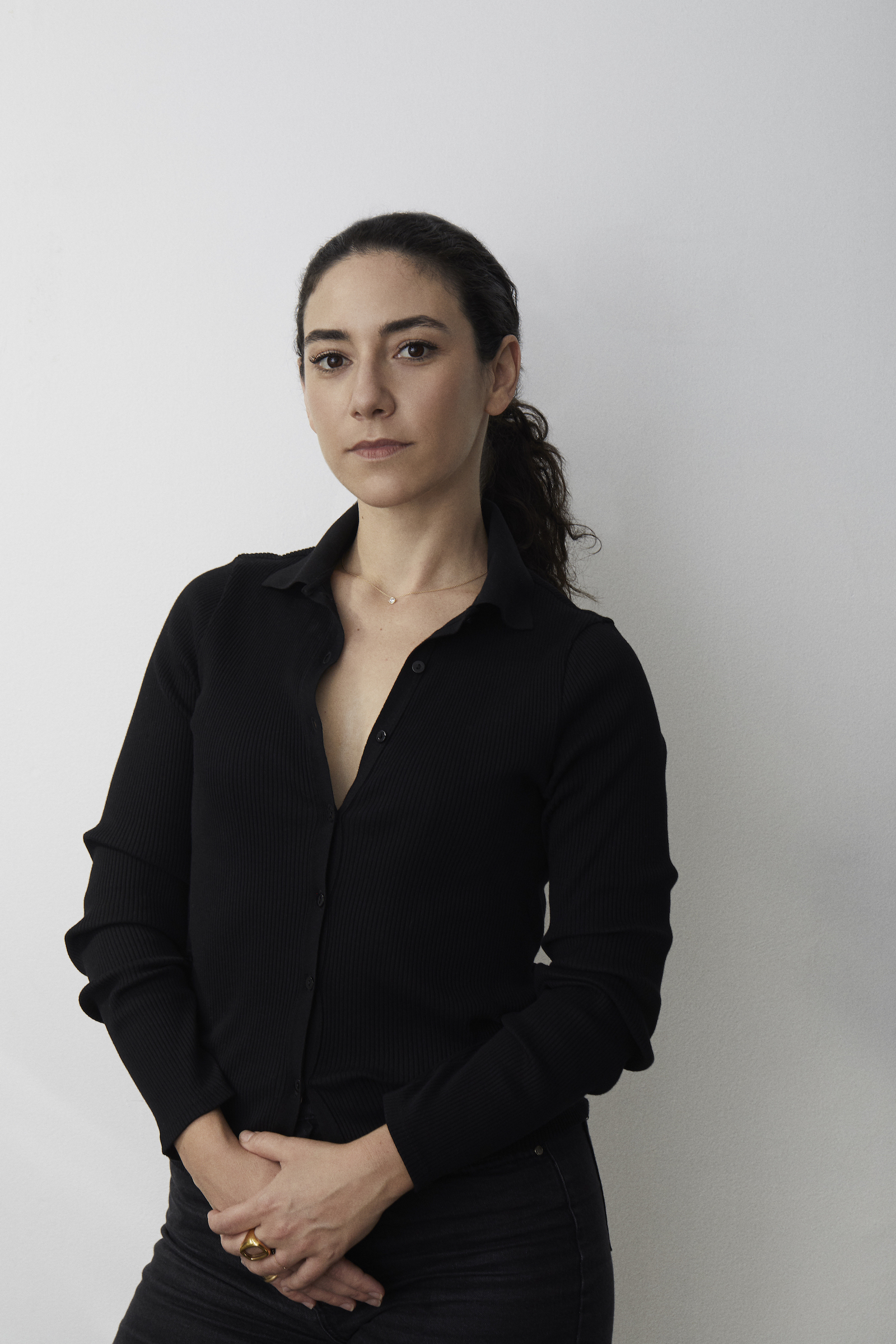
Argyro Nicolaou
"Art operates within ‘the field of politics’ whether we like to or not"
Argyro Nicolaou is a Cypriot filmmaker, writer and researcher based in New York City. Her short films have screened at festivals and exhibitions across Europe and the United States, while her curatorial work and public programming span New York, Athens and Cyprus. Her writing has appeared in MoMA Post, The American Historical Review, Boston Art Review and several collected volumes. She holds a PhD in Comparative Literature and Critical Media Practice from Harvard, where she was awarded the Bowdoin Prize, and she has taught at Princeton, Columbia and Bard. A member of the European Film Academy and the Directors Guild of Cyprus, she is currently developing her first feature film, Excavators, and her first feature documentary, Unsettled (My Sea), while teaching at the Center for Human Rights and the Arts at Bard College, New York.
We speak in the wake of the 76th Berlin International Film Festival, where debates around war, speech and institutional responsibility have unsettled the international film community. Rather than treating the controversy as an isolated incident, Nicolaou situates it within structures of power and history.
“Art operates within ‘the field of politics’ whether we like to or not,” she says early in our conversation…
You follow closely the controversy at the Berlinale closely. How do you respond to the argument that art should remain outside politics?
Each artist may decide their own position vis-a-vis the relationship of art and politics, on the level of content. It goes without saying that each artist is also entitled to their opinion on social and political issues, local or global. Freedom of expression is, after all, a cornerstone of democracy. And the last thing we want is cookie-cutter art. But to claim, as Wim Wenders did in that opening press conference for the Berlinale, that art ‘does the opposite of politics’ and thus imply that art is or should be outside of politics is to ignore the fact that art operates within the field of politics whether one likes to or not.
And there are certain moments in time–like the times we are living through now–when the terrain of that field is intensely marked and entirely inescapable. In such moments, any claims that even approach the argument of art for art’s sake risk sounding as the tone-deaf incantations of privilege.
What, in your view, made Wim Wenders' statement particularly contentious in this context?
The unfortunate thing about Wenders’ statement, and something one would expect him to be much more aware of, is that it, too, operates in a decidedly political context, whether he wished that to be the case or not: the charged context of the Berlinale, which has been greatly influenced by the larger context of the German state, its policing of pro-Palestinian speech and its seemingly unconditional deference to Netanyahu’s regime. This is not something that an artist’s personal stance can will away. At the same time, Wenders’ deflections could also be seen as a symptom of this policing of speech in Germany. This past week we’ve seen the German government initiating a review of Tricia Tuttle, the Berlinale’s director, and contemplating removing her from her role because of pro-Palestinian speech by awarded filmmakers during the Berlinale’s closing ceremony, and her being photographed with a Palestinian flag in the same frame. These are the kinds of consequences that artists and cultural workers face in Germany for even a tangential affiliation to the Palestinian cause.
In another context, in another time, one could potentially be more open to taking what Wenders said as a genuine, good faith response to the age-old question of the political nature of art. But in the context of Israel's ongoing campaign of genocidal violence against Palestinians, it’s hard to see Wenders' response as anything other than a symptom of the very point the journalist was trying to make, and a knee-jerk reaction to the uncomfortable reminder of the inevitably political structures in which Wenders and his jury members operate.
Artists & festivals
On the question of whether artists and major festivals should take explicit political positions, Nicolaou draws a careful distinction. “Of course we don’t expect everyone to make art with a political bent. And we should also not expect every artist to have the same political ideology.”
Her expectations shift when it comes to those who lead powerful cultural institutions. “But we do expect the people who are leading such global taste- and agenda-setting events such as the Berlin International Film Festival to understand that, if they speak of the ‘opposite' realm of politics so easily, they do so only because, in the words of Hannah Arendt, they have not been forced into the unavoidably political position that comes with the lived experience of surviving war, displacement, disenfranchisement and persecution.”
Are there examples of other ways artists have responded within the same festival climate?
Other stances are possible. Kaouther Ben-Hania, the Oscar-nominated Tunisian director of The Voice of Hind Rajab. She refused an award given out at the ‘Cinema for Peace’ gala in Berlin as a way of protesting those people, countries and institutions who ‘gave political cover’ to the genocide. In her words: “as you may know, peace is not a perfume sprayed over violence so power can feel refined, and can feel comfortable. And cinema is not image-laundering. If we speak about peace, we must speak about justice. Justice means accountability. Without accountability, there is no peace…I refuse to let [the] deaths [of Palestinians] become a backdrop for a polite speech about peace. Not while the structures that enabled them remain untouched.”
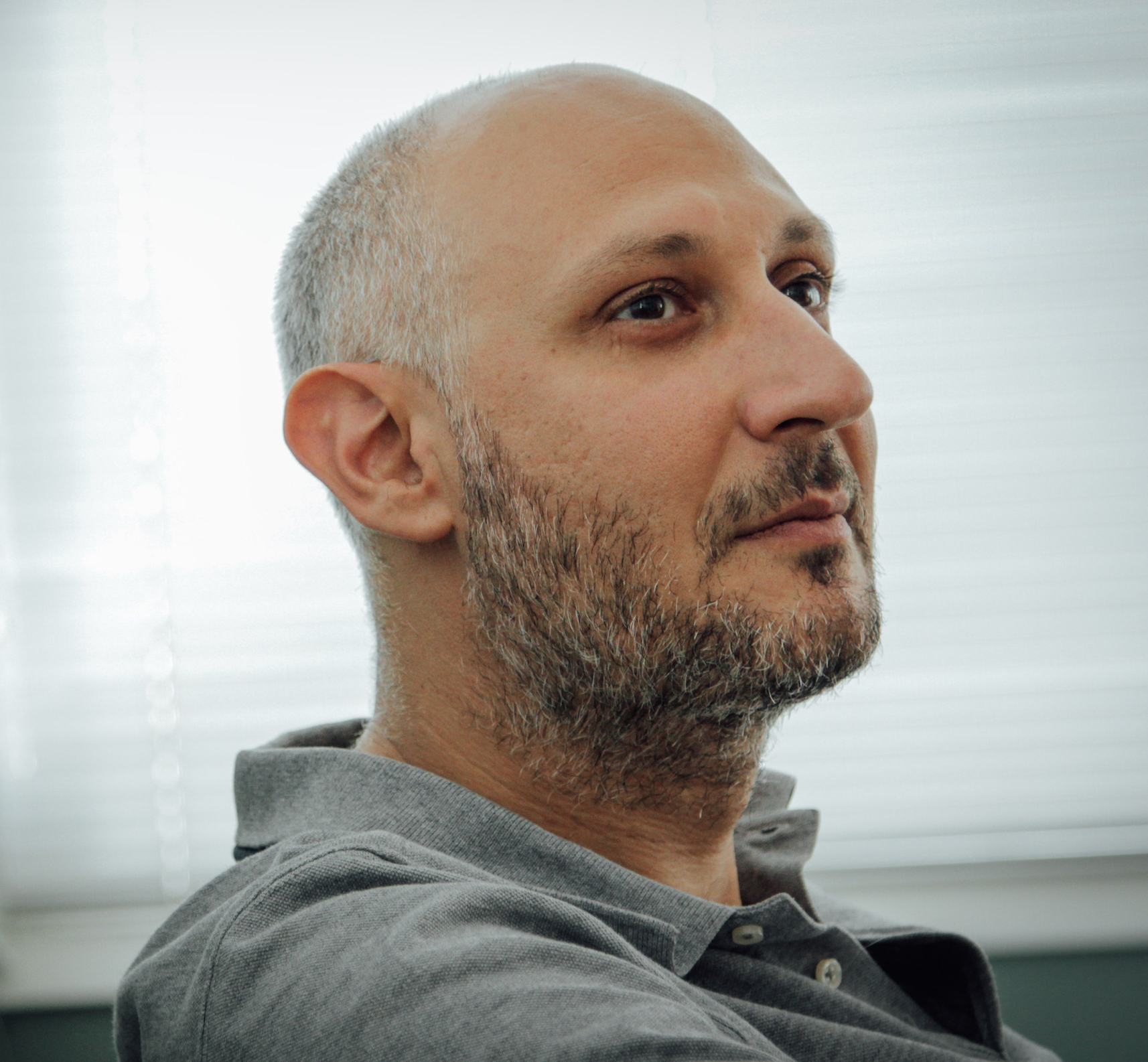
Marios Piperidis
"Political Cinema is a Tool for Dialogue"
With at least five political films to his name, either as producer, co-producer, or director, Marios Piperidis, founder of AMP Film Works, remains steadfastly committed to the idea that cinema must be independent and that those who support it should grant it the right to freedom of expression.
With works such as Smuggling Hendrix (2018), The Immortalizer (2013) and The Last Remaining Seats (2011), Piperidis has demonstrated that he is not afraid to address sensitive issues in Cypriot and international reality.
His film Smuggling Hendrix tells the story of a musician trying to take his dog from one side of Cyprus to the other, and through this seemingly simple story, the entire political and social context of a divided island emerges.
“In the case of Cyprus, we always saw our own side and presented a one-sided view. Now things have started to change. It took many decades to see films with a different perspective,” he says, adding that Smuggling Hendrix aimed to provoke dialogue by showing other perspectives, such as that of a settler born in Cyprus who asks, ‘Is it a crime that I was born here?’
“It is not a matter of beliefs nor was it an end in itself to provoke, but it is important to have the right to question the official narrative and to promote dialogue. Whether we agree or not, we have the right to present alternative viewpoints,” he maintains.
Referring to the role of cinema in times of war, he expressed the view that creators have a responsibility towards the political narrative and that dialogue through art is essential.
“Cinema is one of the few spaces where dialogue can open and different sides of reality can be illuminated,” he notes.
What, in your view, is the role of political cinema during a period of war and tension?
He points out that the political dimension of cinema is not limited to confrontation but concerns the promotion of dialogue. “Step by step, films will not change the world but they will show other ways of seeing the world, open discussions, and illuminate aspects of history that previously remained unseen,” he explains.
How do you ensure the independence of cinema and culture?
“Cinema must be independent,” he emphasises. “Those who support it should give it the opportunity to challenge, to promote dialogue, and to shed light on other sides of history,” he says, noting that those who fund it must consciously say, “I will fund you to express your view.”
He adds that supporting political cinema is an indicator of the health of a democratic state. “Political cinema is necessary and must be supported. This is the power of freedom. A healthy state is one that also supports opposing viewpoints.”
Do we see a global climate of fear and self-censorship emerging?
“It is true that there is a climate of fear everywhere regarding freedom of expression. It happens everywhere,” observes Piperidis. “But if culture cannot express views on culture and humanity, then who can?”
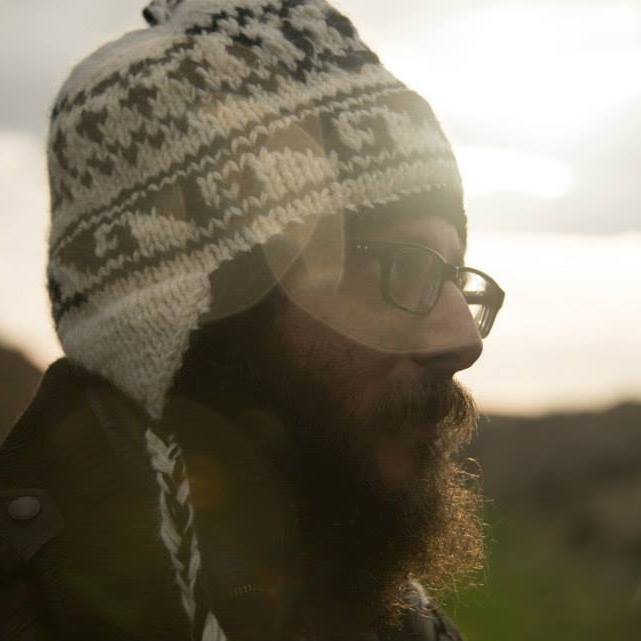
Andreas Kyriacou
Cinema as a Space of Empathy and Freedom
Andreas Kyriacou studied film at the Raindance Institute in London and has worked in production companies in Cyprus since 2006. He curates festivals, including the Cyprus Film Days for Children & Youth, and in 2016 he founded the creative collective GeekOtopos with the aim of shaping contemporary Cypriot narratives. A political film "Au revoir, Slumdogz!", his first feature film, received the Audience Award at the Cyprus Film Days International Festival (2023). His upcoming projects include the European miniseries The Midnight Shift, which received the HBO-Europe Award at the Sarajevo Film Festival in 2017.
In our discussion he reflects on the debate sparked by Wim Wenders’ statements, seeking to look beyond the superficial confrontation.
“I think Wim Wenders expressed a personal opinion,” he says. “I believe that the power of cinema lies in empathy and not in political statements. And it is precisely empathy that was at the centre of Wenders’ work.”
For Kyriacou, the German director’s work speaks for itself. He cites Wings of Desire and Buena Vista Social Club as examples. “Wings of Desire is a deeply political film. Buena Vista Social Club makes a statement on its own. Some creators express themselves through their films. Cinema should not be mobilised by any side.”
He insists that cinema does not exist in a vacuum. “It is dialogue. But it is also a space of freedom. It should not be forced to be political.”
Where, then, do you see the misunderstanding?
According to him, context matters. “Wenders was representing the festival, and this is where the misunderstanding lies. Perhaps some things were lost in translation. The journalists cornered him into taking a position. It caused such a reaction because it was said by Wenders.”
He emphasises, however, that the director’s work is deeply political, even if it does not operate through slogans. “In his films there are no ‘villains’. There is humanity. And that alone is a political act.”
Kyriacou acknowledges that we live in a time when pressure to take a public stance is strong. “It is a period when many consider it important to take a position. Perhaps he could have done so in a way. But we cannot ignore that art, through the human stories it tells, is already a deeply political act.”
In a time of war, what is the role of cinema?
“For peoples in conflict or under occupation, art is one of the most powerful means to send their messages. Human stories are a dangerous tool in the best sense. They create empathy. And empathy is perhaps the most essential political act.”
For Andreas Kyriakou, cinema must remain free. It should not be instrumentalised, nor should it fear its own power. “Its power is not in statements. It is in its ability to make us see the other.”
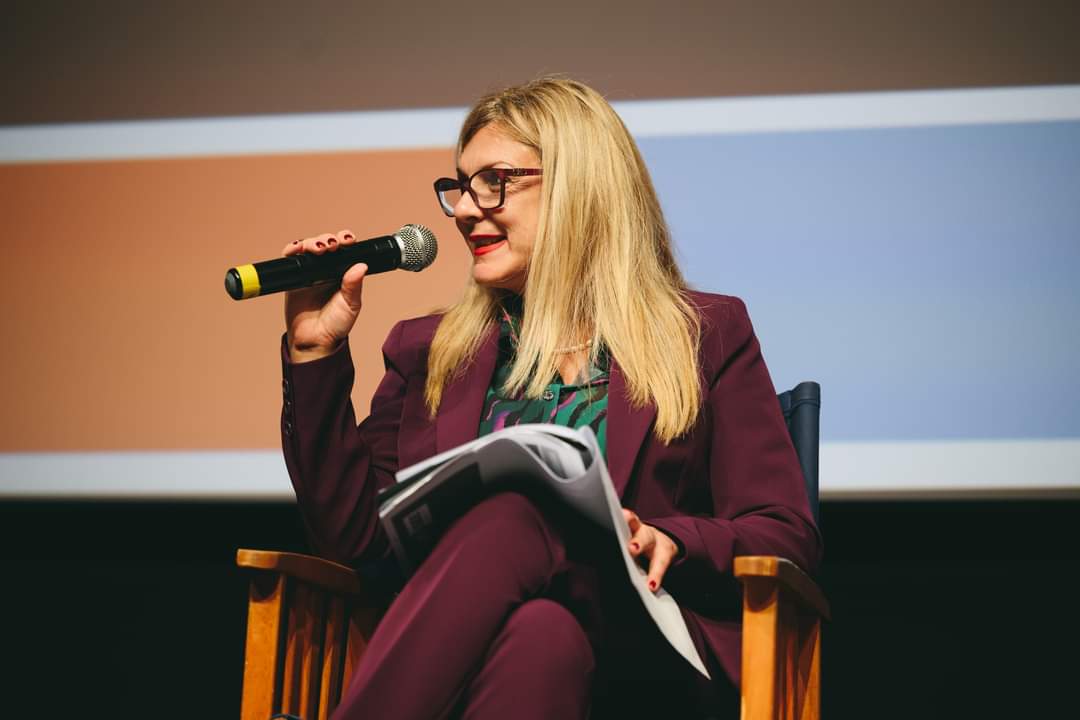
Elena Christodoulidou
“A Work is Political When It Disturbs the ‘Natural’ and the ‘Taken-for-Granted’”
Dr Elena Christodoulidou, as Senior Cultural Officer at the Deputy Ministry of Culture, represents Cyprus at international events and cinema networks, has participated in juries, and contributes substantially to enhancing the country’s presence on the international cultural map.
Consistently present in all critical initiatives of Cypriot cinema, she has institutionally and practically supported the efforts of Cypriot creators to secure a place in the international film community. With profound theoretical training and active participation in public dialogue, she is a voice of authority regarding the relationship between art and politics.
Regarding the debate sparked in Berlin, she told Politis that the issue surrounding Wim Wenders’ highly publicised remarks has been fully explored through a significant number of posts and analyses.
“I do not know why he self-censored. I want to believe it was a bad moment for one of the world’s most important directors or simply an unfortunate slip of the tongue. This, however, does not diminish his work. After all, it is his work that matters and not the man himself. And his work is exceedingly and multilayeredly political.” At the same time, regarding the most recent development, I consider it unacceptable and dangerous to discuss the resignation of Tricia Tuttle.
What, in your view, is the relationship between politics and art?
Political art is intertwined with the most dynamic, beneficial, and complex expressions of artistic creation. It is not limited to works that depict political events, nor should we confuse political cinema with committed cinema or with works that serve the propaganda mechanisms of regimes.
Political cinema concerns any form of aesthetic practice that intervenes in the public sphere, shapes consciousness, and redefines power relations. It is not merely a thematic category; it is a field of ongoing theoretical and practical negotiation.
Political art is not only art “about” politics. It is art that functions politically. An everyday event can acquire the same significance as a heroic epic. This dimension derives not only from content but also from form: from narrative, editing, music, and even from silence. A work can be political because it challenges dominant representations of gender, class, or race, or because it reveals mechanisms of ideological manipulation.
Historically, when did cinema acquire a political dimension?
Due to its mass appeal and technological nature, cinema emerged as a primarily political medium from the early twentieth century, with the Russian avant-garde as a pioneer. Very briefly, in post-war Europe, creators such as Jean-Luc Godard redefined the relationship between form and politics through the Nouvelle Vague movement. Godard argued that it is not enough to make “political films”; one must make films “politically,” that is, to deconstruct the very mechanisms of representation.
In Latin America, the Third Cinema movement, with theorists such as Fernando Solanas, opposed both commercial Hollywood cinema and European auteur cinema, proposing a collective, revolutionary, and radical form of cinema.
How is this discussion translated to the present day?
In today’s world of digital imagery, political cinema acquires new dimensions. Documentaries, independent cinema, and online platforms allow for the production and dissemination of alternative narratives. At the same time, the commodification of imagery raises the question of how political art can maintain its critical power within a capitalist system of mass consumption.
At a theoretical level, which approach do you consider decisive?
The contribution of Jacques Rancière has been decisive. In his work The Politics of Aesthetics, he shifts the question from “what a work says” to “how it organises experience.” According to Rancière, politics is not identical with state power; it is the contestation over what can become visible, audible, and intelligible within a society. He calls this structure the “distribution of the sensible.”
The political act is the moment when those who previously had no “share” in discourse claim visibility and audibility. It is not management but disagreement, dissensus.
Thus, a film can be political even if it does not explicitly refer to social struggles. Its political dimension lies in rhythm, silence, narrative disruption, and shifts in perspective. Cinema becomes the production of dissensus, a confrontation with the dominant narrative.
Political cinema does not have to offer solutions or resort to didacticism. It must create “gaps,” suspend certainty, and allow the renegotiation of what is visible. A work is political when it disturbs the “natural” and the “taken-for-granted.”
Art is not a tool for transmitting messages. It is a field for the redistribution of the sensible. It is not about representing the “other,” but about transforming the very conditions in which something can become visible as “other.”
And in Cyprus?
In Cyprus, reality is, unfortunately, an inexhaustible source of inspiration, but above all, an existential necessity for the creation of political art. Despite the “youth” of Cypriot cinema, we have significant examples to present. Historical experience, division, memory, the sometimes dystopian social reality, inequalities, opacity, loss, and other factors make cinema not merely a medium of expression but a space for meaningful reflection and critical dissent.