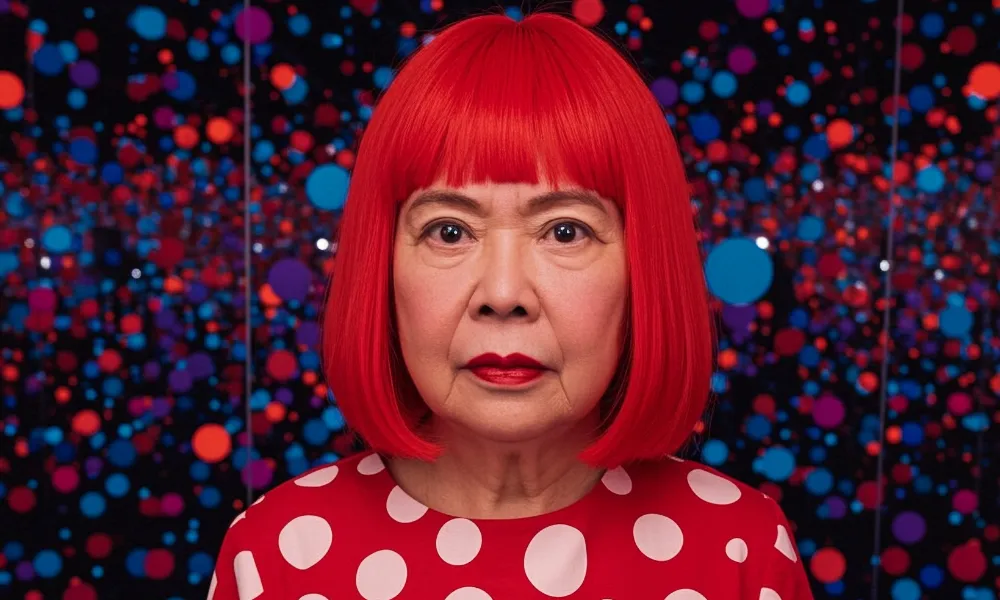

The creator of some of contemporary art’s most recognisable motifs died at a Tokyo hospital on 14 August, according to her company. She was 97 and continued painting until her final days.
Kusama became internationally renowned for her colourful polka dots, pumpkin sculptures and Infinity Mirror Rooms, while her bright red wig became part of her distinctive public image.
Her company described her as a pioneering avant-garde artist whose work encompassed visual art, performance, fiction and poetry. It said her artistic legacy would continue to bring hope and strength to people around the world.
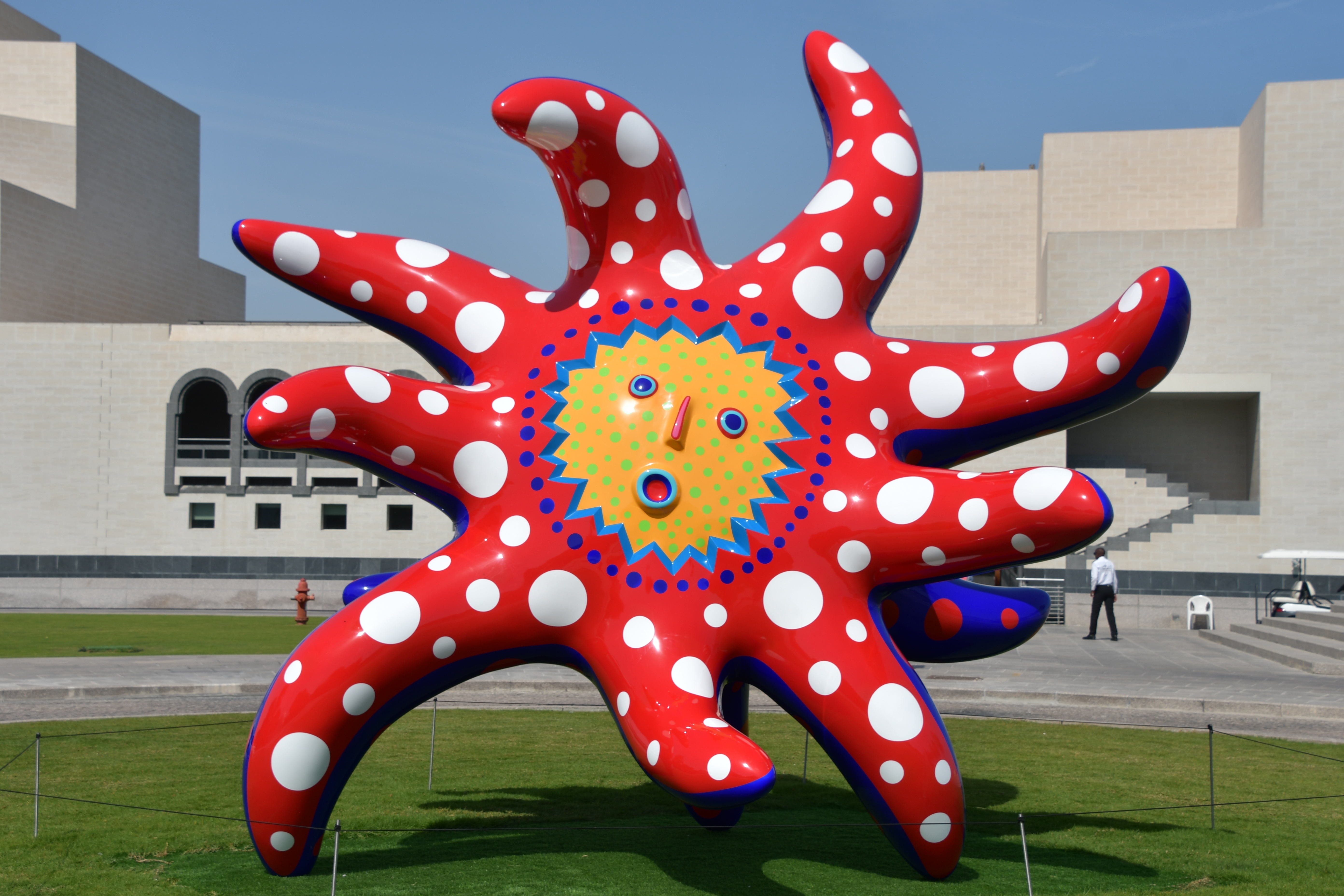
A global cultural icon
Although Kusama struggled for recognition during the early stages of her career, she emerged as one of the world’s most recognisable artists in her 80s and 90s.
Her exhibitions attracted large audiences internationally, while her vibrant paintings and sculptures achieved some of the highest auction prices recorded for a female artist.
One of her paintings sold for approximately $10.5 million (£7.7 million) in 2022, placing her among the world’s highest-earning female artists.
Breaking into the New York art scene
Kusama moved to New York and became part of its avant-garde scene during the 1960s. Her work included soft phallic sculptures, performance art and events involving nudity, which challenged the conventions of the male-dominated art establishment.
In 1965, she introduced her Infinity Mirror Rooms, using mirrors and lights to create the illusion of endless space. The installations would later attract millions of visitors around the world.
Kusama became distressed after seeing ideas similar to her own appear in works by more prominent male contemporaries, including Andy Warhol, Claes Oldenburg and Lucas Samaras.
Feeling overlooked and disillusioned, she eventually returned to Japan.
Life and work in psychiatric care
Kusama voluntarily entered a psychiatric hospital for mental health treatment and remained there for decades. The secure environment allowed her to continue producing art throughout the remainder of her life.
During the 1970s and early 1980s, her work took on a darker tone, with collages exploring natural cycles of life and death.
Her international standing changed significantly in 1993, when she became Japan’s first solo artist to represent the country at the Venice Biennale.
Twenty-seven years earlier, Kusama had appeared at the event without an invitation and placed 1,500 mirrored balls on the ground. The success of her official 1993 exhibition transformed how her work was received in Japan and abroad.
She received the Asahi Prize in 2001 for her cultural and artistic contributions.
Infinity Rooms draw millions
Kusama staged major exhibitions at leading galleries around the world, including Tate Modern in London. Its exhibition of her Infinity Mirror Rooms ran for three years after being extended several times due to high demand.
Catherine Wood, interim director of Tate Modern, described it as the gallery’s most visited exhibition, saying Kusama’s installations created a powerful sense of wonder and infinity.
Her growing popularity was also fuelled by social media, as visitors shared photographs from her mirrored rooms and installations featuring bold flowers, pumpkins and reflective steel spheres.
In 2023, a giant sculpture of Kusama appeared outside Maison Louis Vuitton in Paris, while the building was covered in her trademark colourful dots.
Hallucinations shaped her art
Born in 1929 in Matsumoto, in Japan’s central Nagano region, Kusama experienced hallucinations from childhood. She later used her art to help others understand how she perceived the world.
She recalled seeing floral patterns spread from a tablecloth across an entire room and onto her body. Repeated forms, dots and apparently infinite spaces subsequently became defining features of her work.
Her parents opposed her decision to study painting in Kyoto, while her conservative family regarded her artistic career as a source of shame.
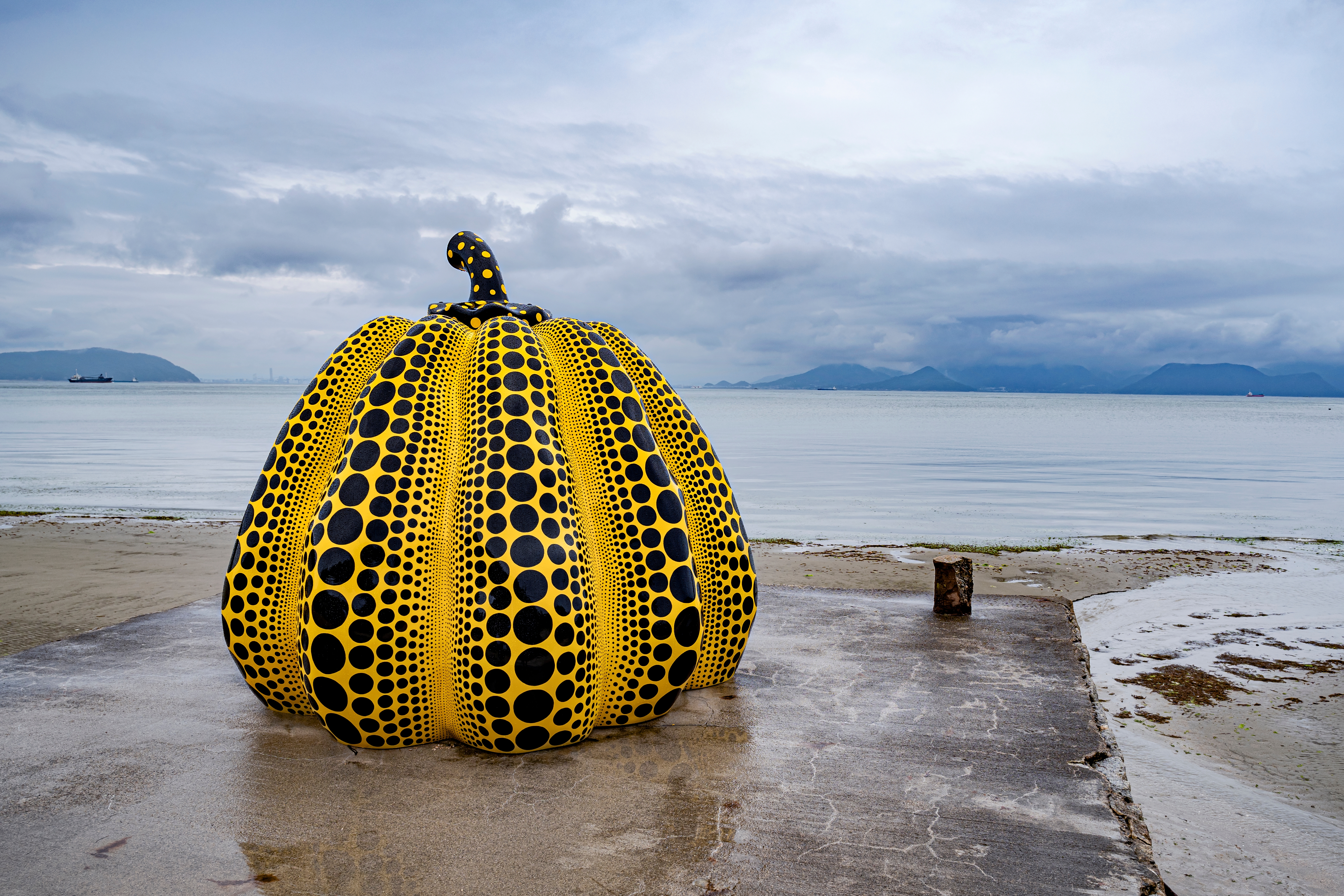
Among her most enduring motifs was the pumpkin, which she associated with childhood, comfort and stability.
Source: BBC