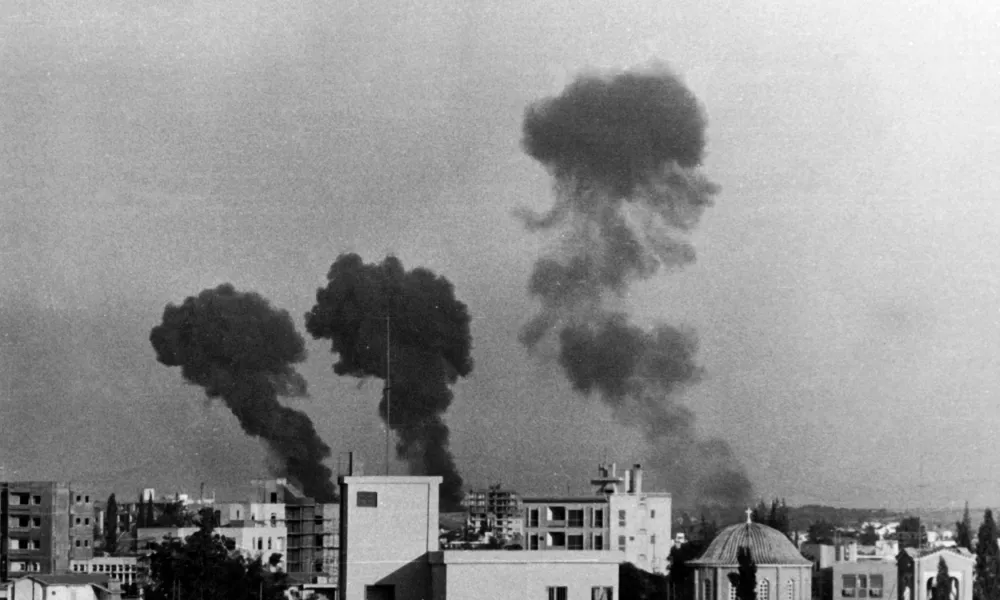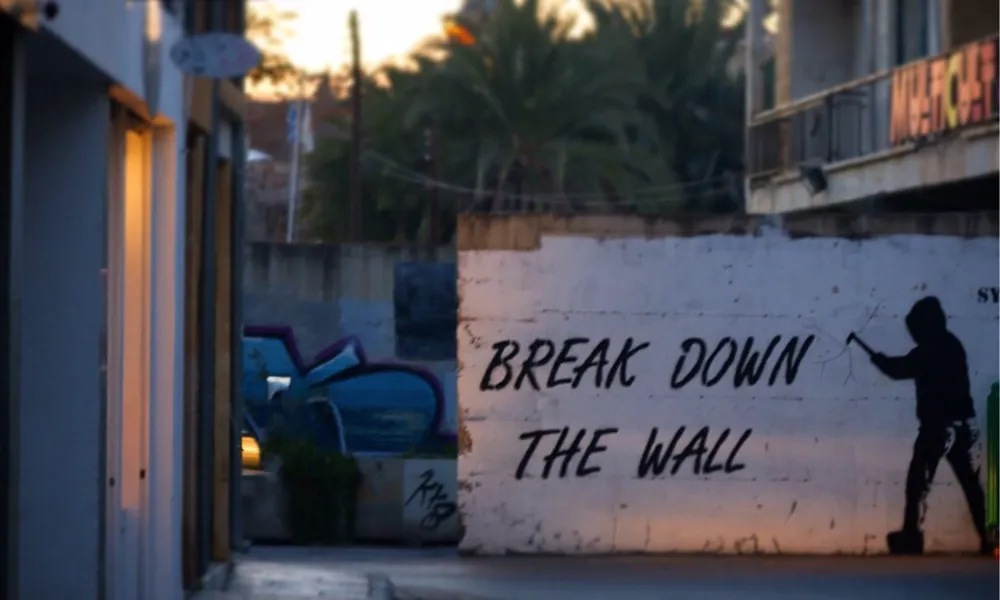
Cities divided by walls, checkpoints or invisible lines are never only places on a map. They are also archives of fear, compromise, survival and memory. For readers in Cyprus, the subject has immediate resonance. Nicosia remains one of the clearest examples of a divided capital, with its urban life shaped by the Green Line and the unresolved political history of the island. But the experience of division is not unique to Cyprus. Berlin, Belfast, Beirut, Jerusalem, Mostar and other cities have also produced powerful books about separation, coexistence and the fragile work of imagining a shared future. These books approach divided cities from different angles: fiction, history, urban studies, memoir and reportage. Together, they show how borders enter homes, streets, language and memory.
Nicosia Beyond Barriers: Voices From A Divided City
Few books speak as directly to the subject as Nicosia Beyond Barriers: Voices From A Divided City, an anthology that brings together writers from across the divide in Cyprus. The collection reimagines the city’s past, present and future, placing personal memory beside political history. Its value lies in its multiplicity: Nicosia is not presented as a symbol alone, but as a lived city of neighbourhoods, absences, crossings and unfinished conversations.
For readers who want to understand Nicosia beyond headlines and diplomatic language, this is one of the most accessible starting points. It gives the city back to those who live with its division every day.
Divided Cities: Belfast, Beirut, Jerusalem, Mostar And Nicosia
Jon Calame and Esther Charlesworth’s Divided Cities is a key non-fiction work for anyone interested in how urban partition happens and why it lasts. The book examines Belfast, Beirut, Jerusalem, Mostar and Nicosia, looking at how ethnic, religious and political conflict can become embedded in the built environment.
It is more academic than literary, but it is essential reading for understanding the physical logic of division: buffer zones, contested neighbourhoods, security barriers, abandoned spaces and the uneasy routines that develop around them. The book’s central strength is that it treats divided cities not as exceptions, but as places with patterns that can be studied and compared.
The Wall Jumper By Peter Schneider
Peter Schneider’s The Wall Jumper is one of the defining literary works about Berlin before the fall of the Wall. First published in German in 1982, the short novel captures the absurdity, danger and psychological pressure of a city split between East and West.
Rather than focusing only on politics, Schneider writes about the habits, jokes, loyalties and contradictions created by the Wall. The result is a book about borders as mental structures as much as physical ones. It remains valuable because it shows how a divided city changes not only movement, but imagination.
City Of Stone: The Hidden History Of Jerusalem By Meron Benvenisti
Meron Benvenisti’s City Of Stone is a deeply layered history of Jerusalem, a city where competing claims to land, memory, religion and sovereignty are inseparable. Published by the University of California Press, the book focuses strongly on the 20th century while tracing how older histories remain present in the city’s streets and institutions.
Jerusalem is not divided in the same way as Berlin once was or Nicosia remains, but Benvenisti shows how boundaries can be legal, symbolic, municipal and emotional. The book is especially useful for readers interested in how a city can be formally unified while remaining profoundly contested.
Survival In Beirut By Lina Mikdadi Tabbara
Lina Mikdadi Tabbara’s Survival In Beirut offers a personal account of life during Lebanon’s civil war, when the city became synonymous with fragmentation, checkpoints and sectarian geography. It is often recommended in reading lists about divided cities because it captures the human experience behind maps of conflict.
Beirut’s division was not only about lines drawn through streets. It was also about fear, rumour, family separation and the daily improvisation required to survive. Tabbara’s book is valuable because it keeps the focus on civilians living inside a city being remade by violence.
Northern Ireland’s Troubles By Marie-Therese Fay, Mike Morrissey And Marie Smyth
For Belfast, any reading list on division must engage with the Troubles. Northern Ireland’s Troubles by Marie-Therese Fay, Mike Morrissey and Marie Smyth provides a clear account of the conflict’s human and social cost, making it a useful companion to more place-specific writing about Belfast’s peace walls and segregated neighbourhoods.
The book helps readers understand how division can continue even after formal peace agreements. Belfast’s experience shows that the end of widespread violence does not automatically dissolve mistrust, separate schooling, territorial identity or the physical markers of conflict.
Cyprus 1957-1963: From Colonial Conflict To Constitutional Crisis By Diana Weston Markides
Diana Weston Markides’ Cyprus 1957-1963 is not only about Nicosia, but it is important for understanding the years before the island’s later division. The book examines the transition from late colonial conflict to the constitutional crisis that followed independence, offering context for readers who want to understand how political tensions hardened over time.
Why These Books Still Matter
Books about divided cities are not only about conflict. They are about how people live beside absence, how ordinary routines continue under extraordinary conditions, and how memory survives in streets, buildings and borders. They also challenge the idea that division is ever purely physical. A wall can be demolished, a checkpoint can open, a peace agreement can be signed. But cities often carry division long after the visible barriers change. Together, these books show that divided cities are never only defined by walls, borders or checkpoints. They are also shaped by the people who continue to live, remember, work, grieve and imagine futures within them.