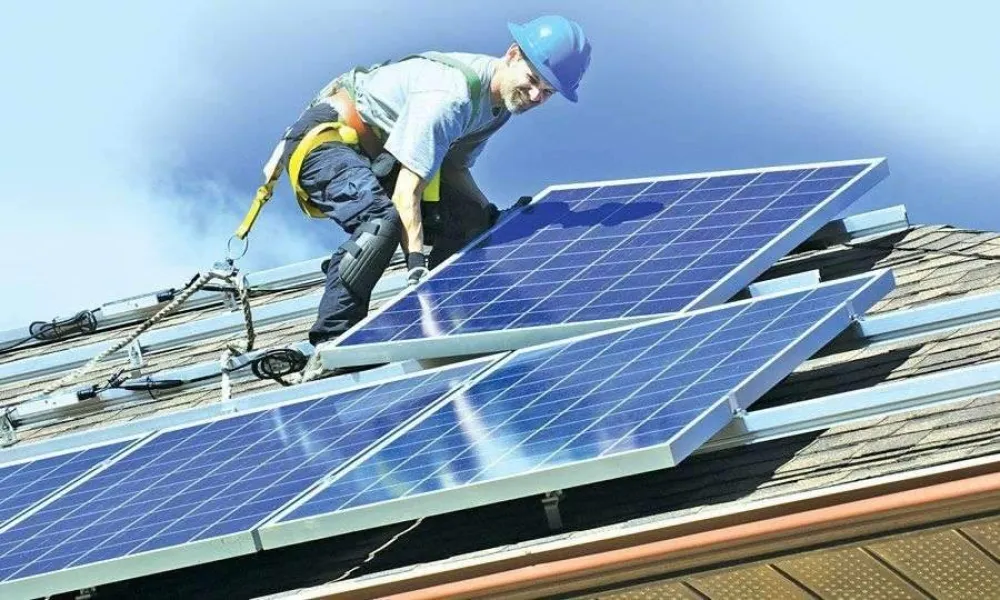

The existence or absence of a Grant Scheme does not affect households’ ability to install a photovoltaic system for self-consumption, and consumers can proceed with installing solar panels and reduce their energy costs without losing any potential future right to participate in a Grant Scheme, said the Cyprus Association of Renewable Energy Companies (SEAPEK) on Tuesday.
The Association held a press conference aimed at clarifying the situation surrounding electricity self-consumption from photovoltaic systems. It stressed, “self-consumption of electricity is neither abolished nor suspended.”
In a press release issued following the briefing, SEAPEK said confusion had arisen due to the incorrect conflation of two different concepts: Grant Schemes and the Self-Consumption (net-metering) Framework. As clarified, Grant Schemes are public policy tools, financed by the Renewable Energy and Energy Conservation Fund, and are designed annually with objectives that include promoting renewable energy, saving energy, reducing emissions, and tackling energy poverty.
Regarding the Self-Consumption Framework, SEAPEK explained that it concerns exclusively the terms of the commercial net-metering agreement between the consumer and the electricity supplier. As for the changes implemented from 1 January 2026, it was noted that the offsetting of production and consumption is not abolished, nor is self-consumption prohibited, but the method of compensating surplus energy fed into the grid has changed.
Reference was also made to the tax reform that came into force on 1 January 2026, which, according to SEAPEK, effectively introduces tax incentives for capital expenditures related to energy upgrades of a primary residence, including the installation of photovoltaic systems. Under the current provisions, a couple of taxpayers may, under certain conditions, benefit from tax deductions that can total up to €10,000. SEAPEK clarified that this benefit does not constitute a grant, is not linked to Grant Schemes, and represents a tax entitlement for citizens.
In conclusion, the association reiterated that electricity self-consumption is neither abolished nor suspended, remaining one of the most important tools for reducing energy costs and strengthening household energy autonomy. SEAPEK further called for an informed and transparent public dialogue on energy issues.
Source: CNA