



“Our goal is to counter Trump’s assault on American values by zeroing in on what he really cares about: the markets,” says Scott Galloway, the US academic and entrepreneur behind the Resist and Unsubscribe campaign.
Launched earlier this month, the initiative urges Americans to cancel subscriptions to major technology and consumer platforms in an attempt to inflict economic pressure on corporate leaders seen as accommodating or enabling Donald Trump’s administration. Galloway argues that while protests and elections matter, the fastest lever of influence lies in markets and quarterly earnings.
A boycott aimed at balance sheets
On ResistandUnsubscribe.com, Galloway frames subscriptions as “mother’s milk to the tech companies,” arguing that recurring revenue and subscriber growth underpin the valuations of firms such as Apple, Amazon, Google, Meta, Microsoft, Netflix, OpenAI and Uber. The site also names AT&T, Comcast, Dell, FedEx, Marriott, Lowe’s and UPS among companies he describes as “active enablers of ICE.”
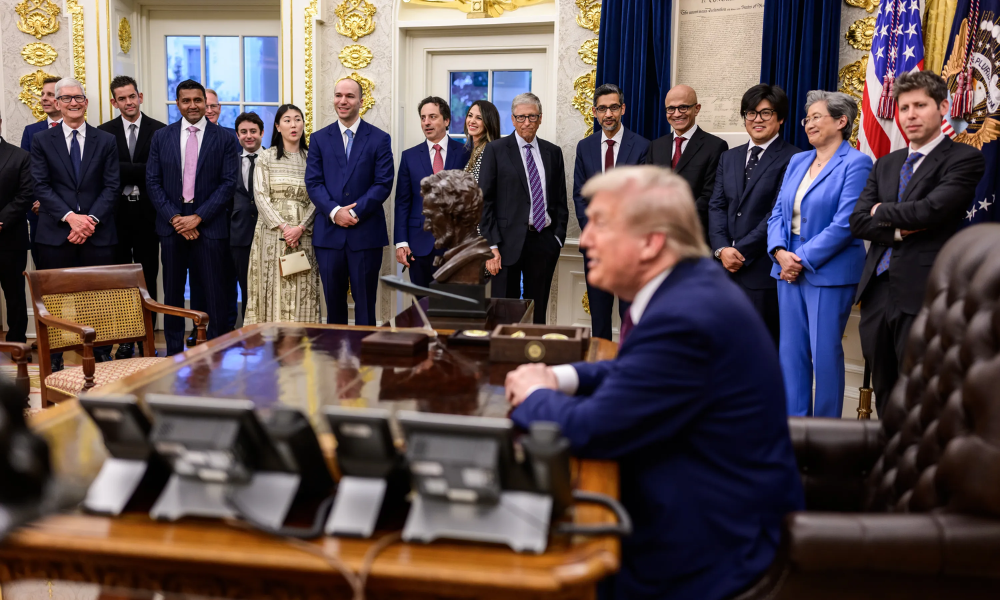
Each listing includes instructions for cancelling subscriptions and, in some cases, descriptions of how the companies allegedly facilitate US Immigration and Customs Enforcement operations, whether through cloud contracts, telecom infrastructure or logistics services.
Galloway claims that in the first weeks of the campaign, the website attracted more than 1.5 million visits without paid advertising, after platforms including Meta and Google reportedly rejected political ads. He estimates that unsubscribes triggered through the site have reduced market capitalisation across targeted firms by roughly $242 million.
The figure is derived from a formula Galloway frequently outlines: lost subscription revenue multiplied by prevailing revenue multiples in public markets.
The algebra behind the argument
If a user cancels a $20 per month subscription, that equals $240 per year in lost revenue. If a company trades at a valuation multiple of 40 times revenue, that $240 reduction theoretically translates into nearly $10,000 in lost market capitalisation.
MarketCapImpact=LostRevenue×RevenueMultipleMarket Cap Impact = Lost Revenue × Revenue MultipleMarketCapImpact=LostRevenue×RevenueMultiple
Using this model, Galloway argues that small consumer decisions can cascade into disproportionate valuation effects. He cites recent market reactions as evidence of sensitivity: T-Mobile shed approximately $12 billion in market value after reporting subscriber additions below analyst expectations, while Microsoft lost more than $350 billion in market value in January following a slight deceleration in Azure revenue growth.
Public equities, particularly in technology, are highly sensitive to marginal changes in subscriber growth and forward guidance. Revenue multiples amplify incremental shifts in expectations.
However, the translation from individual cancellations to measurable share price decline is more complex than the model suggests. Market capitalisation fluctuates continuously based on macroeconomic conditions, earnings outlooks, liquidity, and investor sentiment. Isolating the impact of a discrete boycott requires far more granular evidence than headline valuation swings.
Media, amplification and celebrity
Galloway has treated the campaign as a media experiment as much as a political action. He reports appeearing on more than 30 outlets in three weeks, from CNN and PBS to Substack and podcast platforms. According to his internal analytics, a single NPR article drove more than 28,000 unique visitors to the site. A social media post by comedian Chelsea Handler reportedly generated 6,000 visits in one instance.
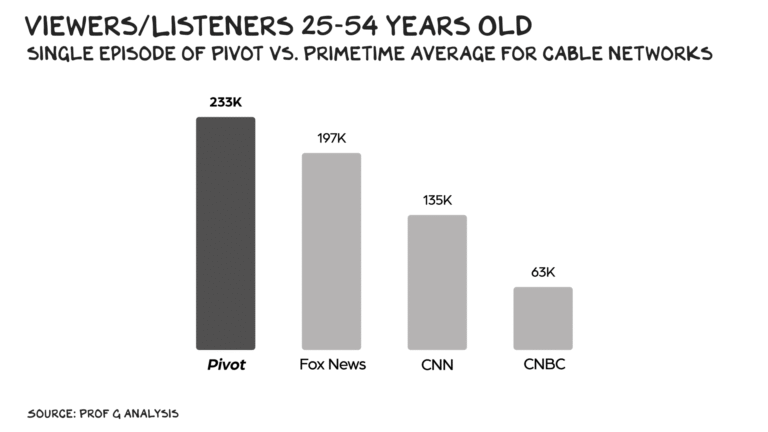
His conclusion is that influence still resides in traditional broadcast platforms, but action is increasingly driven by personality-led digital ecosystems. Substack, podcasts and social media appear to generate more engaged traffic than legacy television segments alone.
This observation aligns with broader media research: audience fragmentation has reduced the agenda-setting monopoly of network television, while creator-driven platforms cultivate high-intent communities more likely to convert into economic action.
Do boycotts work?
Economic boycotts have a mixed historical record. Academic literature shows they succeed primarily when three conditions align: sustained participation, reputational risk to firms, and clear, measurable demands. Short-term social media campaigns often fade without material impact.
Galloway acknowledges this risk. He references the Montgomery bus boycott of 1955-56 as an example of sustained economic pressure, lasting 381 days before a Supreme Court ruling ended segregation on public buses. His argument is that modern activism must similarly be durable.
The comparison, however, highlights a structural difference. The Montgomery boycott targeted a local monopoly service with clear geographic boundaries and legal objectives. Today’s tech platforms are global, diversified and deeply embedded in daily life. Substituting away from Amazon, Apple or Google involves significant behavioural friction for consumers.
Moreover, the companies targeted in Resist and Unsubscribe span sectors from streaming and smartphones to logistics and cloud computing. Their exposure to subscription revenue varies widely, as does their reliance on US consumer sentiment relative to enterprise contracts or international markets.
The political thesis
At its core, the campaign rests on a political assumption: that corporate leaders are uniquely positioned to influence or constrain presidential power, and that market pressure will force them to do so.
“Only then will CEOs who’ve enabled the president push back … or at least get off their knees,” Galloway writes.
Historically, corporate America has influenced policy through lobbying, campaign financing and regulatory engagement. Yet public clashes between major CEOs and sitting presidents are rare and typically confined to issues directly affecting corporate profitability.
Symbolism versus scale
Resist and Unsubscribe has already succeeded in one respect: it has reframed the debate about political resistance in financial terms. Publicly traded technology companies command trillions of dollars in combined market capitalisation. For sustained share price impact, subscriber losses would need to materially alter revenue trajectories.
Yet even if the direct financial impact proves modest, the campaign underscores a broader shift in civic strategy. In a platform-dominated economy, consumer behaviour and political behaviour increasingly overlap. Whether that choice can move markets, or merely start conversations, will determine whether Resist and Unsubscribe joins the long list of short-lived digital boycotts or evolves into something more durable.