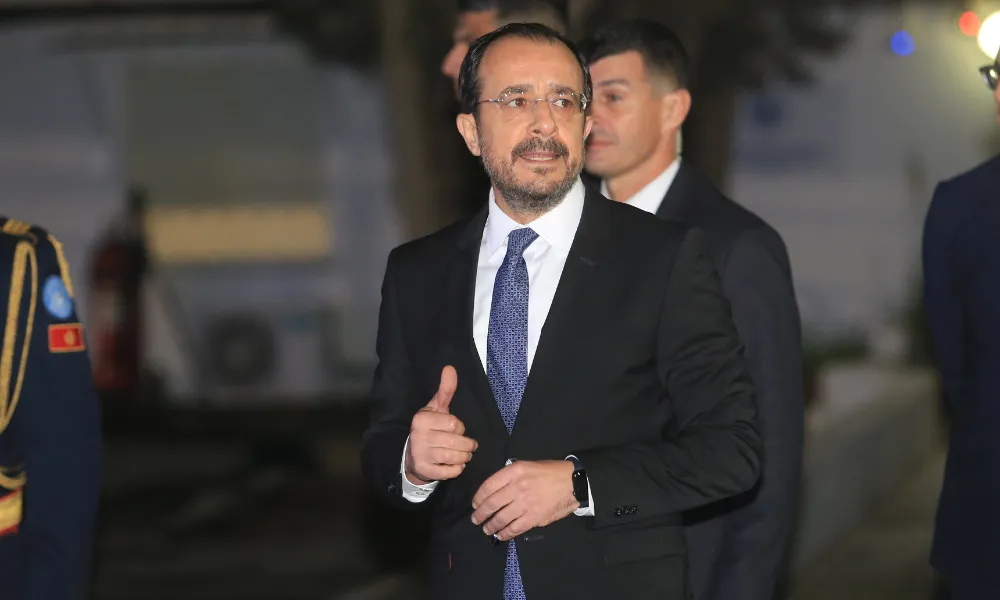
In the face of the new crisis the country is being called upon to face, it is particularly important that Cyprus’ economy remains strong and resilient, allowing the government to respond effectively to any potential repercussions, President Nikos Christodoulides said to the 30th Congress of the Cyprus Workers’ Confederation (SEK) on Wednesday evening.
“The high growth rates, the significant fiscal surplus, the limited public debt and the low inflation – all results of our responsible economic policy – give us grounds for optimism that we can manage, in the best possible way, the consequences of regional developments, particularly regarding the cost of energy, goods and services,” he said.
President Christodoulides added that the country’s strong economic fundamentals, solid fiscal base and resilient banking sector, supported by strong liquidity and adequate capital, enhance the Cypriot economy’s ability to withstand external shocks.
Collective agreements for most workers
He also stressed that the European directive on adequate minimum wages, which aims to ensure that 80% of workers are covered by collective agreements, “remains a core priority for us, both at national and European level”.
Reflecting on the past three years in office, the President noted that the government was required to manage multiple crises, including the impact of the war in Ukraine and other challenging developments in the region. When Cyprus’ economic performance is compared with that of major European economies such as Germany and France, it demonstrates both the effectiveness of the government’s policies and the resilience of the Cypriot economy, he argued.
Full employment
He also highlighted that unemployment has fallen to historically low levels, while full employment has effectively become a reality for the first time since 2008.
Responding to critics who argue that strong economic indicators are meaningless if they do not translate into prosperity for citizens, the President said that the country’s economic performance means cheaper borrowing costs for the state, businesses and households, while strong economic indicators attract high-quality investments that create better-paid jobs.
Economic indicators have knock-on effect
According to President Christodoulides, these economic indicators have also contributed to Cyprus receiving 27 consecutive credit rating upgrades from all major rating agencies since the government took office in March 2023, placing the country back in Category A for the first time since 2010-2011.
These upgrades are not merely numbers, he said, noting that they represent a vote of confidence in the responsible economic policy Cyprus is pursuing and have “a direct positive impact on all of us, improving our daily lives in measurable ways and enabling targeted social interventions.”
He added that they also make it possible to implement a fairer tax reform, reduce the tax burden, increase disposable income and invest more in key areas such as defence, education, healthcare, housing and the welfare state.
Landmark pension reform
Following the tax reform, he also said, the government is now moving forward with “a landmark reform” of the pension system, the first substantial overhaul since 1980, he noted. He described the reform as a major step towards greater social justice, aimed at ensuring fairness for those who helped build the country’s prosperity.
“One of our key objectives is to substantially increase pensions, particularly for low-income pensioners,” he said.
Additional measures being promoted, he said, include ensuring the adequacy of pensions, revising the investment policy of the Social Insurance Fund and introducing a new governance framework for its investments.
Source: CNA