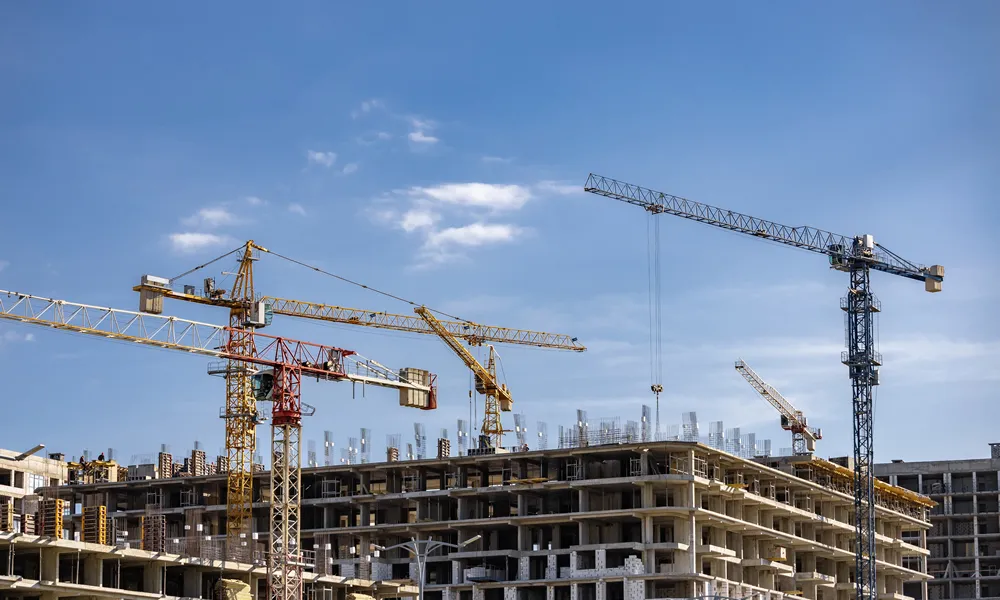
Cyprus is facing mounting pressure on property purchase and rental costs, with prices already on an upward trajectory and the war in the Middle East expected to add further strain. Industry figures told Politis they are monitoring the situation carefully, noting that while the geopolitical crisis has not yet affected the market to a degree that warrants serious alarm, its potential impact on supply chains, construction costs and external demand is a growing concern.
The numbers
Recent data published by the Statistical Service of Cyprus and Eurostat show an acceleration in property price growth. In the fourth quarter of 2025, prices rose by 6% year-on-year, up from an annual increase of 4.2% in the third quarter. Property sales recorded by the Land Registry in March reached 1,761 transactions, compared with 1,491 in March 2025, an increase of 18%.
Andreas Christoforidis, chief executive of the Landbank Group, said the conflict in Iran could affect prices, particularly for buildings currently under construction. "If we see supply chains affected, and prices of raw materials and construction materials rise, then there will inevitably be increases in construction costs. This will concern us if the Iran crisis is prolonged and prices remain high for an extended period," he told Politis.
He drew a parallel with the impact of Russia's invasion of Ukraine, adding that the Cypriot property market had demonstrated resilience across successive and varied crises over the past six years. On the Eurostat figures, Christoforidis pointed to a detail he considered significant: that in the fourth quarter of 2025, Cyprus was the only EU country where house prices remained stable quarter-on-quarter, while 22 other member states recorded increases and only three saw prices fall. "This shows that the Cypriot market is in a phase of maturity as an investment destination," he said, while cautioning that 2026 looks set to be a very different year from 2025, particularly if the conflict in the Middle East continues.
Mersina Isidorou, director general of the Land Development Association, told Politis that the Eurostat data confirm Cyprus is facing rising pressure on both purchase and rental costs, as part of a broader European phenomenon that is now making itself felt on the island. She identified the core of the problem as a structural imbalance between housing supply and demand. Insufficient production of new homes, particularly during the period from 2013 to 2018, she explained, created a cumulative deficit that has not yet been closed, while demand continues to grow driven by population growth, urbanisation and changing household needs. "The delays in licensing new developments, combined with an insufficient construction workforce, are two of the main factors intensifying the problem and creating serious obstacles to the orderly development of the market," she said.
The Land Development Association is calling for continued and strengthened efforts by the Ministry of Interior and the Cyprus Land Development Corporation to increase the supply of affordable housing, warning that the problem requires coordinated and sustained intervention to ensure market stability and citizen access to decent and affordable homes.
The impact of the war
Polys Kourousidis, president of the Cyprus Association of Property Valuers, told Politis that current price increases remain within normal levels, attributing them primarily to rising supply. He said the trajectory of property prices through 2026 will depend largely on how long the war lasts, given its effect on external demand.
Christoforidis said his reading of the situation remains calm. "Despite the difficult geopolitical environment, and the conflict in Iran, the property market in Cyprus has not been affected to a degree that inspires concern, let alone panic. There is a degree of slowdown in transactions, but that is to be expected when a conflict as serious as the one in Iran, which is affecting the Strait of Hormuz, is underway," he said.
Isidorou noted that the geopolitical crisis is inevitably affecting the investment climate, creating a period of heightened uncertainty both locally and internationally. "In the short term, it is natural to see a more cautious stance from investors and businesses, with some investment decisions being deferred until the picture becomes clearer," she said. At the same time, she argued, new dynamics are emerging. Cyprus, she said, has historically functioned as a stable and secure European investment destination, offering the political and economic stability, clear institutional framework and EU market access that investors look for in periods of turbulence. "We have seen in the past that after an initial period of caution, interest grows from individuals and businesses seeking security and predictability. The challenge for Cyprus is to capitalise on this moment by reinforcing its credibility and competitiveness through efficient processes, speed and stability in the investment environment," she said.
Kourousidis said he expects the war to drive up construction costs, a trend he said is already beginning to show. "After the war ends, I expect a sharp surge in demand from foreign buyers which, combined with rising construction costs, will lead to further increases in property prices. It is imperative that the state's housing policy is intensified so that Cypriots too can realistically afford to buy a home," he said.