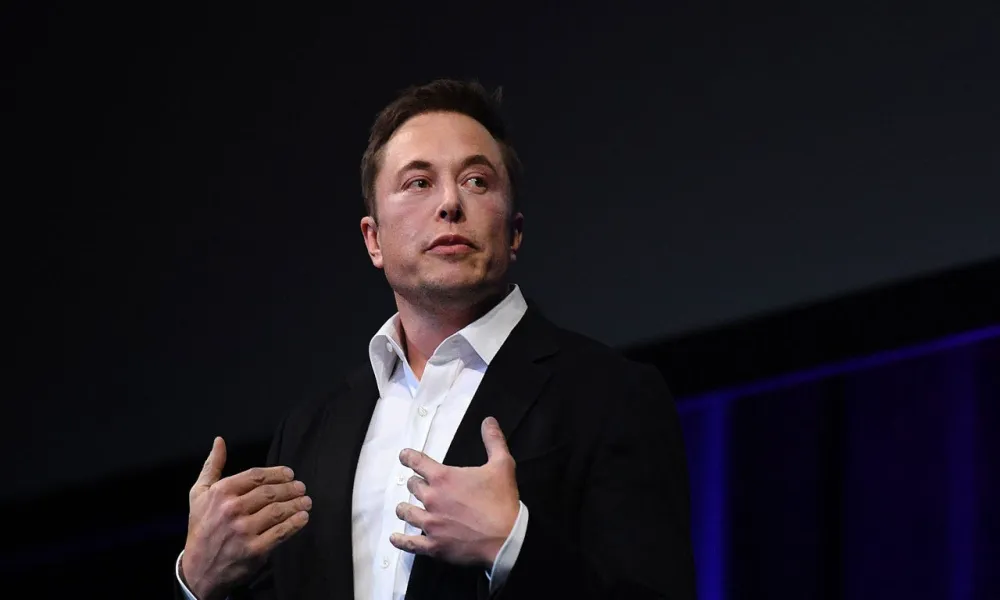

Elon Musk has said that within the next 10 to 20 years, work will become optional and money will largely lose its meaning, as artificial intelligence and robotics transform productivity and daily life.
Speaking recently at the US–Saudi Arabia Investment Forum in Washington, the CEO of Tesla outlined a future in which people will choose to work only if they find it enjoyable, rather than out of economic necessity.
“Work will be like playing video games or exercising,” Musk said, according to Fortune. “And if you want to work, it will be like growing vegetables in your garden. Harder work, but enjoyable for some.”
A productivity revolution powered by robots
Musk’s vision rests on the rapid expansion of advanced robotics and AI systems. He predicts that millions of humanoid robots will dramatically increase global productivity, freeing humans from most traditional jobs.
He has previously said that humanoid robots could eventually account for as much as 80 percent of Tesla’s long-term value, despite ongoing delays in their large-scale deployment. In the medical field, Musk has gone further, suggesting that within a decade autonomous robots could outnumber and outperform human surgeons, delivering care of a higher standard than that available today even to world leaders.
In a recent podcast appearance, Musk framed this development in almost biological terms. “You are programmed to die,” he said. “If you change the program, you can live longer.” The remark reflects his broader belief that technology will allow people to live longer, healthier lives without the pressure of compulsory employment.
A future without money
Musk also touched on the future of money itself. Drawing inspiration from Culture by Iain M. Banks, he described a post-scarcity society in which advanced AI systems eliminate the need for traditional labour and currency.
“In those books, money doesn’t exist,” Musk said. “And my estimate is that if enough time passes, assuming AI and robotics continue to improve, which seems likely, money will stop having meaning.”
While critics question how such a transition could unfold in practice, Musk’s comments add to a growing debate about how artificial intelligence, automation and robotics may fundamentally reshape work, wealth and social organisation in the decades ahead.