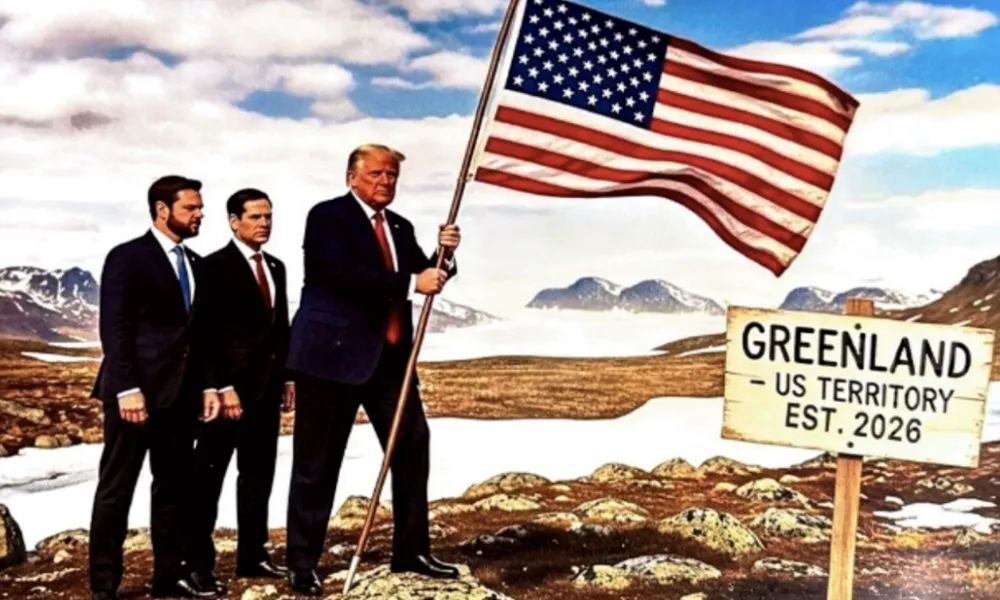
The stance of Donald Trump on Greenland, framed by a logic of “buying or taking whatever serves my interests” and marked by open disregard for Europe, acts as yet another loud wake-up call for the continent. Not only in terms of how a Trump administration perceives geopolitical balance, but more importantly in exposing how vulnerable the European Union remains when it outsources its defence and security to third parties.
That third party, unfortunately, is the United States, a power that increasingly prioritises military leverage over an alliance framework grounded in shared values. Europe can no longer treat the American security umbrella as a given.
In this environment, the need for the European Union to rely on its own capabilities becomes urgent. Just as member states once accepted that the Common Agricultural Policy or the Common Trade Policy could not function in fragments, it is now clear that defence and security cannot continue to exist as national islands within an otherwise unified European structure.
A truly common defence and security policy is no simple task. It requires political courage, transfers of sovereignty similar to those made in agriculture and trade, and a shared strategic understanding of threats. Yet reality itself, and developments in the international system, are forcing member states to move further and faster. The gradual retreat of the United States from its role as guarantor of European security, instability in the Middle East, the war in Ukraine, and the escalating geopolitical confrontation with Russia and China leave no room for illusions.
For countries such as Cyprus, such a shift would carry clear benefits. A member state on the frontline of geopolitical tensions, with an unresolved national issue and limited military capacity, has every interest in being part of a European security architecture that rests not merely on declarations of solidarity but on real deterrence and defence capabilities.
The “age of Trump”, whether defined by the man himself or by the mindset he represents, shows that Europe must come of age geopolitically. Not in opposition to the United States, but in response to the challenges of the era itself. That path inevitably runs through a common, strong and credible European defence.