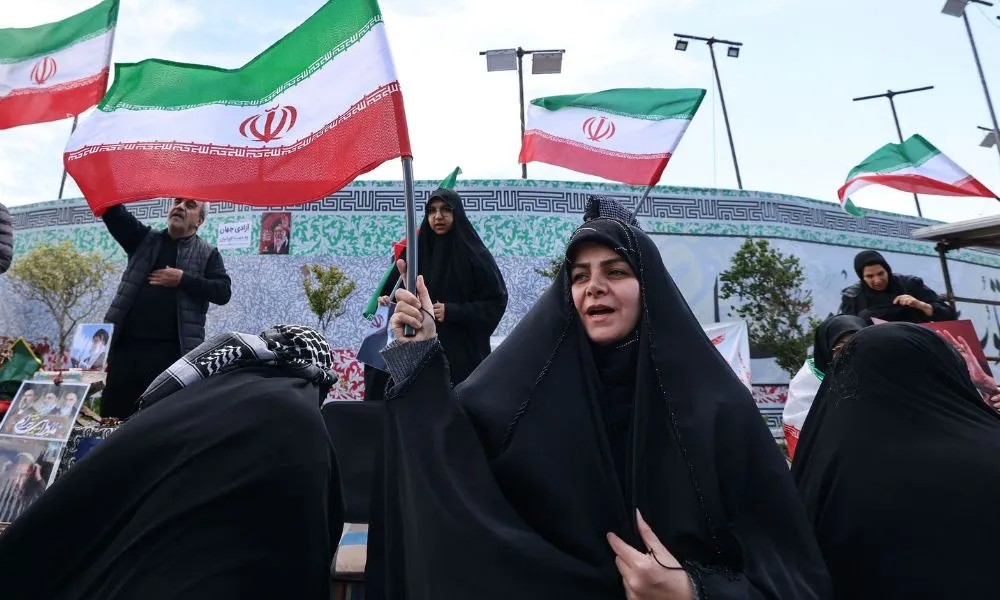



Two months into a war with the United States and Israel, Iran is being governed in a way it never has been before. The killing of Supreme Leader Ayatollah Ali Khamenei on the first day of the conflict, and the elevation of his wounded son Mojtaba to replace him, have ended the Islamic Republic's foundational model of one-man clerical rule and handed effective power to the commanders of the Islamic Revolutionary Guard Corps (IRGC).
Mojtaba Khamenei formally holds the title of Supreme Leader, but three people familiar with internal deliberations told Reuters that his role is largely to legitimise decisions made by his generals rather than direct them. Severely injured in the opening strike that killed his father and left him disfigured with serious leg wounds, Mojtaba has not appeared publicly and communicates through IRGC aides or limited audio links, according to two people close to his inner circle. Real authority, analysts and Iranian officials say, has consolidated around a wartime inner circle centred on the Supreme National Security Council (SNSC) and the IRGC, which now dominates both military strategy and key political decisions.
The shift has had direct consequences for diplomacy. Pakistan, which has been mediating peace talks between Iran and the United States, has found the process frustratingly slow. "There is apparently no one decision-making command structure," a senior Pakistani government official briefed on the negotiations told Reuters. "At times, it takes them two to three days to respond." Iran submitted a new proposal to Washington on Monday envisioning staged talks, with the nuclear issue set aside until the war ends and disputes over Gulf shipping are resolved. Washington has insisted the nuclear issue must be addressed from the outset, leaving the two sides at an impasse.
On the Iranian side, the diplomatic face of the talks has been Foreign Minister Abbas Araqchi, more recently joined by parliament speaker Mohammed Baqer Qalibaf, a former Guards commander who has emerged as a key conduit between Iran's political, security and clerical elites. On the ground, however, the central interlocutor has been IRGC commander Ahmad Vahidi, identified by Pakistani and Iranian sources as Iran's pivotal figure, including on the night a ceasefire was announced.
Analysts say the obstacle to a deal is not internal infighting in Tehran but the fundamental gap between what each side is willing to accept. "Neither side wants to negotiate," said Alan Eyre, an Iran expert and former US diplomat, arguing that both believe time will weaken the other. Iran holds leverage over the Strait of Hormuz and the nuclear file; Washington is applying economic pressure and a blockade. "For either, flexibility would be seen as weakness," Eyre said. President Donald Trump faces midterm election pressure that leaves him little room for concessions, while the IRGC is equally wary of appearing to yield to Washington.
The Guards' growing dominance points toward a more aggressive foreign policy and tighter domestic repression, sources familiar with Iran's inner policy-making circles told Reuters. Hardline figures such as former nuclear negotiator Saeed Jalili have raised their profiles during the war, but analysts say they lack the institutional clout to shape outcomes. The real shift is structural. "We've gone from divine power to hard power," said Aaron David Miller, a former US negotiator. "From the influence of the clerics to the influence of the Revolutionary Guard Corps. This is how Iran is being governed." Despite sustained military and economic pressure, Iran has shown no signs of fracture or capitulation nearly nine weeks into the war, with a strategic consensus having emerged among its security leadership: avoid a return to full-scale conflict, preserve leverage over Hormuz, and emerge from the war stronger.
Source: Reuters