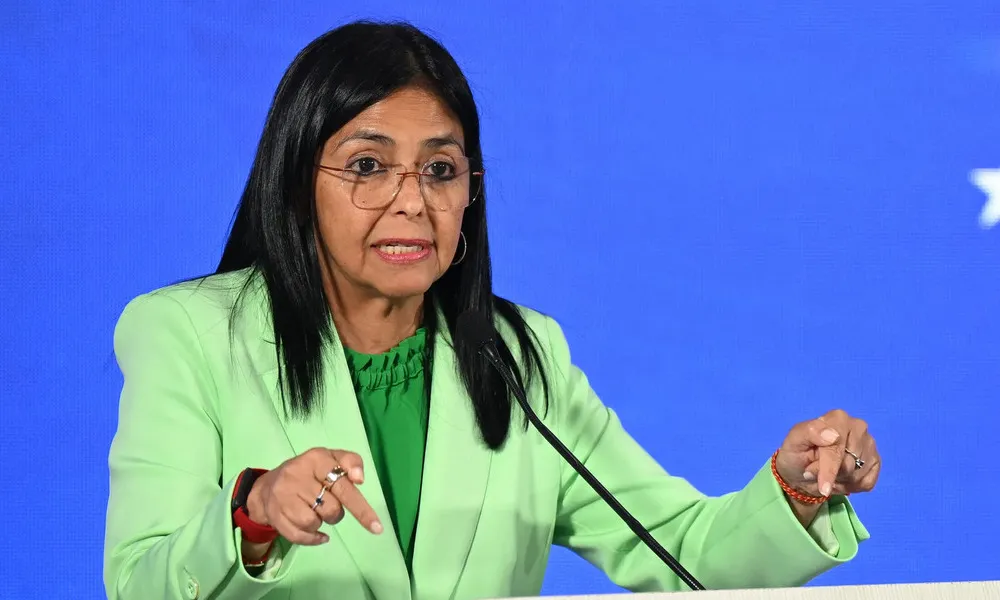
Delcy Rodríguez, Venezuela’s vice-president and oil minister, was formally sworn in on Monday as interim president of Venezuela, stepping into the role after US forces captured President Nicolás Maduro and his wife, Cilia Flores, in a dramatic development that has triggered international controversy.
The 56-year-old Rodríguez took the oath before the National Assembly in Caracas, administered by her brother Jorge Rodríguez, who serves as president of the legislature. Alongside her, 283 lawmakers elected in May 2025 were sworn in; most are aligned with the government, as several opposition factions, including the group led by Nobel Peace Prize laureate María Corina Machado, boycotted the session.
The only notable absentee was First Lady Cilia Flores, who remains in US custody.
Supreme Court order and contested legitimacy
Rodríguez’s elevation followed a decision by the Constitutional Chamber of Venezuela’s Supreme Tribunal of Justice, which directed her to assume the presidency immediately in the absence of Maduro to ensure administrative continuity and defend the nation.
Under Venezuelan constitutional provisions, the vice-president assumes presidential duties in the event of a vacancy. However, the European Union has stated that it does not recognise Rodríguez as Venezuela’s acting head of government, reflecting broader international disagreement over the transition.
Maduro’s appearance in New York court
Meanwhile, Nicolás Maduro, detained on 3 January in a US-led military operation, appeared in a federal courthouse in Manhattan to face drug trafficking and other federal charges. He pleaded not guilty on Monday to accusations including narco-terrorism, conspiracy and money laundering, and challenged the legality of his capture, asserting he remains Venezuela’s president.
A US judge has set the next court hearing for 17 March. The prosecution’s indictment alleges involvement in large-scale cocaine trafficking and other criminal acts; Maduro’s legal team is expected to contest the charges and argue sovereign immunity despite longstanding US refusal to recognise his presidency.
Political and international reactions
Following her swearing-in, Rodríguez paid tribute to Maduro and Flores, saying she felt “pain over the kidnapping of two heroes held hostage in the United States” while also expressing honour at taking the oath “on behalf of all Venezuelans”.
Her first messages have varied between defiance and overtures for cooperation, including comments indicating a willingness to engage with the United States on a diplomatic agenda.
The situation yields continued uncertainty in Venezuela’s political future, including questions about the timing and legitimacy of future elections. Under constitutional norms, presidential elections are typically direct and six-year in duration, but Maduro’s removal and Rodríguez’s interim status have left the next presidential election date unclear.
Sources: Reuters, AP, AMNA