
Sixty minutes were enough to carry centuries of history, emotion and collective memory. The Opening Ceremony of the Cyprus Presidency of the Council of the European Union concluded with sustained applause, as art and culture took centre stage in a production that spoke not only to Europe, but about Cyprus itself.
Directed by Kostas Silvestros and brought to life by 172 contributors, the ceremony gathered over 100 artists and creators from different generations and artistic fields. Together, they offered a poetic and often deeply emotional portrayal of Cyprus, reflecting where the island comes from, where it stands today, and the future its people continue to imagine and hope for.
The ceremony began with a brief delay due to the late arrival of the President of the European Council, António Costa. What followed, however, unfolded seamlessly as a carefully curated journey through time.
A video tracing the milestones that led Cyprus to European Union membership set the tone, before the National Anthem of Cyprus and the Anthem of Europe filled the venue. Soprano Mariza Anastasiadou, accompanied by a section of the Cyprus Symphony Orchestra, delivered a performance that blended solemnity with quiet pride.
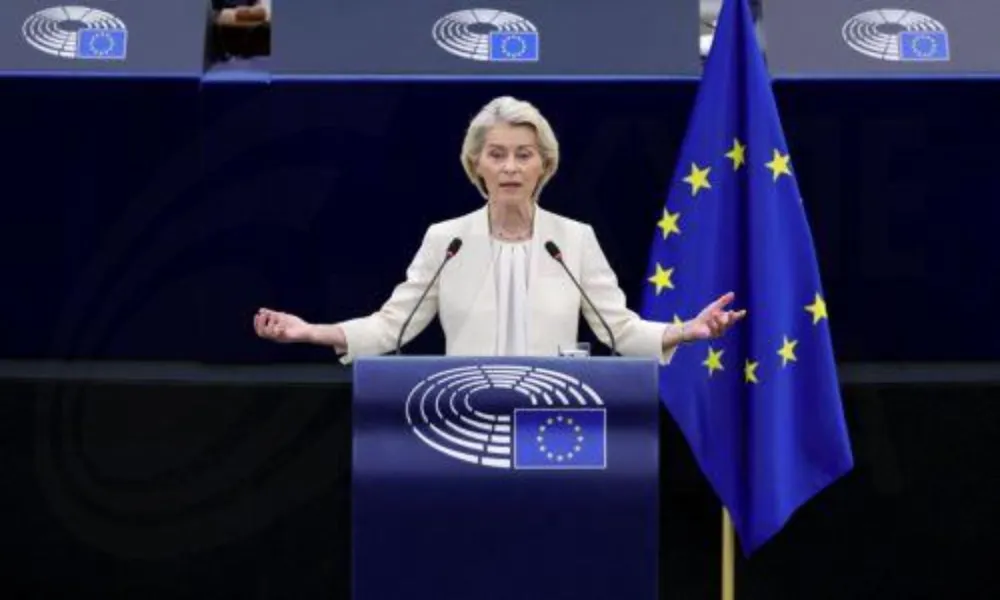
After official addresses by the Deputy Minister for European Affairs Marilena Raouna, the President of the Republic Nikos Christodoulides, the President of Ukraine Volodymyr Zelenskyy, the President of the European Commission Ursula von der Leyen, and António Costa, the spoken word gave way to artistic expression.
Memory: Where it all begins
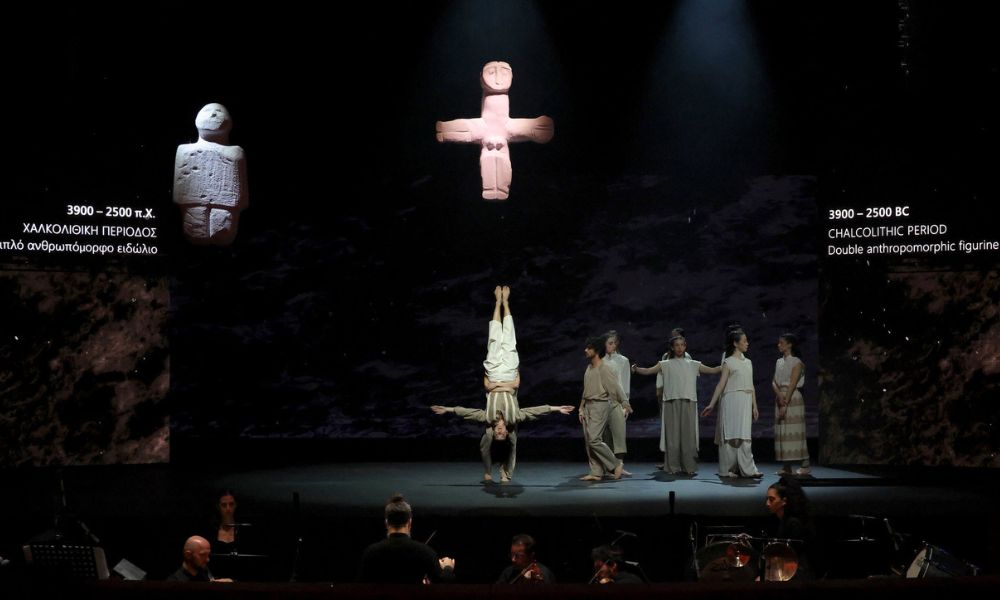
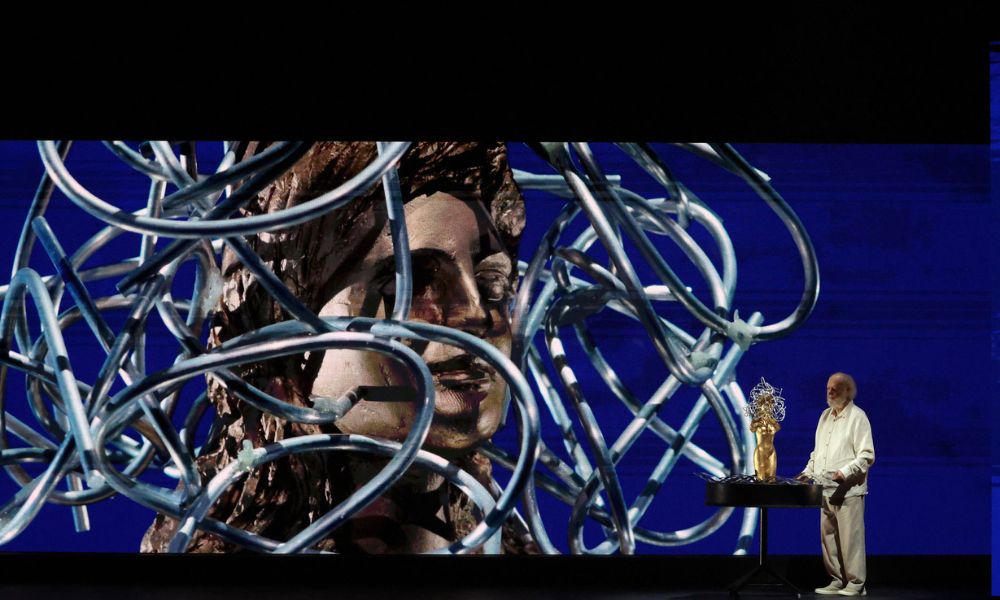
The first chapter, titled Memory, unfolded as a tribute to Cyprus’ ancient roots. Against the recitation of Cypriot Rhapsody by poet Tevkrós Anthias, and carried by the sound of the Symphony Orchestra, sculptor Nikos Kouroussis revealed a sculpture inspired by the goddess Aphrodite.
The goddess herself took human form through actress Eleni Kallinikou, as ancient figurines and historical references traced Cyprus’ path from antiquity to the birth of the Republic. It was a quiet reminder that Cyprus’ identity is layered, shaped by time, and inseparable from its cultural memory.
Present: Wounds, voices and resilience
The second episode, Present, shifted the tone. Street artist Twenty Three brought his iconic work Alasia to life, depicting a figure walking along barbed wire. The image later transformed, as the character appeared on stage dressed in traditional Cypriot costume, a stark and symbolic reference to the Turkish invasion and its lasting imprint on the island.
The sound of the pithkiavli, played by Elli Michail, cut through the silence, while poetry gave voice to collective trauma. Young Ioli appeared on stage holding a book, reciting Turkish Invasion II by Kostas Montis. She was met by enclaved teacher Eleni Foka, bridging generations through lived experience.
Wearing VR glasses, the child figure added colour to the occupied areas of Cyprus, transforming absence into vision and closing her message with a single, resonant word: peace.
The Amalgamation Choir, conducted by Vasiliki Anastasiou, followed with traditional songs, repeating the word “peace” in different languages, as if insisting that it be heard.
Dance, movement and poetry continued the narrative, with actress Despina Bebedeli delivering E Adrope by Kyriakos Karneras, grounding the present in reflection and empathy.
Future: What Cyprus dares to imagine
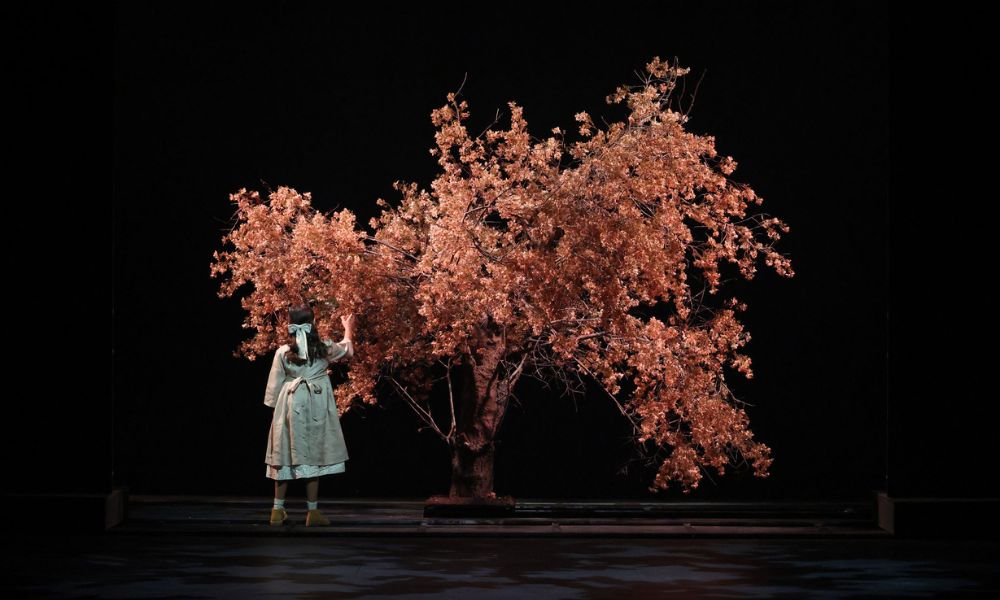
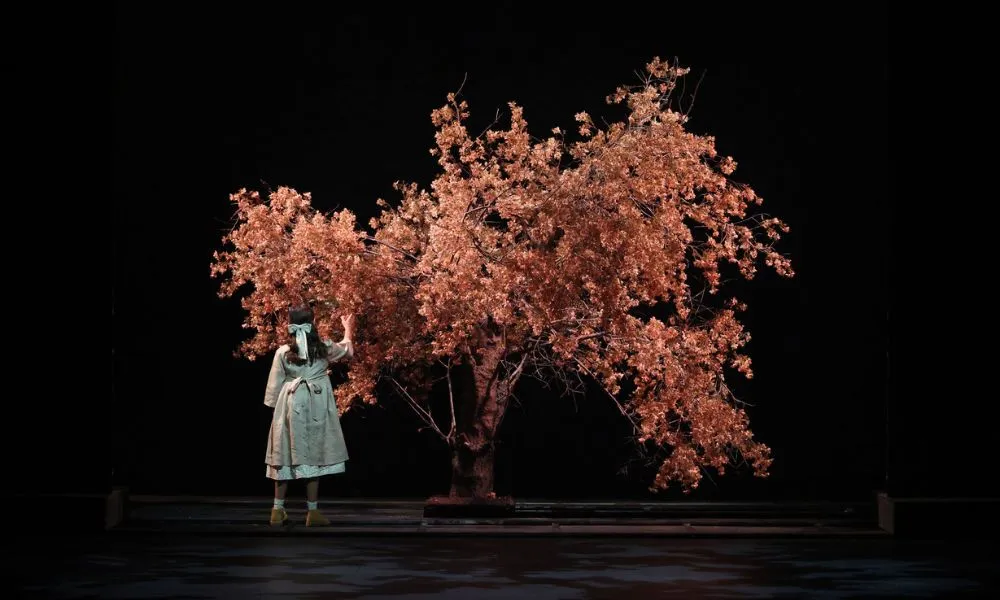
The final episode, Future, opened a window to possibility. Turkish Cypriot visual artist Nurtane Karagil presented an image of a reunited Cyprus, sheltered beneath blossoming almond trees, a symbol of renewal and fragile hope.
Members of the Youth Advisory Group of the Commissioner for Children’s Rights took the stage, reminding the audience that the future belongs to those whose rights must be protected today. Olympic gymnast Marios Georgiou then watered a withered almond tree on stage, a simple yet powerful gesture of care and continuity.
Music returned with Monsieur Doumani, performing Methysin Tziai Filin, as dancers filled the stage with movement and rhythm. The image of Cyprus formed by white doves, presented by artist Hambis Tsangaris, closed the visual narrative.
The ceremony ended where it began, with young Ioli returning to the stage to leave the audience with messages of hope. In silence, then applause, Cyprus’ story lingered in the air, not as a conclusion, but as an invitation to imagine what comes next.