
The College of Commissioners of the European Union is visiting Cyprus on 15 and 16 January 2026, led by European Commission President Ursula von der Leyen. The visit forms part of the official programme of Cyprus’ Presidency of the Council of the European Union and is regarded as one of the most significant institutional moments of the six month term.
The College Commissioners is expected to arrive today at 13:35 at Larnaca airport.
Such visits traditionally serve as a political and operational alignment exercise between the European Commission and the presiding member state. In this case, it is also one of the first major tests of Cyprus’ ability to position its priorities within a demanding European agenda shaped by war on the EU’s borders, migration pressures and economic uncertainty.
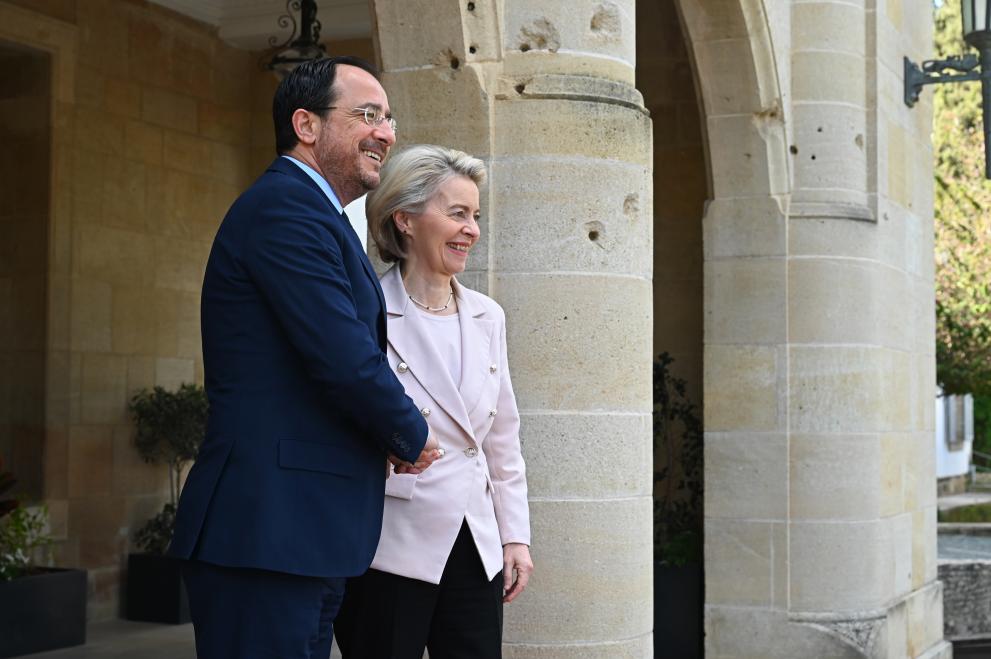
The green line visit in Nicosia
The official programme begins at 11:30, with a visit by von der Leyen and President of the Republic Nikos Christodoulides to the green line in Nicosia, near the new Nicosia municipality building.
The visit carries strong political symbolism, highlighting the EU’s long stated position that the Cyprus problem is a European issue and reaffirming institutional support for reunification efforts within the UN framework.
Consultations at the port of Limassol
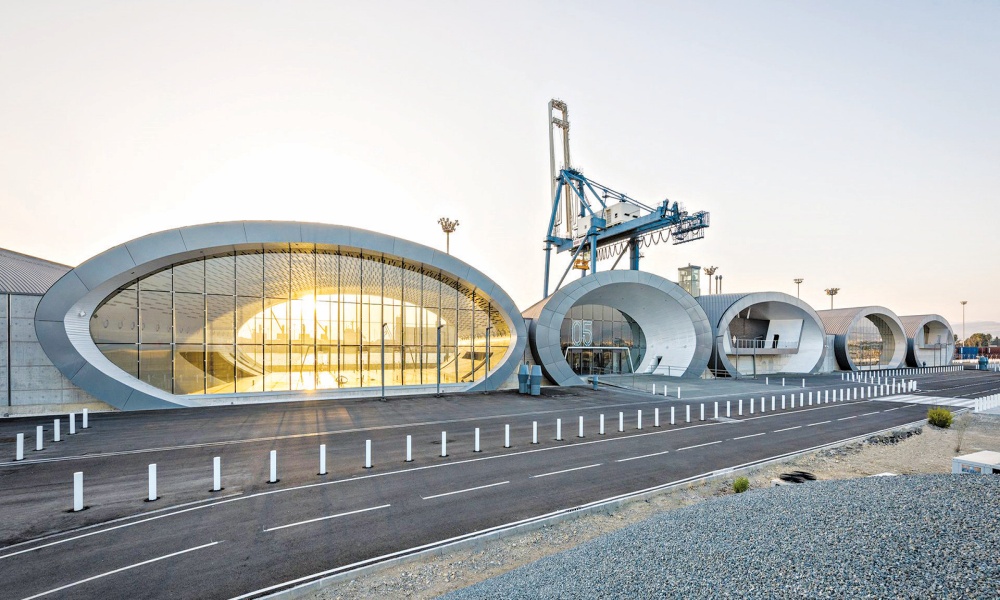
The central political and institutional discussions of the visit take place in Limassol, at the new port, later on Thursday afternoon.
At 14:55, von der Leyen and Christodoulides will visit an exhibition dedicated to the Amalthea initiative, hosted in the passenger terminal area of the port.
Immediately after the exhibition, the two leaders will hold a bilateral meeting, while parallel meetings begin at the same time between groups of Cypriot ministers and European commissioners. These discussions focus on the European agenda and the policy priorities of both the Cypriot Presidency and the European Commission.
At 15:55, the programme moves into a full plenary session, bringing together the entire College of Commissioners and the Cypriot Council of Ministers, chaired jointly by Christodoulides and von der Leyen.
The formal consultations conclude at 17:05 with a joint press conference by the President of the Republic and the President of the European Commission.
Following the press conference, von der Leyen departs Cyprus later on Thursday evening, while the Commissioners travel to Nicosia for an official dinner hosted by the President of the Republic.
Walking the old city on the second day
The visit continues on Friday, 16 January. Starting at 09:00, the College of Commissioners will visit the old city and walk along sections of the green line, accompanied by Foreign Minister Konstantinos Kombos and Deputy Minister for European Affairs Marilena Raouna. The Commissioners are expected to depart Cyprus shortly before midday on Friday.
Why the visit matters
The visit serves as a signal of political confidence in Cyprus’ presidency at a time of heightened geopolitical tension in the Eastern Mediterranean and the wider Middle East. Analysts note that Cyprus is seeking to position itself as a bridge between regions, while advancing on matters linked to migration management, regional stability and humanitarian initiatives.
The presence of the entire College of Commissioners so early in the presidency is also read as an effort to ensure close coordination on legislative pacing, crisis response and strategic messaging throughout the six month term.
Setting the tone for the next six months
The visit sets the tone for how Cyprus intends to exercise its role at the helm of the Council. It blends institutional seriousness with political symbolism, combining precise policy coordination with visible reminders of Cyprus’ unique political context.
As the presidency unfolds, the outcomes of these first consultations will serve as a reference point for how effectively Cyprus can shape debates, manage compromises and keep European priorities aligned during a period of sustained pressure on the EU’s political and institutional cohesion.