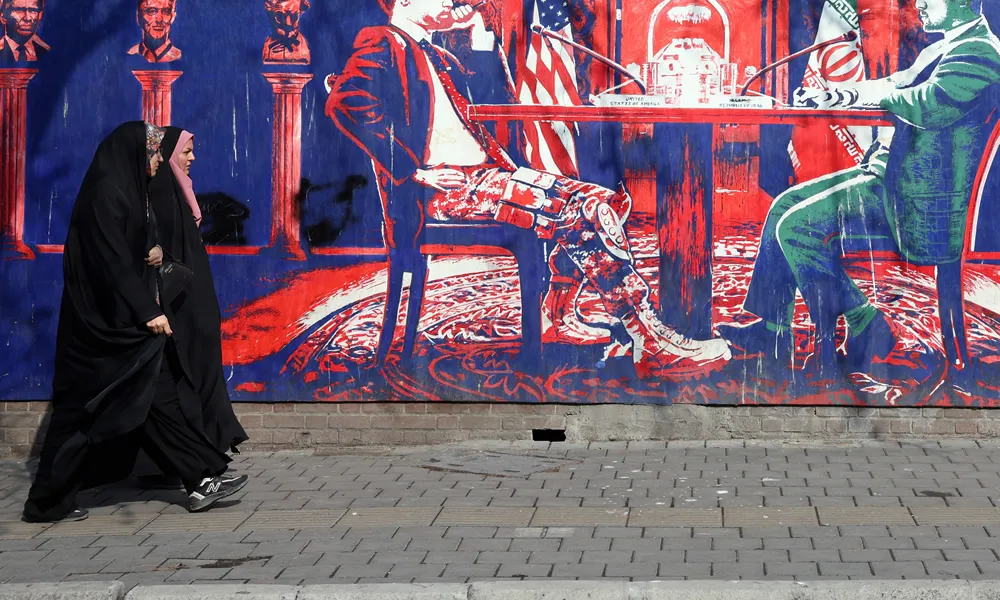

American and Iranian officials held nuclear talks on Friday for the first time since the 12-day war between Israel and Iran last June. Iranian Foreign Minister Abbas Araghchi described the shuttle talks in the Omani capital as a “good start”. The two sides are expected to continue talks in the coming days.
US President Donald Trump says he wants a deal with Iran on its nuclear programme but is willing to use force if no deal is forthcoming.
The US aircraft carrier Abraham Lincoln remains in the region, supported by guided-missile destroyers. A similar US naval build up in Venezuela last month resulted in the abduction of Nicolas Maduro and his wife. Iran is not Venezuela, however, and the region is already on tenterhooks. Prior to the talks in Oman, Araghchi warned that a US attack on Iran would start a “regional war”. His comment was seen as a veiled threat to target US bases stationed in the countries around Iran. There is also the question of how Iran’s regional allies – Hezbollah, Hamas and the Houthis – would respond.
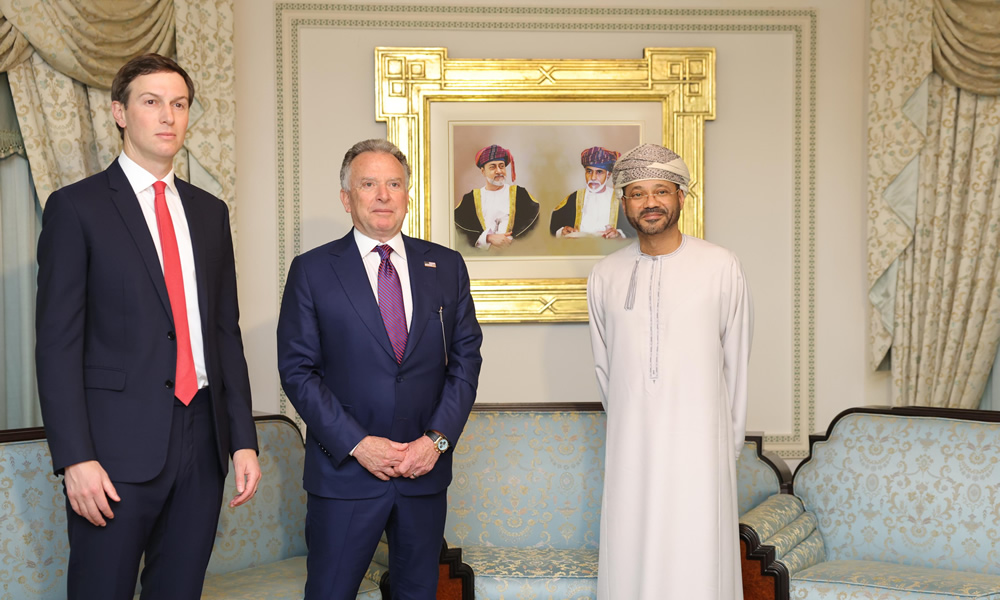
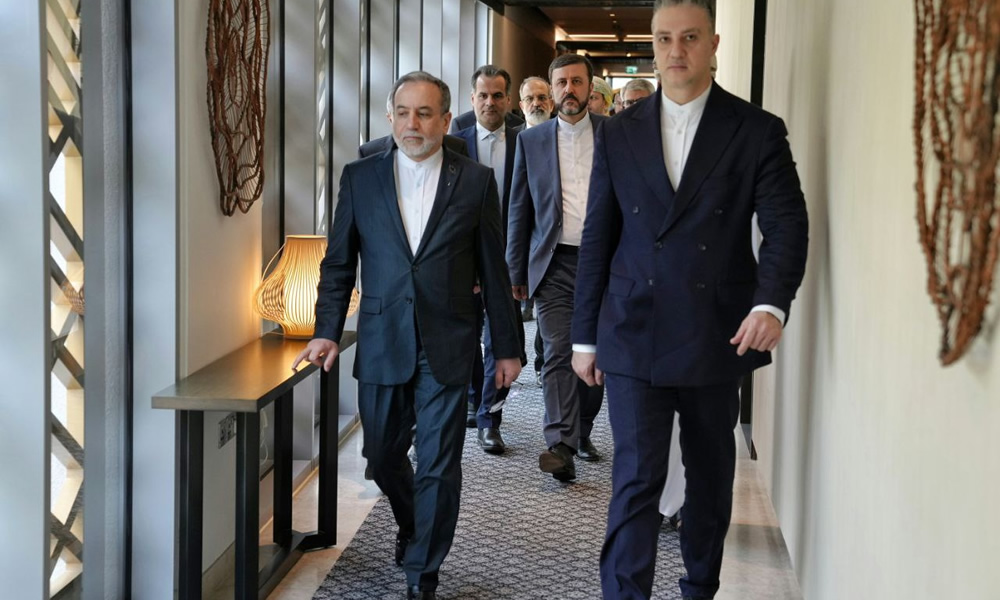
and Jared Kushner (L) ahead of Iran-US talks in Muscat on Friday
At the same time, the violent crackdown on anti-government protests that started in late December over hyperinflation and spread throughout Iran resulted in an internet blackout and thousands of deaths, with thousands more detained. Trump had originally encouraged the protests, saying “help is on its way” and then pulled back from intervening, working instead to prevent mass executions of those arrested. The official death toll stands at over 3,000. The US-based Human Rights Activists News Agency puts the toll at over 6,000, while other unconfirmed reports suggest the actual figure could be three to five times that amount.
Last week, the EU joined the US in formally designating the Islamic Revolutionary Guard Corps (IRGC) as a terrorist organisation and expanded sanctions on Iranian officials and entities tied to repression. EU foreign policy chief Kaja Kallas said: “Any regime that kills thousands of its own people is working toward its own demise.”
Tehran currently faces a delicate balancing act as it seeks to ward off a direct confrontation with the US and prevent internal discontent from bubbling to the fore on an even larger scale.
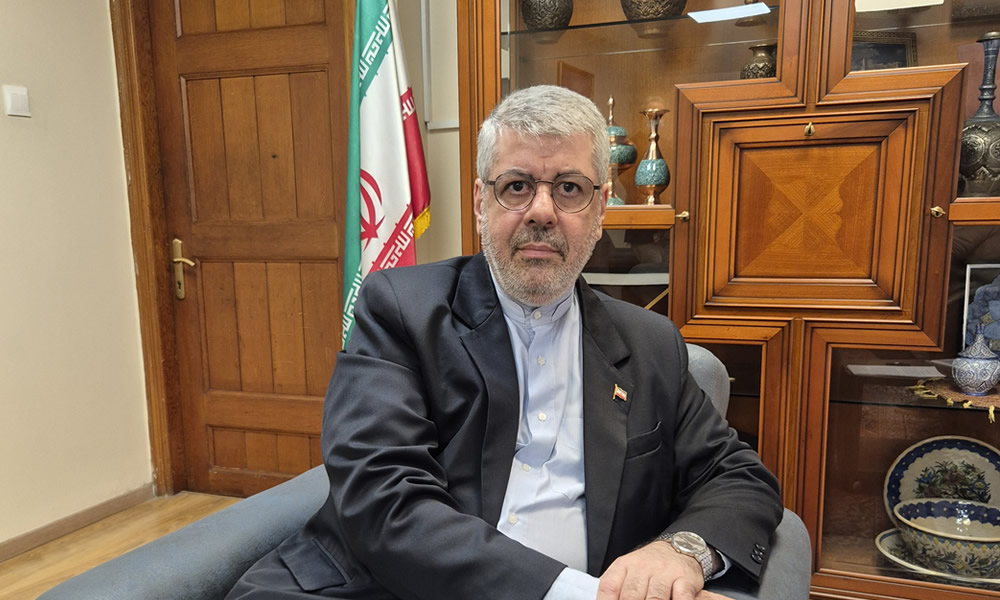
Politis to the point spoke with Iranian Ambassador to Nicosia Alireza Salarian about the precarious situation in the country and region.
The nuclear deal
“Over the years, we have faced serious challenges. The United States followed hostile policies toward Iran, especially through imposed heavy sanctions. In 2015, the nuclear agreement (Joint Comprehensive Plan of Action – JCPOA) was approved by the UN Security Council, and previous sanctions were lifted.”
The Iranian diplomat argued that all parties were satisfied with the outcome, reached after significant negotiations which included then US President Barrack Obama.
“Iran respected its commitments. Unfortunately, when Mr Trump came to office, by 2018, the US withdrew from the agreement and brought back sanctions, putting pressure and punishment on other countries to follow as well,” he said.
Salarian said Iran maintained indirect contact with the US through the ‘E3’ countries (Germany, France, the UK) who acted as mediators to encourage a return to the nuclear agreement, but to no avail.
The 12-day war
When Trump’s second term came around, Iran and the US talks held five rounds of talks which were interrupted by the Israel-Iran war in June 2025. The ambassador said Israel’s “unlawful military aggression against Iran” resulted not only in US attacks on three nuclear facilities, but also the deaths of 1,000 Iranians.
The brief war also saw Iranian missiles fired at Israel, showing the range of Iran’s capabilities.
“Mr Trump repeatedly announced that they destroyed the nuclear facilities. I don’t know why they come again talking about the nuclear issue,” he said.
Asked if it had to do with the International Atomic Energy Agency (IAEA)’s concern that Iran’s stockpile of uranium enriched to 60% purity had surpassed 400kg, which is technically close to the 90% threshold for weapons-grade material, the ambassador replied: “Actually this happened when the United States withdrew from the nuclear deal, and European countries didn't do anything.”
He argued that Iran repeatedly announced it would start enrichment if the US did not return to a nuclear agreement, noting that the country was not bound to implement a deal that the US walked away from.
“They imposed sanctions but asked us to stop enrichment. We didn’t accept. Until now, we are ready to go back to the deal we already had.”
The shadow of war
In the meantime, “the US has increased its military presence and exercises in the region, while tensions with Iran have also become higher and now we witness the shadow of war hangs over the region.”
Salarian argued that the reason behind the latest tensions most likely boils down to the view that Iran is the only real threat to Israel in the region.
“But we already announced repeatedly, we defend ourselves. We don't want to start a war, and we are not the starters. But we just respond strongly.”
Asked how Iran sees de-escalation happening in practice, the ambassador referred to the Iranian foreign minister who “already said repeatedly that we can reach an agreement on not developing nuclear weapons, very simply, with transparency, and inspection. We just commit to not have nuclear weapons and we have IAEA inspection. They can come any time.”
“But if they ask us to close our peaceful nuclear programme, we don't agree.”
The diplomat argued that UNSC Resolution 2231 confirms Iran’s right to a peaceful nuclear programme.
Defence capability non-negotiable
Asked to comment on US demands for an agreement, which according to media reports, includes zero uranium enrichment, a curb on Iran’s ballistic missiles, a commitment to withdraw support to regional proxies and to treat arrested protestors fairly, Salarian said: “Iran is ready to talk just about the nuclear issue. Let’s solve that first.”
Discussion on Iran’s missile range is not on the cards. “We are not talking about our defence capability. All countries in the region have it,” he said, noting that Israel has some of the most advanced military equipment in the region, either produced or supported by the US and some European countries.
On regional proxies, the ambassador argued Iran provides humanitarian aid to Palestine and Lebanon, but not military equipment, claiming equipment couldn’t reach Gaza, even if Iran wanted to send it. He further noted that these issues could be discussed in the future to clarify “misunderstandings”, but defence capability was not up for negotiation.
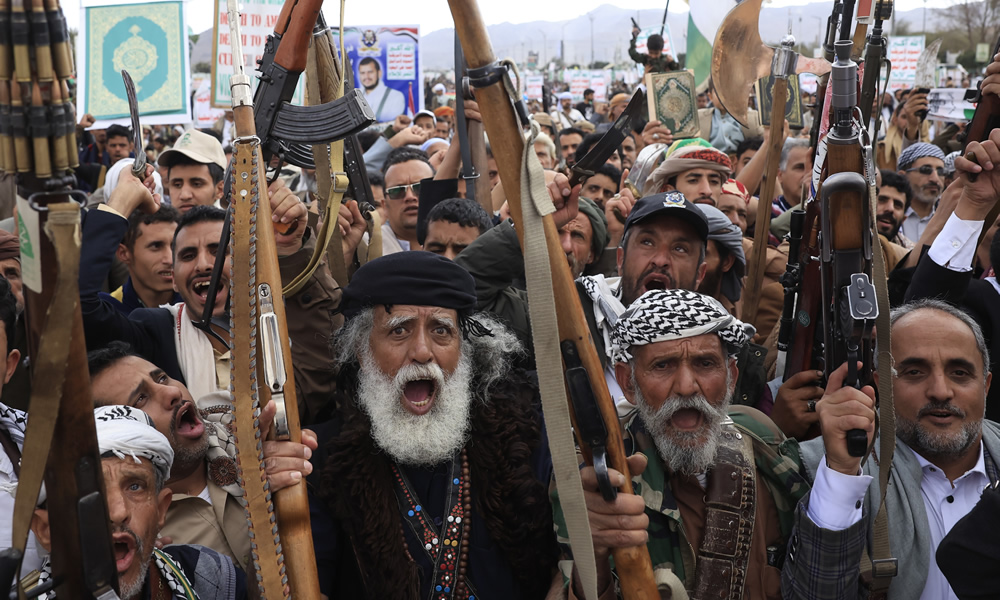
The diplomat said all other countries in the region boast modern US military equipment, while Iran has had to rely on its own capability, due to sanctions.
He maintained that Iran remained ready to negotiate on the nuclear question in goodwill “to solve this issue based on diplomacy, mutual respect and mutual interest.”
Domestic unrest leads to heavy loss of life
Regarding the latest protests within Iran, Salarian said the main reason behind the unrest was sanctions that caused the rapid devaluation of the Iranian currency last year.
He argued that peaceful protests started on December 28 from the bazaar and went to the street. Government officials met with representatives of the protestors to discuss their complaints, after which things remained calm until January 8, he said.
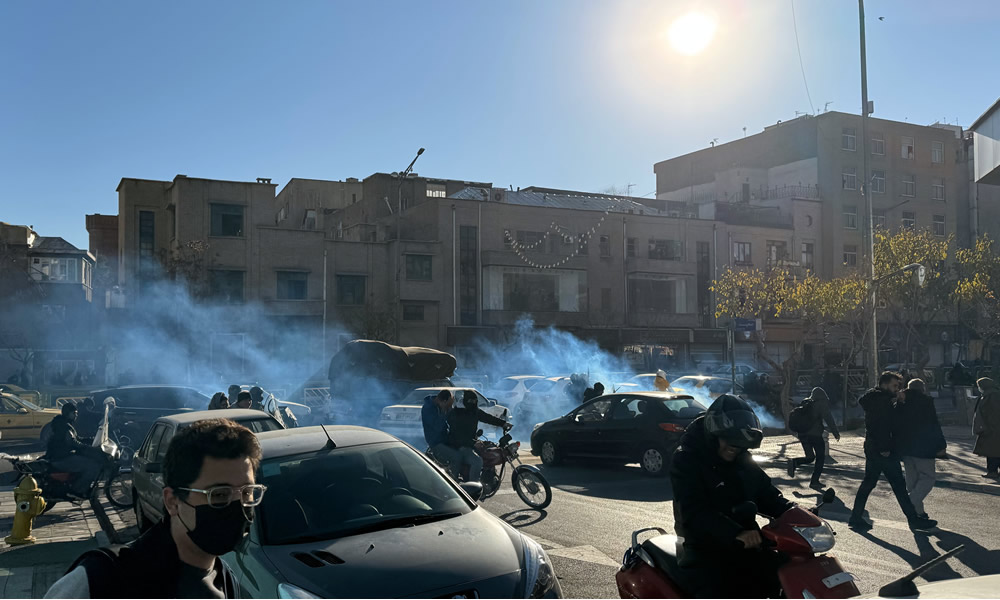
Then, according to the ambassador, a new round of demonstrations started outside of Tehran. He questioned why protestors chose to protest at night instead of during the day.
“Unfortunately, it turned from a peaceful demonstration to a violent and armed demonstration,” he said, adding, “Many security forces were killed or injured.”
The diplomat said hundreds of public and religious buildings were destroyed by armed protestors.
Asked where the protestors obtained weapons from, he noted that Iran was a country with a total area of 1.6 million square kilometres, making it difficult to control what goes in and out the borders.
Asked to comment on the discrepancy between the official death toll and the much bigger toll recorded by human rights organisations, Salarian replied that the government compiled a list of the dead using ID numbers and, in most cases, photographs. If others claim there are more deaths, they should provide documentation, he said.
Even the loss of one life should not happen, but when the protests turned violent, the police had to respond, he argued.
The ambassador said protestors were mainly young people, who, he argued, may have been “charged” up by foreign media broadcasting “fake news” about the demonstrations.
Bilateral relations
Regarding relations with the Cyprus Republic, Salarian said a Cypriot delegation went to Tehran last year as part of a new initiative to discuss political issues. An Iranian delegation was supposed to visit Nicosia during Cyprus’ EU Presidency, but after the EU’s designation of the IRGC as a terrorist organisation, this is currently on hold.
The ambassador said relations with Cyprus have always been friendly, or at least ordinary, and without any tension. Cyprus provides a good example of utilising diplomacy over conflict in efforts to solve its division, he said.
Asked if Cyprus can play a role in regional relations, the diplomat replied: “With the EU, yes, because Cyprus is the closest EU country to the region. We only expect goodwill from Cypriot officials to make a bridge between Iran and the EU.”