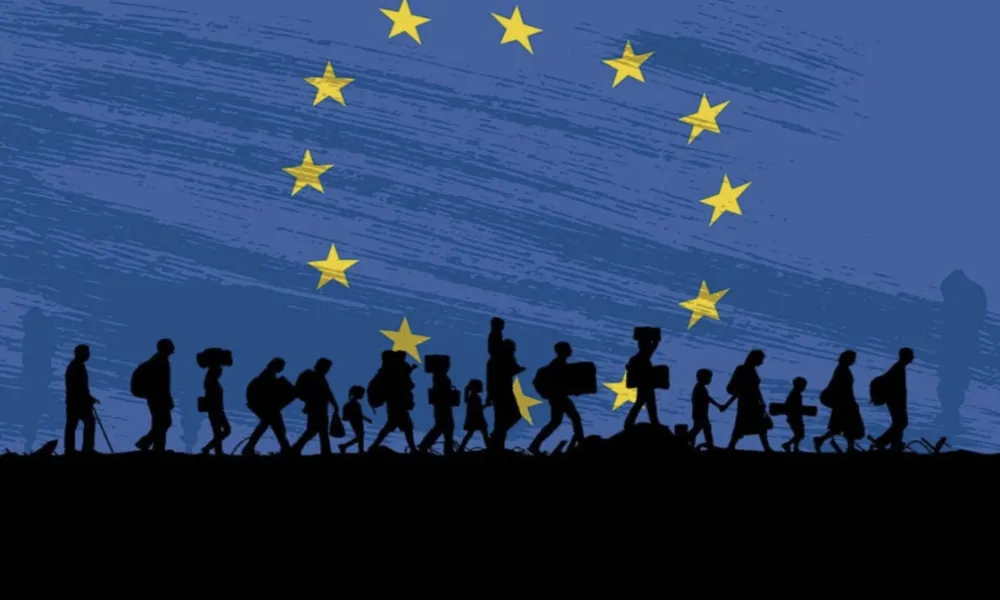
People expect Europe to find common solutions to the shared challenge of migration. This is an issue that has divided us in the past. But 2025 was the year Europe proved it can deliver on migration – together.
Illegal border crossings are down 55% in the last two years, and asylum applications are down by 21%. Our new Entry-Exit System, which started operations in October, is the most advanced border IT system in the world. Already 23 million border crossings have been registered, and over 12,000 people stopped and turned back. Add to this the new rules that are coming into application in a few short months, and it’s clear that the era of fragmentation and disorder which marked the migration crisis of 2015-2016 is now squarely behind us. In that regard, we are working with the Cyprus Presidency to solidify Europe’s ambitious approach to migration.
We have turned a corner. And the challenge now is to cement this new approach towards migration: one that reflects the EU’s interests as well as its values.
For me and most Europeans, the answer is a Europe that is in control. A Europe that remains a place where those in genuine need can find protection; but where that process is managed by the EU and its Member States, not migrant smugglers or hostile state actors. The answer is clear, efficient and fair procedures, not a system that can be gamed. It is quick legal decisions, not loopholes perpetuating enduring illegal residence. It is quick and dignified returns of those with no right to stay. Because seeking a better life is a legitimate aspiration – but doing so illegally is not.
Abuse of the system gives migration a bad name. It undermines public support for providing protection to those in genuine need. In the same vein, it undercuts our drive to attract the skills and talent our economies need to thrive. We’ve done the work to reform our laws, and it is already paying off.
But if we want a Europe that remains a place for asylum and is an attractive destination for talent, the task for us is clear: bringing illegal arrival numbers down and keeping them that way. This is now our overarching priority.
And the way we achieve this is by ensuring the EU stands on its own two feet, with an assertive migration policy and a more strategic use of our visa policy.
Most of all, we need to intensify our cooperation and engagement with third countries. That means seeking partnerships wherever possible to open legal pathways and cooperate better in the global fight against migrant smugglers.
But it also means becoming more assertive in defending the EU’s interests. For example, we expect third countries to readmit their own nationals – something they are obliged to do.
Make no mistake, the EU has plenty of leverage to back up this approach: We are the largest trading partner for around 80 countries. Our Member States issue 10 million visas to third-country nationals every year. And we, the EU and its Member States, remain the largest global provider of Official Development Assistance, with more than 90 billion euro annually.
Going forward, the EU will strengthen the link between visa policy and cooperation – not only on readmission, but also for border protection, security, and the fight against migrant smuggling. Because access to the EU is a privilege – and the way we manage that access is a strategic choice.
We are showing that we will do things the European way. And that it works.