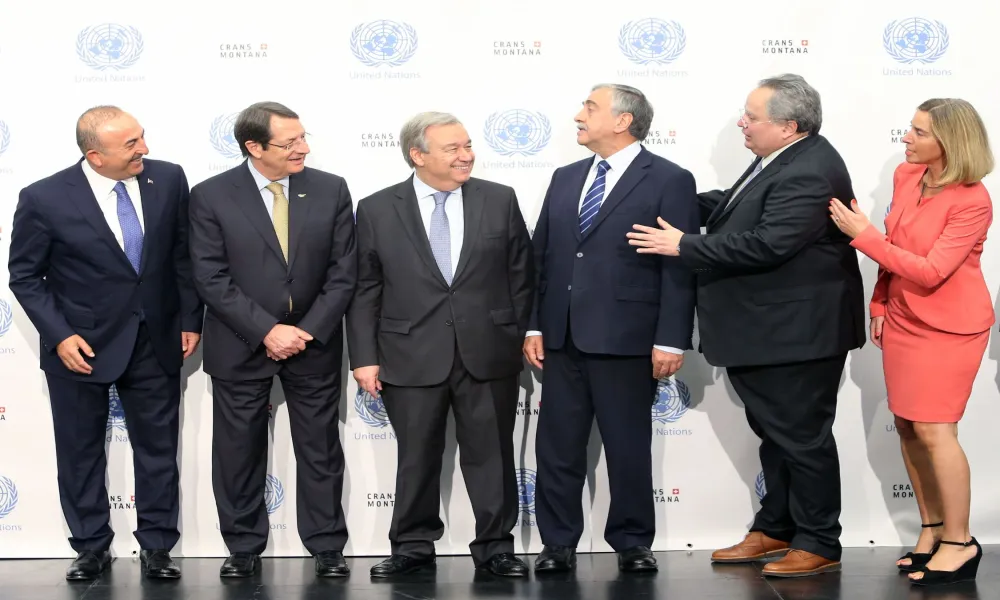

Shortly after 3am on 9 July 2017, UN Secretary-General António Guterres decided to end the Cyprus conference at Crans-Montana. The working dinner was going nowhere. Delegations had been discussing matters for almost five hours and tensions had risen. Visibly disappointed, Guterres left the room and delivered the now-famous remark:
"Good luck to the Cypriots, in the north and the south."
What followed was the familiar blame game.
The Greek Cypriot side placed responsibility on Turkey, arguing that Ankara continued to insist on guarantees and troops. At the same time, reports emerged of poor handling by the Greek Cypriot delegation. Then-President Nicos Anastasiades reportedly rejected the participation of the prime ministers of the three guarantor powers. Information also circulated that members of the Greek Cypriot delegation had packed their bags before the dinner, while Anastasiades allegedly approached the Turkish foreign minister and raised the idea of a two-state solution.
To this day, competing narratives remain about what actually happened at Crans-Montana.
In the meantime, the collapse of the talks caused profound disappointment among Turkish Cypriots. The reunification movement lost momentum, while then Turkish Cypriot leader Mustafa Akıncı came into conflict with Ankara after refusing to change his position on the Cyprus issue.
Most Turkish Cypriots subsequently shifted their support to Ersin Tatar, who ultimately placed a two-state solution on the table, a move that led to a lengthy period of stagnation.
Nor was Anastasiades' approach particularly constructive. One need only recall the proposal for Turkish Cypriots to return to the Republic of Cyprus, an idea that appealed only to a minority of Greek Cypriots.
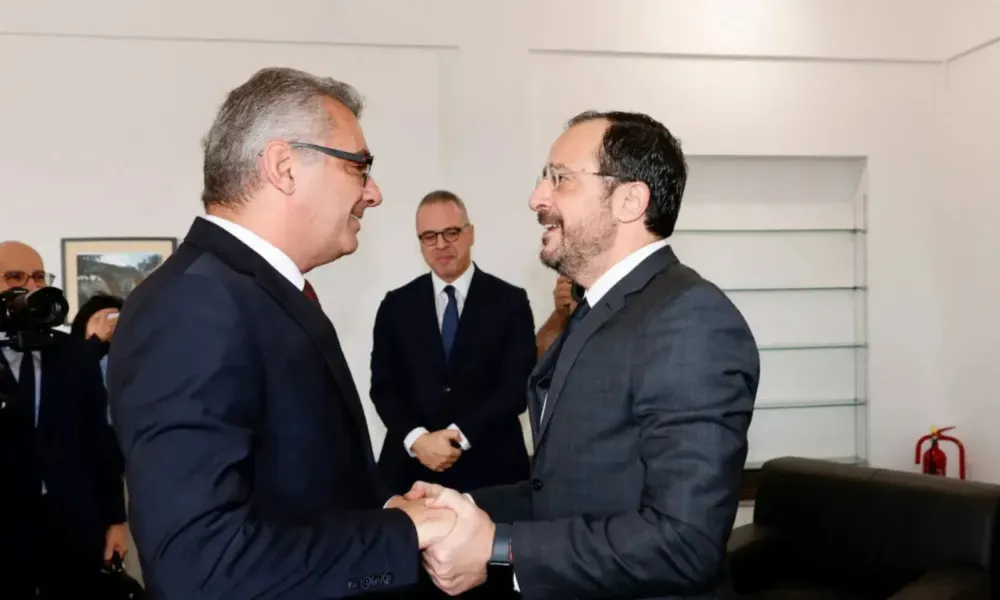
In 2023, Nikos Christodoulides was elected President of the Republic and formed a government with parties traditionally associated with the rejectionist camp. Nevertheless, he undertook a substantial effort to reactivate international interest in the Cyprus issue.
At least on the level of rhetoric, the current president sent the appropriate messages. Yet a major obstacle remained in the form of Ersin Tatar.
A genuine sense of optimism emerged after the election of Tufan Erhürman as Turkish Cypriot leader in October 2025.
Several meetings followed between Christodoulides and Erhürman, but they failed to produce the desired results. They were unable to agree even on the opening of a single crossing point, nor did they announce any substantial confidence-building measures.
Optimism quickly gave way to disappointment.
Cyprus' presidency of the European Union then intervened, pushing the Cyprus issue once more to the sidelines.
Now, following the conclusion of that six-month presidency, came the news that the UN secretary-general would travel to Cyprus. In truth, few expected such a development.
It is a highly significant step.
Being high on the agenda of the UN secretary-general matters enormously. Guterres clearly wants to engage seriously with Cyprus' problem.
The question is whether we genuinely want to solve it.
It is not enough to declare at every opportunity that we support a settlement.
Political will is not something that can simply be proclaimed. It is demonstrated in practice and tested in real-world conditions.
Real commitment is measured at the negotiating table.
It is measured through mutual concessions and the flexibility shown by the parties.
Let us hope that we will not hear the head of the United Nations once again wishing "good luck" to the Cypriots.