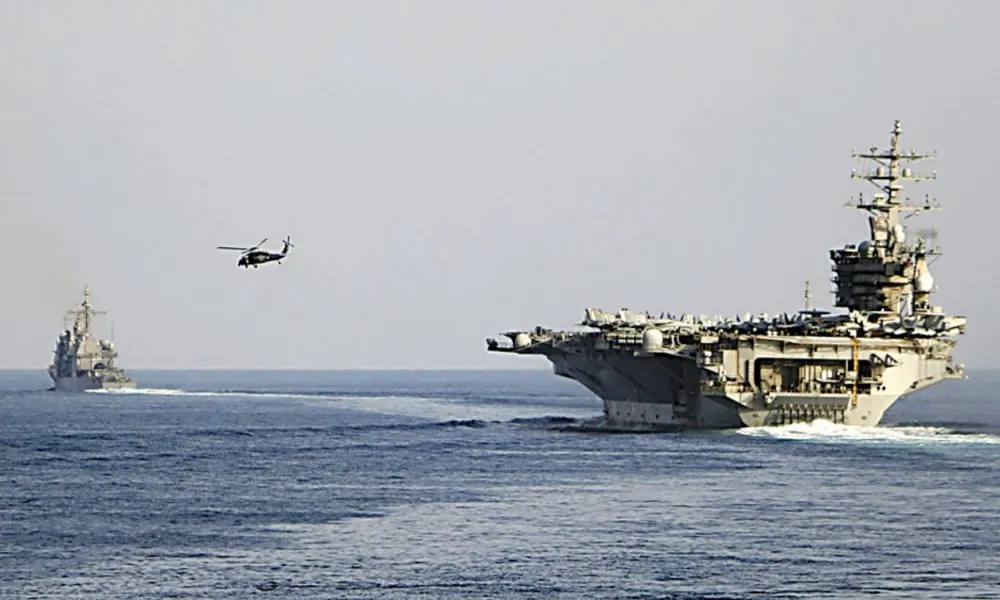

A second consecutive night without US strikes on Iran brought relief to global energy markets, with investors interpreting the operational pause as a possible opening for renewed talks between Washington and Tehran.
The price of Brent crude fell by 5.58% to $91.38 per barrel, while West Texas Intermediate (WTI) dropped 5.46% to $84.43 per barrel. The decline followed two successive nights without fresh bombardments or Iranian retaliation, prompting markets to speculate that the conflict may be entering a more stable phase.
Tehran's position
A senior Iranian source told Reuters that Tehran remains willing to continue the pause in military operations, provided Washington also refrains from launching new strikes.
The same source stressed, however, that scepticism outweighs optimism within the Iranian leadership, where the prevailing view is that the current pause is tactical rather than substantive.
Donald Trump rejected reports suggesting the United States faces constraints in its military stockpiles, insisting that the country possesses larger ammunition reserves than any other nation.
At the same time, the US president maintained his combative rhetoric, posting AI-generated images on Truth Social depicting strikes against Iranian oil facilities and vessels.
Three difficult options
Despite the temporary de-escalation, analysts believe Trump faces three difficult choices: further military escalation, stricter economic sanctions or a return to diplomacy.
According to US media reports, Vice President JD Vance and Chairman of the Joint Chiefs of Staff General Dan Caine have expressed concerns about further escalation amid worries over declining US military stockpiles.
Political pressure on the White House
The prolonged conflict is increasingly becoming a political issue for Trump, as fluctuations in oil prices and opinion polls showing limited public confidence in the administration's handling of the crisis add to pressure on the White House.
Even close political allies are calling for a clear exit strategy.
House Speaker Mike Johnson recently said that "we need to finish this", reflecting a sentiment that is being expressed with growing frequency, including among some of the president's strongest supporters.
Public support for the conflict remains low in the United States, and for Trump the stakes now extend beyond the outcome of the war itself to his broader political legacy.
Each of the options available to him carries significant political and strategic costs.
Israeli Prime Minister Benjamin Netanyahu, meanwhile, insisted that Iran's nuclear programme must be ended "with or without an agreement." He argued that the conflict will conclude either through the collapse of the Iranian regime or through its weakening to the point that it is forced to abandon its nuclear ambitions.