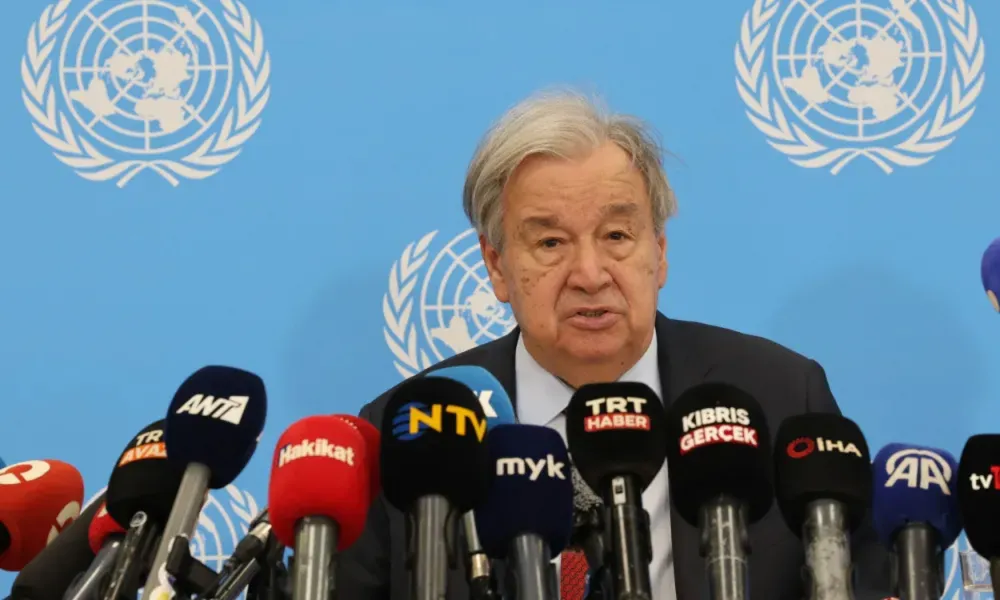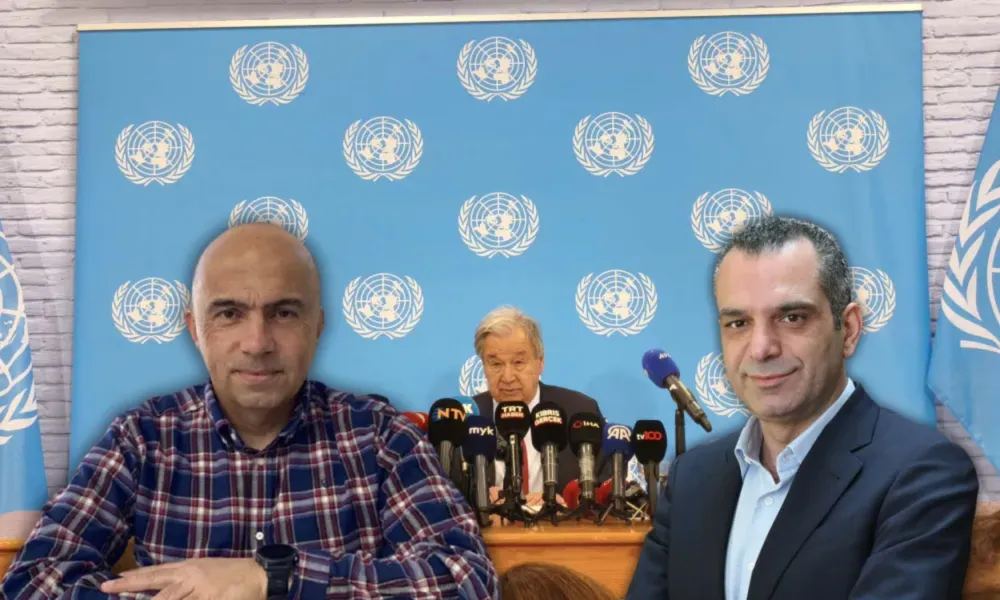

Two analysts offered largely converging assessments of UN Secretary-General António Guterres' two-day visit to Cyprus, arguing that while the visit succeeded in keeping the Cyprus process alive, it did not deliver a breakthrough towards renewed negotiations.
Sophocleous: Not a failure, but below expectations
Former director of the Presidential Office under former president Nicos Anastasiades, Michalis Sophocleous, said the visit fell short of its primary objective, which he believes was the announcement of a new enlarged conference on Cyprus.
Speaking on Politis radio's Morning Briefing, Sophocleous noted that no date was set for a new conference, meaning the goal was not fully achieved.
However, he stressed that Guterres reaffirmed his intention to convene such a meeting, suggesting he has the consent of all parties involved, including Turkey.
"We fell short of the bar, but it was not a complete failure," he said.
Sophocleous highlighted Guterres' insistence that any new conference should follow satisfactory preparation on confidence-building measures, methodology and substance.
According to him, the UN chief does not want another meeting that ends without a concrete outcome and is seeking tangible signs of progress from both the Greek Cypriot and Turkish Cypriot sides before moving forward.
He also argued that references to previous convergences being "taken into account" do not necessarily mean future negotiations will be based exclusively on them.
Sophocleous expressed disappointment that the two sides failed to agree on opening a new crossing point, saying the failure raised doubts about their ability to tackle far more complex issues.
Nevertheless, he described the visit as useful, arguing that continued diplomatic movement is preferable to stagnation.
Protopapas: The process needs a destination
Political scientist and member of the Cyprus negotiating team Vasilis Protopapas said Guterres had succeeded in preserving the process and clarifying the conditions required for future progress, but had not achieved the key objective of restarting negotiations.
Protopapas said the UN secretary-general had effectively "bought time" by keeping dialogue open.
At the same time, he argued that after 52 years, the aim cannot simply be to hold further informal or multilateral meetings.
"There is no room for a lengthy process lost in time," he said.
According to Protopapas, every passing day deepens the realities created by the division of the island, accelerates the Turkishisation of the occupied areas and distances younger generations from both the events of 1974 and the Cyprus issue itself.
No common ground on final settlement
Protopapas identified the lack of common ground on the form of a future settlement as the principal obstacle.
He argued that references to a bizonal, bicommunal federation with political equality have largely disappeared from recent public statements and UN communications.
Before a new enlarged conference can take place, he said, both sides must first confirm that they are pursuing the same objective.
He also called for agreement on a clear methodology, including a roadmap, milestones, objectives and a timetable.
While welcoming Guterres' reference to past convergences, Protopapas said they should be clearly and formally recorded to avoid disputes over previously agreed positions if negotiations resume.
He concluded that Guterres appears determined to convene a conference capable of producing results rather than another inconclusive meeting.
For that to happen, he said, agreement is needed both on the desired end goal and on the process for reaching it.