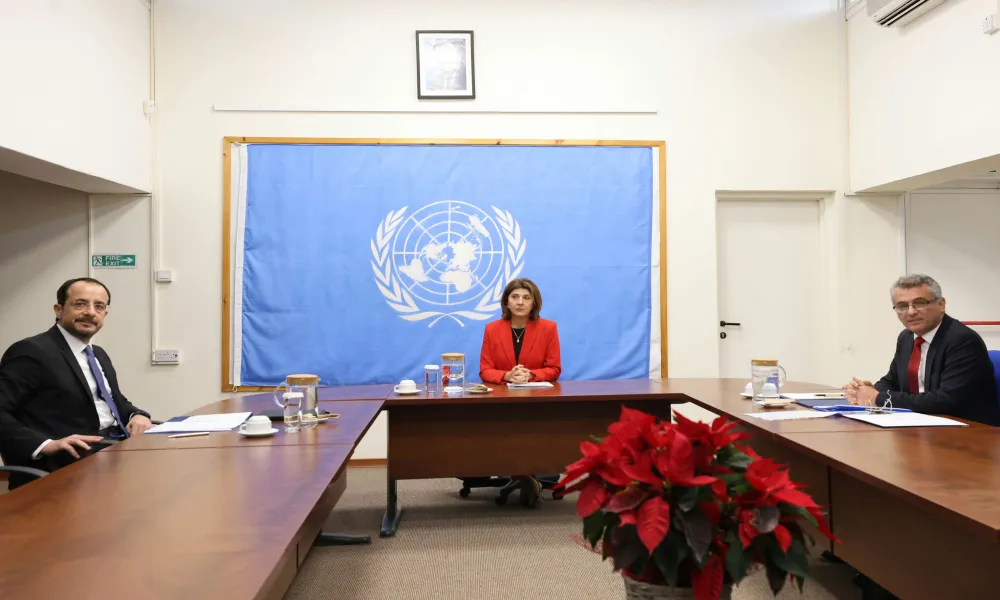

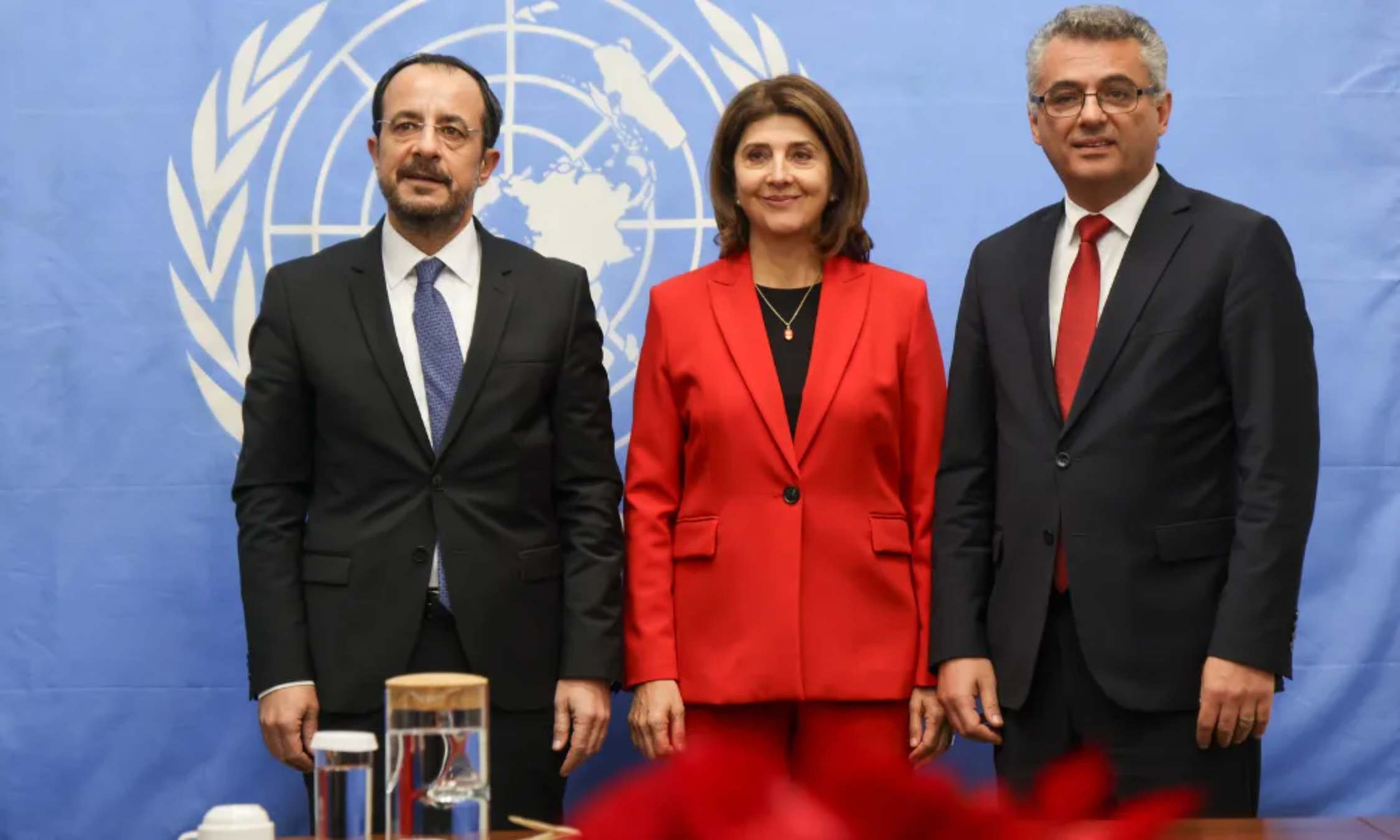
On the eve of the leaders’ first social gathering and ahead of her own visit to Cyprus, UN Personal Envoy María Ángela Holguín has called on both leaders to start working together and explore co-existence based on political equality.
They must sit down and agree on confidence-building measures (CBMs) and the rules of a future dialogue. Progress towards a resumption of talks depends on it, she noted.
In a message that pulls no punches, Holguín highlighted the UN’s demonstrated commitment to the Cyprus issue, clarifying however, that, “The decision to resume negotiations rests with the leaders.”
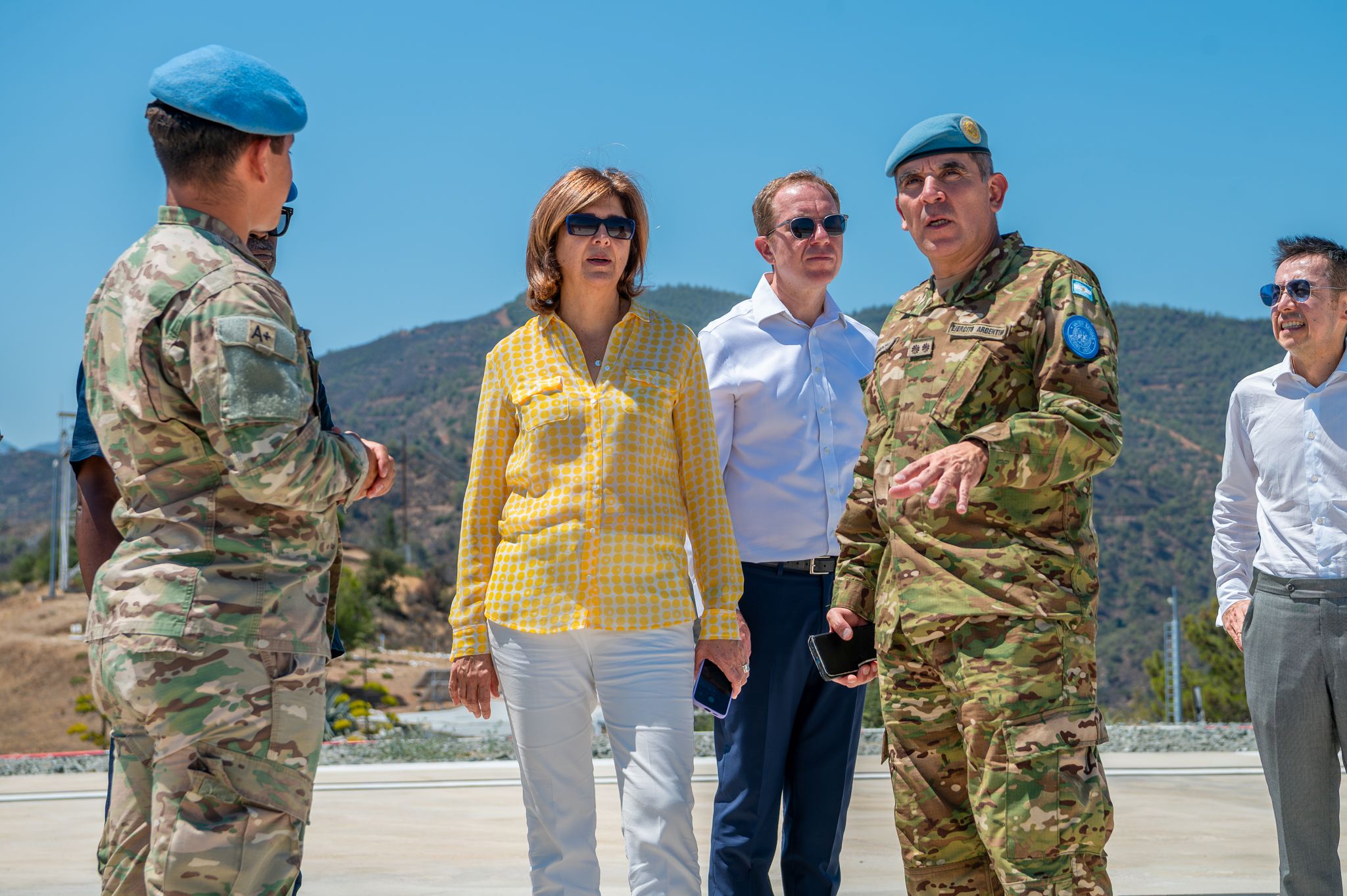
On the three main issues required to move forward, the UN envoy noted that the one referred to as “substance” concerned the compilation of convergences reached during negotiations a decade ago. This compilation will be presented when negotiations begin, she said.
Indirectly replying to Greek Cypriot calls to deliver the document to all sides now for comment, Holguín said: “We will not introduce anything that could give rise to further debate and serve to trigger further setbacks.”
Political will in practice
On CBMs and methodology, the former Colombian foreign minister said the leaders had to negotiate and agree on both, requiring a “willingness to begin working together and to explore how they can coexist on the basis of political equality”.
If the parties have not been able to agree on crossing points, demining, or jointly addressing plastic pollution over the past two years, “how can they agree on a political, economic and social model capable of overcoming decades of division,” she asked.
CBMs need to be implemented to demonstrate actual political will and create trust, added Holguín.
Agreeing on the “rules of the game” is also fundamental to the success of negotiations, she said, calling on the leaders not to confuse methodology for substance.
“Methodology establishes how the agenda is negotiated, while substance determines what is negotiated.”
If they can agree on a functional methodology, they can set up key guiding principles, including early implementation of some agreements.
Holguín, who arrives at the end of October for probably her last Cyprus visit, urged both leaders to take the long-term decisions necessary to overcome the division.
Below is her message in full:
Message from María Ángela Holguín, Personal Envoy of the Secretary General for Cyprus
Building the Rules for Dialogue Does Not Mean Negotiating Substance
In recent months, Cypriots have encountered the terms methodology, substance and confidence-building measures almost daily. All of our efforts are aimed at creating an environment conducive to the launch of negotiations that could lead to a final settlement of the Cyprus issue. The Secretary-General visited the island to promote this understanding and encouraged the resumption of negotiations.
Despite the absence of negotiations, the United Nations has demonstrated its commitment by maintaining a presence on the ground and remaining ready to serve the parties. The decision to resume negotiations rests with the leaders. In the meantime, the United Nations continues to contribute to maintaining contact between the communities and building bridges between the leaders who will shape the future settlement. The work of the technical committees demonstrates what can be achieved through cooperation and remains one of the United Nations priorities on the island.
In recent months, the United Nations has worked on compiling the convergences reached during negotiation processes a decade ago. This is what has been referred to as substance. Although the parties are familiar with what was negotiated in the past and have all the relevant documents in their files, the United Nations has reviewed several documents that may prove useful when the parties decide to resume formal negotiations. This compilation will be presented when negotiations begin. We will not introduce anything that could give rise to further debate and serve to trigger further setbacks.
The other two issues that have been regularly mentioned are confidence-building measures and methodology. Both must be negotiated and agreed upon by the leaders. Progress depends on their willingness to begin working together and to explore how they can coexist on the basis of political equality.
If, over the past two years, the parties have been unable to agree on a crossing point to facilitate communication, demining, or a joint effort to eliminate plastic pollution across the island, and many other areas of potential cooperation, how can they agree on a political, economic and social model capable of overcoming decades of division and growing distance between the two communities, especially bearing in mind that such divisions are becoming more pronounced by the day. In order to create trust and demonstrate with facts the actual political will, CBMs need to be implemented. This will allow both parties to cooperate and work together.
We have invited the leaders and negotiators to discuss the methodology for negotiations during their weekly meetings. This is no minor issue. The way negotiations are conducted is fundamental to their success. Agreeing on a procedure does not mean renouncing any position or changing the vision that either party holds on the substantive issues.
Methodology establishes how the agenda is negotiated, while substance determines what is negotiated. They serve different but complementary purposes, and it is essential that they remain distinct. Confusing the two prevents agreement on the rules of the game, which both parties must respect to guide their substantive discussions.
Moreover, agreeing on a functional methodology would give both sides the opportunity to establish key guiding principles, including that nothing is agreed until everything is agreed, early implementation of some agreements, the confidentiality of the process, and the rules for communicating progress to Cypriots.
Agreeing on the rules of procedure is, in itself, a measure of the willingness to engage in dialogue and of both parties’ readiness to move forward.
As a facilitator, I will not cease my efforts, until the final day of my mandate. After two years of coming to Cyprus and listening to so many people of both sides, I firmly believe that it is still possible to reach a comprehensive agreement.
I will continue to urge both leaders to take the long-term decisions necessary to enable Cyprus to overcome decades of confrontation, division and growing distance between its communities.