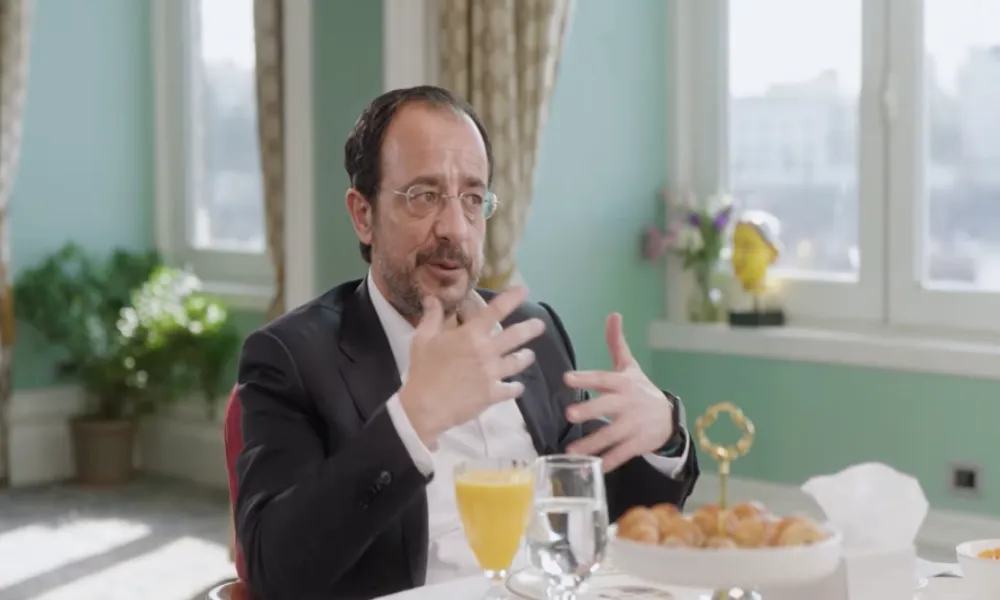


President Nikos Christodoulides has used a wide-ranging podcast interview with self-made Indian billionaire entrepreneur Nikhil Kamath to argue that the world is entering a new era of geopolitical rivalry and that India must play a central role in shaping what comes next.
Speaking on the People by WTF podcast, Christodoulides said we are currently navigating through a “transitional period” in world affairs following the collapse of the Cold War period. He added that the post-World War II international system no longer reflects today’s realities, warning that global politics is reverting to competition between states.
“We’re seeing this today… an anarchic, in a way, international system,” he said, describing a shift away from the cooperative assumptions that followed the Cold War.
India at the centre of a new order
At the core of his argument was a push for India to take a larger global role, including a permanent seat on the UN Security Council.
“We need to expand… the permanent members of the UN Security Council. And India should be the first one to be included,” he said, arguing that such a move would restore credibility to international institutions.
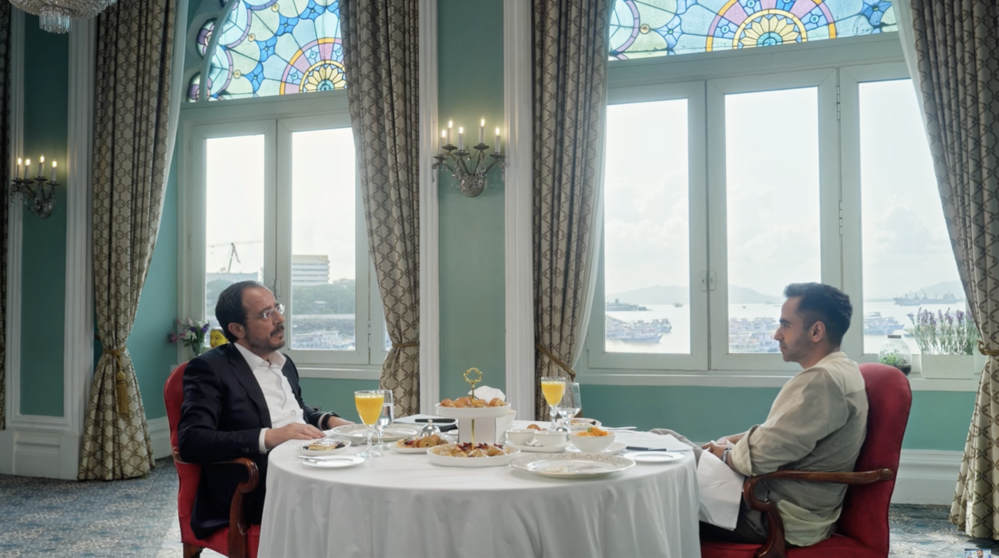
Christodoulides described India as a “leading role” player in a changing global landscape, citing its size, economic strength and democratic credentials. He also pointed to growing ties between the European Union and India, calling a planned free trade agreement “a strategic agreement that will change the international system”.
Neo-colonial approach over
“It's the first time that I see my European colleagues understand the importance of the Greater Middle East,” he said, defining the term to include the Eastern Mediterranean, Middle East, Gulf, and India.
“In the past, they used to approach our region – I will mention this publicly, I mean, I don't have any problem, I'm not a diplomat any more – through a neo-colonial approach. Always criticising the region,” particularly over human rights and rule of law issues, he said.
Now, things are changing, said Christodoulides, adding mutual interests and a political willigness to work together has opened the door to build a new architecture out of the current crisis.
The Cypriot president proposed a new regional framework linking India, the Middle East and Europe, built on cooperation rather than confrontation. The success of this architecture will encourage others to join and help prevent future wars, he argued.
“We need a new architecture… security architecture, trade architecture,” he said, adding that countries should “work together on a positive agenda, not to come together against a third country”.
India can play “a leading role” in this, he said.
War and the limits of power
Reflecting on rising global tensions, Christodoulides warned against the dangers of conflict, arguing that war remains the easiest decision but the most difficult to reverse.
“The easiest thing is to start a war. The most difficult is to finish the war,” he said, calling for stronger international frameworks to manage disputes.
At the same time, he defended increased defence spending as a deterrent, particularly for Europe after Russia’s invasion of Ukraine.
“If you want to avoid war, you need to increase your defence budget,” he said, noting that European states can no longer rely solely on the United States for security.
A historian’s view of politics
Christodoulides, who trained as a historian before entering politics, repeatedly returned to the importance of historical perspective in decision-making.
“History repeats itself… it is very important to understand what happened in order to predict what is going to happen,” he said.
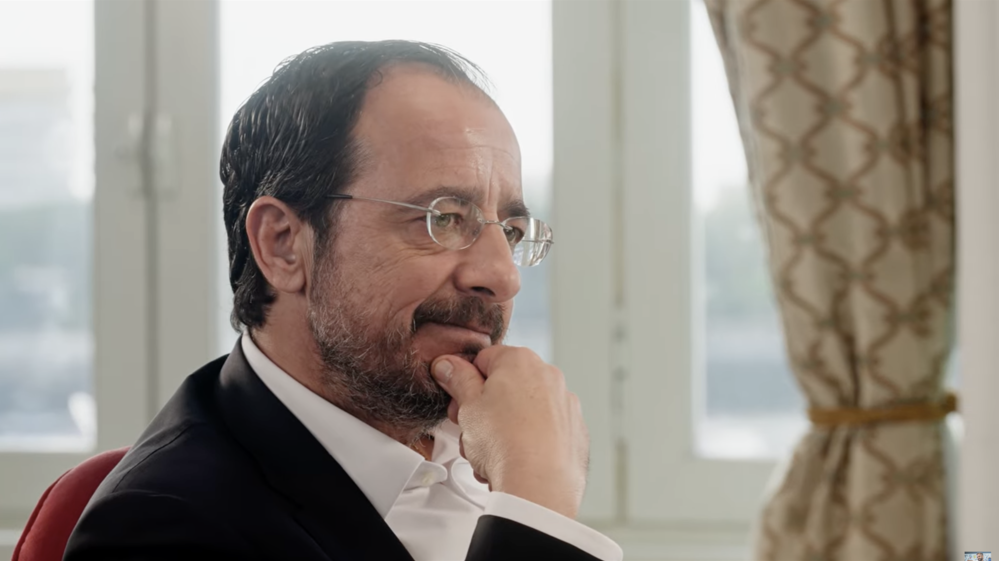
He described himself as aligned with the “realist” school of international relations, emphasising competition between states rather than idealistic cooperation.
His academic background, he argued, shapes his approach as a leader, particularly in navigating Cyprus’ position as a small state in a volatile region.
Democracy under pressure
The president also warned of growing challenges to democracy, particularly from misinformation and social media.
“We see a lot of threats to our democracy today,” he said, pointing to declining trust in institutions.
Despite these pressures, he insisted democracy remains essential. “We don’t have an alternative… it’s the only way to get economic progress and the well-being of the people.”
He acknowledged ideological debates about governance, saying the world appears to be shifting “centre to the right”, while defending a mixed approach that combines free markets with strong public services in health and education.
AI and the future of work
Christodoulides expressed caution about the rapid development of artificial intelligence, warning of potential social disruption if large parts of the workforce are displaced.
“What’s going to happen if AI replaces 80% of the workforce?” he asked. “How will they react?”
While acknowledging the benefits of technological progress, he said its long-term impact on societies and governance remains uncertain.
A 'lonely' job
In one of the interview’s more personal moments, the president described the burdens of leadership.
“It’s a very lonely road,” he said. “You need to take difficult decisions every day.”
He stressed that leaders must prioritise long-term outcomes over short-term popularity, arguing that history, not headlines, is the ultimate judge.
“You need to think the next generations and not the next elections,” he said.
Cyprus as a gateway
Christodoulides also used the interview to pitch Cyprus as a strategic hub linking Europe with India and the wider Middle East, highlighting its geography, stability and access to EU markets.
“Cyprus really is the entry point, the gateway of India to Europe,” he said, encouraging Indian investors to see the island as both a European base and a regional bridge.
Daily routine
The conversation ranged from geopolitics to personal routines – Christodoulides’ daily routine is a 5.30am wake up call, an hour and a half of gym, then straight to work until 10pm-11pm, broken up by a 45-minute power nap at around 2.30pm.
“Power nap is a Mediterranean habit. But it's very important, it is a must,” he said.
When probed, the president confessed he's never tried yoga.
The People by WTF podcast interview is part of a series that has featured global figures including business and political leaders, such as Elon Musk, Indian Prime Minister Narendra Modi, Bill Gates, YouTube CEO Neal Mohan and Meta AI chief Yann LeCun.