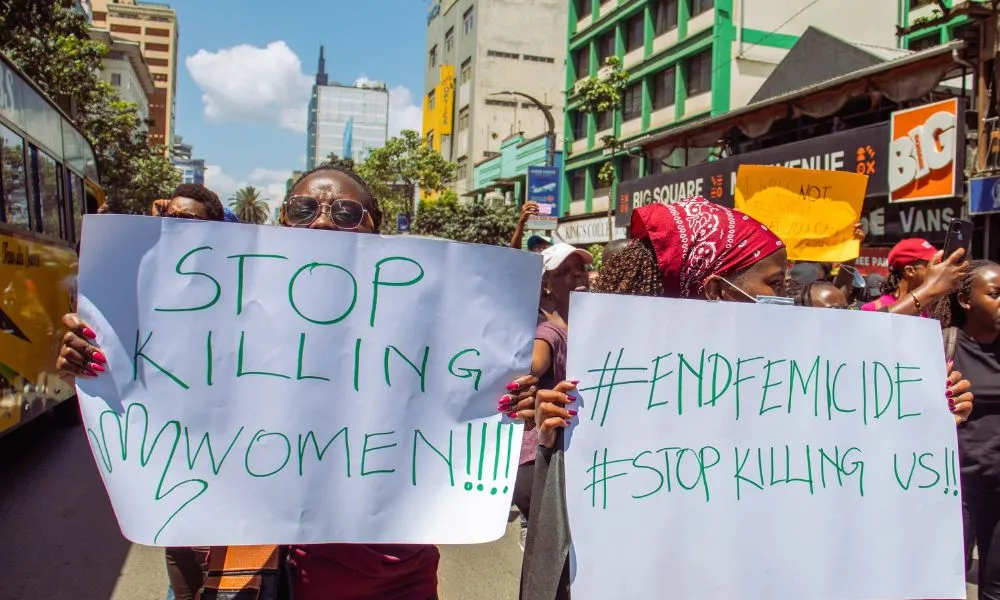

Two weeks ago, following the femicide in Drama, Greece, where a police officer stabbed his wife to death, we wrote that it is not enough to be shocked every time a woman is murdered by her husband, partner or former partner. We wrote that it matters to name violence correctly, rather than disguising it as a "family tragedy," a "crime of passion" or a "moment of madness."
Two weeks later, there is no longer any room for politeness or half-measures. Last Tuesday in Limassol, a police officer shot his wife with his service weapon before taking his own life. The woman remains in critical condition. An eyewitness reported seeing a man holding a woman by the neck and, when told to let her go, replying: "Leave. She's my wife." A few days earlier in Strovolos, a man attacked his wife and mother-in-law before fleeing. His wife was a recognised victim of domestic violence and had the panic button application installed on her phone. She did not have time to use it.
These two cases do not call for yet another statement of condemnation. They do not call for more declarations that "enough is enough." They do not call for more tears afterwards. They require political decisions, a plan and persistence. They require us to stop treating violence against women as something that surprises us anew every single time.
The question is not only what we do when a woman reaches the point of asking for help. It is what we do much earlier. Before the complaint is filed. Before the panic button is installed. Before restraining orders become necessary. Before the husband, partner or former partner decides he has the right to raise his hand, pick up a weapon, grab a woman by the neck, say "she's my wife" and kill her.
Because that is where the problem lies: in that phrase. It is not merely something said in the heat of the moment. It reflects an entire culture. It reflects the belief that a woman is an extension of a man, that a relationship confers rights, that marriage means ownership, that separation is an insult and that a woman's "no" deserves punishment.
If we truly want prevention, we must dare to go where the problem begins, not to the final stage of violence but to its roots. To how boys and girls are raised. To schools. To what children learn about love, consent, anger, rejection and boundaries. To whether they are taught that jealousy is not proof of affection, that control is not care and that masculinity is not measured through shouting, threats and domination. This cannot be limited to a lecture once a year, a poster on a wall or an occasional campaign. It requires continuous education. It requires uprooting the stereotype of the "macho" man who sees a woman as his property.
There must also be programmes for perpetrators and potential perpetrators. Not as an excuse. Not as a way of sharing responsibility. But as a tool for protecting victims. A man who feels he is losing control should know where he can turn before he becomes dangerous. Support structures must exist and they must be easy to access. They should not be hidden away in pamphlets, nor fragmented initiatives run by NGOs that remain largely unknown to the wider public.
Recognising the term "femicide" is necessary. But it is not enough. It is not enough to find the correct word for the woman who was killed or nearly lost her life. A clear message must be sent to the man who believes he has rights over her:
-
Your partner is not your property.
-
Your wife does not belong to you.
-
Your ex does not owe you obedience.
-
No woman should have to live in fear because a man never learned to accept the word "no."