
Twenty-one years after the Helios Airways Flight HCY522 disaster claimed 121 lives, relatives of victims say the pain remains as raw as ever, recalling desperate attempts to reach loved ones, the agonising wait for confirmation and a sense that justice was never fully delivered.
The flight, which departed Larnaca bound for Prague via Athens, crashed near Grammatiko, Attica, on 14 August 2005, killing all 115 passengers and six crew members on board.
"The phones rang but nobody answered"
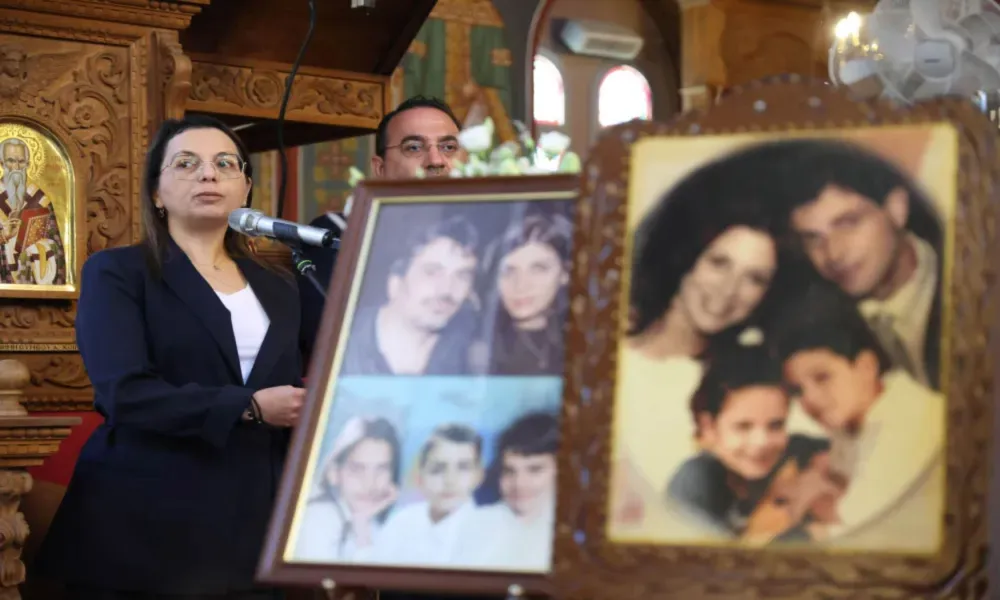
Christiana Tsiopani lost five members of her family: her uncle Kyriacos (Kolokasis) Kyprianou, 48, her aunt Anastasia, 43, and their three children, Stella, 14, Christia, 12, and Christodoulos, 6.
The family from Dali was travelling to Porto Heli via Athens for their summer holidays.
"We grew up together. They were like second parents to us and the children were like our brothers and sisters."
Tsiopani vividly remembers seeing television reports about an "uncontrolled Helios aircraft".
"We immediately became worried and started calling their mobile phones. The phones rang but nobody answered."
Waiting for answers
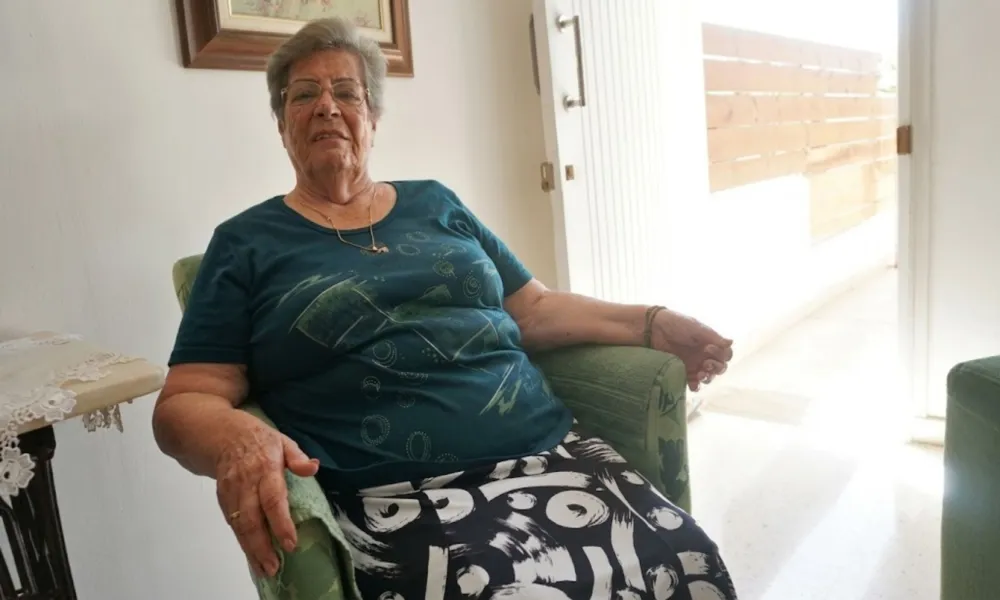
Rafaella Savva, who was about 12 years old at the time, lost her grandparents, Cleopa Nicolaou, 66, and Yiannoula Neophytou, 55, from Kokkinotrimithia.
They were travelling to Prague for a summer holiday.
"In a single moment we lost two people who were part of our lives."
She remembers the hours of uncertainty.
"At first there was mainly anxiety and waiting to find out whether it was really the flight on which my grandfather and grandmother were travelling."
Her family gathered at home, constantly watching the news and waiting for passenger names to be published.
The final flight
At 10:15am, the aircraft entered the Athens FIR without communication with air traffic control.
At 11:05am, two F-16 fighter jets took off from Nea Anchialos and established visual contact with the Boeing at 11:18am.
They observed that the first officer was unconscious, the captain was not in his seat and oxygen masks had deployed throughout the cabin.
The aircraft continued flying on autopilot.
Flight attendant Andreas Prodromou, who remained conscious longer than others on board, later attempted to take control of the aircraft.
Meanwhile, families in Cyprus waited anxiously for information.
After fuel was exhausted, the engines stopped functioning and at 12:04pm the aircraft crashed near Grammatiko, killing all 121 people aboard.
"The situation was tragic"
When news of the crash emerged, Tsiopani and her brother rushed to the airport seeking information.
"Other relatives arrived there too, trying to find out what had happened to their loved ones. The situation was tragic, with many parents desperately seeking information and calling out for their children."
Savva said confirmation eventually came after hours of waiting.
"When it was finally confirmed that they were on that flight, it was a huge shock for the entire family and all our relatives."
The difficult identification process
Both families then faced the painful process of identifying victims.
Tsiopani's mother, brother and another uncle travelled to Greece.
"They witnessed the hardest scenes imaginable."
She said many remains were unrecognisable and identification had to be carried out through DNA analysis.
The identification of her uncle took longer, forcing the family to wait before a funeral could be held.
Savva also remembers that period vividly.
"I was about 12 years old then and, although I could not fully understand everything that was happening, I remember very clearly the anxiety, sadness and shock within the family."
"A wound that never heals"
"Our lives changed. It left us with a wound that never closes," Tsiopani said.
She recalls the funerals and the overwhelming grief of the days that followed.
"The pain was so heavy that even the stones seemed to crack."
She particularly remembers her grandmother, who lost her son and his entire family in the disaster.
"She had deep faith in God and she supported us and gave us the strength to endure."
Questions over accountability
The report by the Hellenic Air Accident Investigation and Aviation Safety Board, published in October 2006, concluded that the aircraft's pressurisation selector had remained in manual mode and that the crew failed to recognise warning indications in time.
Former investigation chairman Akritas Tsolakis later said the chain of events led to hypoxia and incapacitation of the crew before fuel exhaustion ultimately caused the crash.
Tsiopani believes the disaster was not an accident but the result of a series of failures.
"It was not a random event."
She attributes responsibility both to state authorities and shortcomings within the airline.
She also criticises the way the Cypriot prosecution handled the case, arguing that charges were framed incorrectly and focused too heavily on pilot suitability rather than broader issues identified during the investigation.
According to Tsiopani, the findings of the Kallis report were not properly utilised, despite, in her view, identifying more serious failings within Helios and the Department of Civil Aviation.
"No one was held responsible for the deaths of the 121 people."
She further claimed that some people were aware of problems within the company but remained silent out of fear for their careers and that operational and regulatory shortcomings extended far beyond the actions of the flight crew.
Tsiopani also referred to allegations at the time concerning the aircraft's certification process and expressed hope that Cyprus' culture of accountability in safety matters has since improved.
Justice not fully delivered
In Cyprus, five company executives faced trial.
The case ended with their acquittal and the Attorney-General's Office subsequently discontinued the prosecution.
In Greece, four company officials were convicted.
Savva believes many questions about what happened have been answered, but not the question of justice.
"Even after 21 years, I still believe some things could have been handled differently."
She said families should have received greater support, fuller information and genuine justice.
"Time helps, but it does not erase a loss like this."
She nevertheless hopes important lessons were learned.
"What matters is that tragedies like this lead to change and greater safety so that mistakes capable of costing human lives are never repeated."
Remembering those who were lost
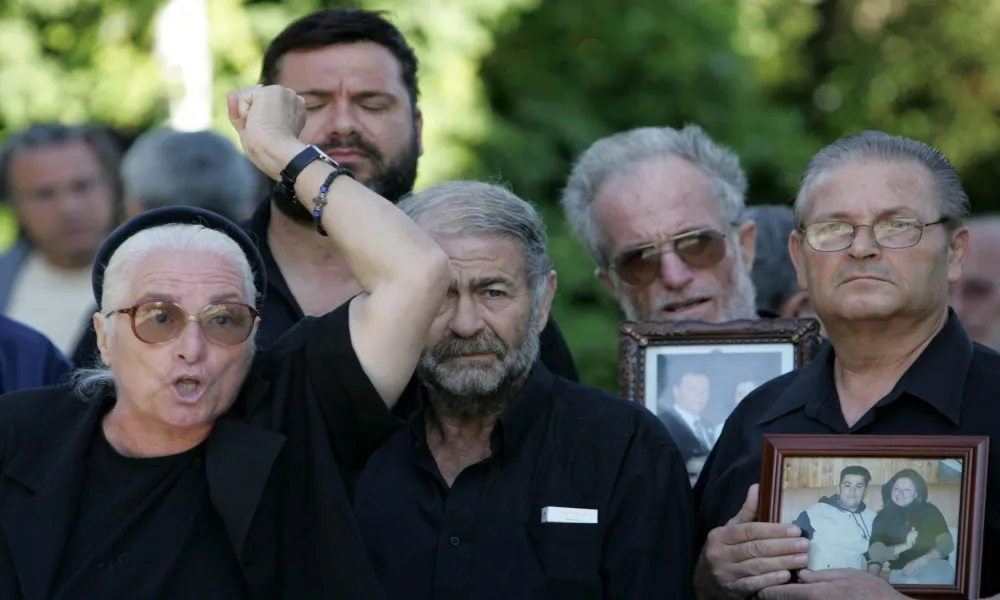
For Tsiopani, one of the most tragic consequences of the disaster was the number of children who lost parents and parents who lost children and grandchildren.
Twenty-one years later, what remains above all is memory.
"For us, our loved ones continue to exist in our memories," Savva said.
She hopes one message endures:
"The protection of human life and safety must always remain a priority."
For Tsiopani, memories return during every important family occasion.
"This wound remains engraved in our lives. Time does not erase wounds. Their absence is always there, even in every smile and every happy moment."
Remembering the day before the disaster, she still recalls her three cousins who died alongside their parents:
"Their voices, their laughter, their last hugs."
And she concludes:
"No matter how many years pass, in our minds they have gone on a long journey, and we hope God will one day allow us to meet again."
Source: CNA