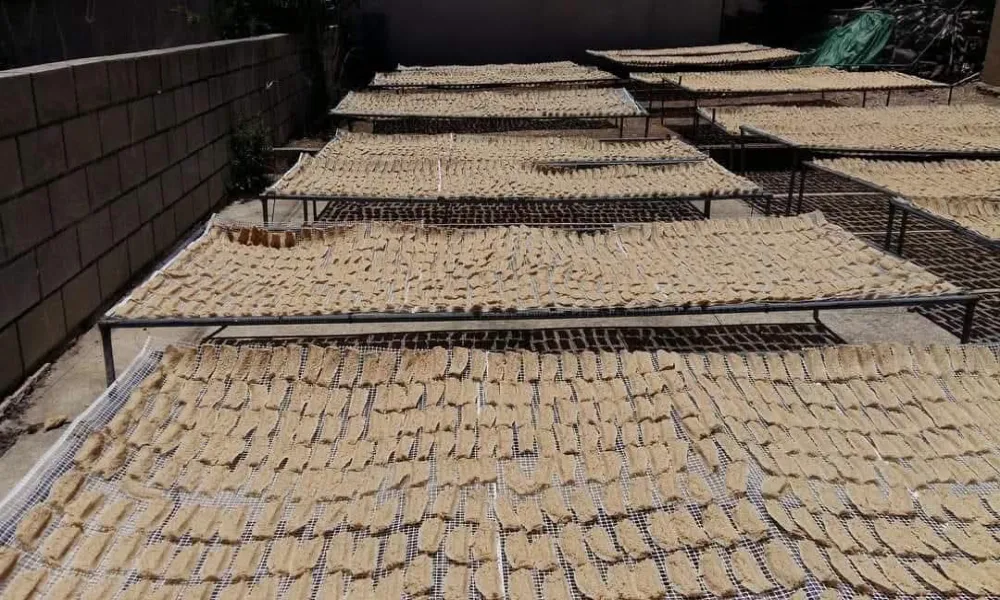

As the beaches fill up, the Cypriot countryside offers a different kind of summer ritual. In Statos-Agios Fotios, the village of trahanas, July is the month when the traditional product is made and laid out to dry, according to tradition researcher Anna Tselepou.
What is trahanas?
For anyone who did not grow up with it, trahanas is one of the oldest foods of the Cypriot table: cracked wheat soaked in soured milk or yoghurt, cooked slowly, then shaped into small pieces and dried in the summer sun until hard as pebbles. Preserved this way, it keeps through the year without refrigeration, a technique born of necessity in the days before freezers. Come winter, the dried pieces are simmered back to life in broth, often with a piece of halloumi melting in the bowl, producing the tangy, comforting soup that generations of Cypriots associate with cold evenings and their grandmother's kitchen.
A village ritual under the July sun
In almost every house and courtyard of Statos-Agios Fotios, Ms Tselepou says, trahanas is spread out to dry under the scorching July sun, so that it can be preserved and accompany the tables of winter. Some households prepare small quantities, others larger ones, but all use quality, local raw materials, keeping unchanged a tradition passed from generation to generation.
The images from the village are striking, highlighting the value of locality and seasonality in Cypriot products. It is a living process that continues to connect residents with their land and their traditions.
'Everything in its time and in its place'
As grandmother Maritsa characteristically puts it, Ms Tselepou adds: "Everything in its time and in its place." A phrase that distils the wisdom of Cypriot tradition and the importance of respecting the cycle of nature and local produce.