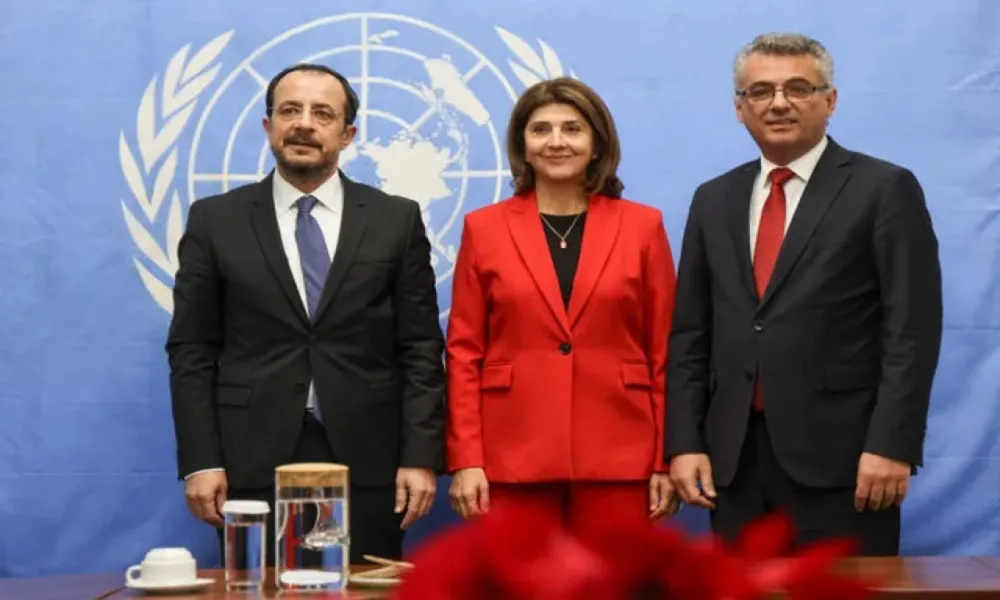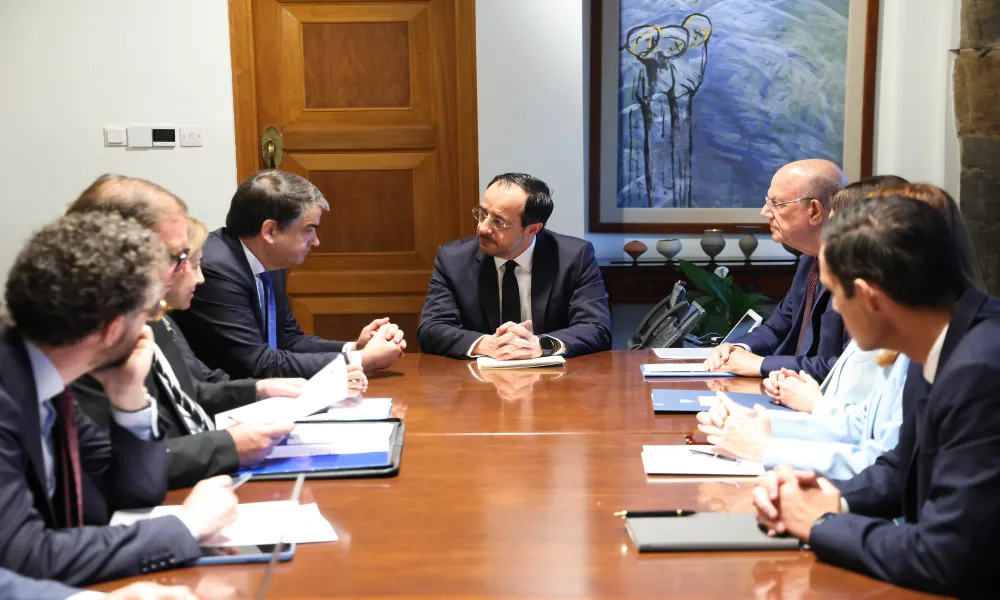

Cooperation on the next Multiannual Financial Framework (MFF), the EU Islands Strategy and the Right to Stay initiative dominated Thursday's meeting between President of the Republic Nikos Christodoulides and European Commission Executive Vice President for Cohesion and Reforms, Raffaele Fitto.
Fitto is in Cyprus ahead of the high-level conference "Strengthening the Islands and Coastal Communities of the European Union", taking place on Friday in Paphos, where he will address delegates on the EU Islands Strategy.
Christodoulides praises Fitto's role in Cyprus Presidency
Welcoming Fitto to the Presidential Palace, President Christodoulides thanked him for his support during the Cypriot Presidency of the EU Council, describing his contribution to the MFF negotiations as "very decisive". He expressed confidence that cooperation between Cyprus and the Commission would continue beyond the Presidency.
Fitto: Cyprus Presidency a significant success
In his remarks, Fitto described the work completed during the Cypriot Presidency as a "very important success", citing progress on the next MFF, the governance framework for the next national-regional partnership, and the Islands Strategy. He also highlighted the Right to Stay initiative as a key priority in preparation.
Addressing rural depopulation
Speaking after the meeting, Fitto outlined the ambition behind the Right to Stay initiative, describing rural depopulation as "a critical issue for the future of Europe". He said the aim is to develop an integrated policy connecting regional, agricultural, fisheries, transport and tourism frameworks.
He noted that a recent public consultation had attracted more than 700 contributions, which he described as a strong signal of interest. The strategy is expected to be presented in the first months of 2026.
Village visits and field assessment
As part of his Cyprus visit, Fitto travelled to the village of Agios Ioannis in the Limassol district and visited the Troodos Observatory, an EU-funded project under the Right to Stay initiative. He said such field visits are central to his approach, allowing him to assess the real needs of remote and rural communities directly.