At 18:04 local time on Wednesday, two earthquakes struck in rapid succession near the Venezuelan capital. According to the United States Geological Survey (USGS), the first measured magnitude 7.2, with a focal depth of 21.9 kilometres and an epicentre approximately 200 kilometres west of Caracas. Just 39 seconds later, a second and stronger quake of magnitude 7.5 followed, originating at a shallower depth of 10 kilometres.
The USGS described the magnitude 7.5 earthquake as the most powerful to hit Venezuela since 1900. Both tremors were felt as far away as Bogotá, Colombia, more than 1,000 kilometres distant, and were also reported in cities across northern Brazil. More than 20 aftershocks have since been recorded.
The scale of destruction
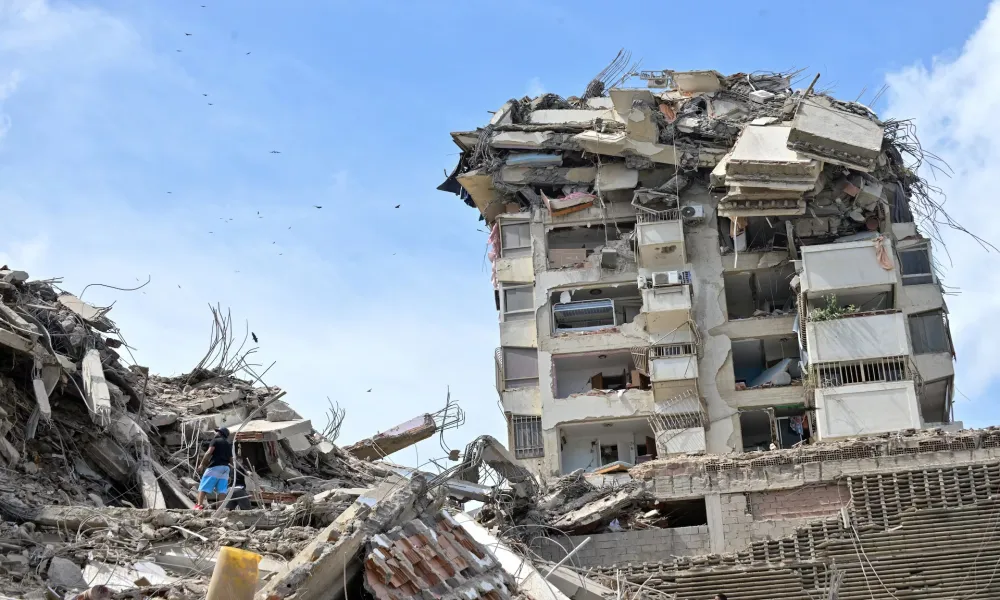
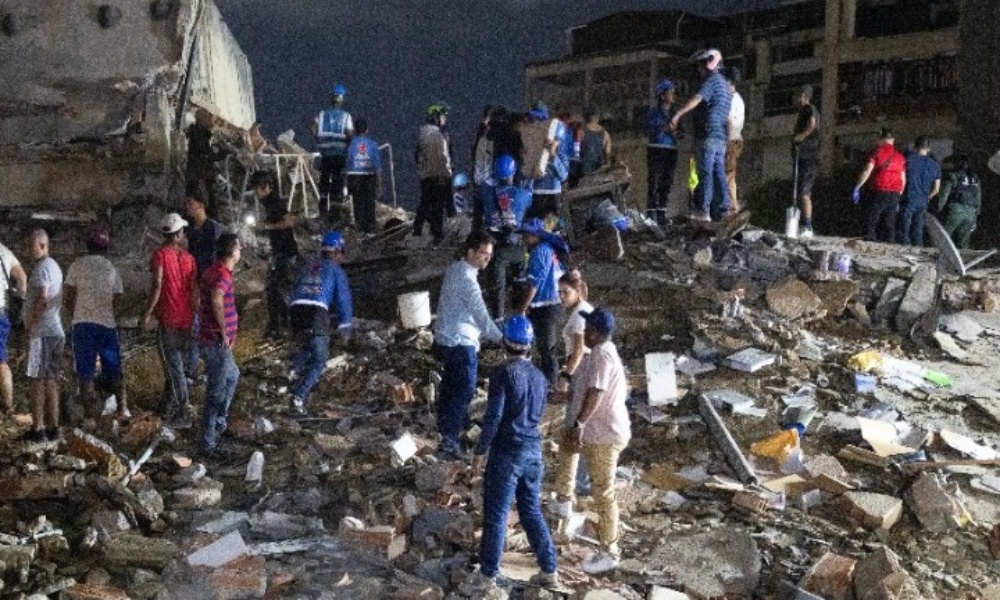
The hardest-hit area is the state of La Guaira, north of the capital, where the coastal city of Catia La Mar has seen widespread building collapse. Maiquetía International Airport, located in La Guaira, sustained severe damage and has been closed. Caracas itself has also suffered significant destruction, with streets covered in rubble and broken glass, and multiple buildings collapsed or structurally compromised.
Power cuts were reported across affected areas, and Interior Minister Diosdado Cabello ordered the gas supply to be cut as a precaution against accidents. By Thursday morning, almost no shops had opened, and heavy traffic filled the streets as residents attempted to move away from damaged and unstable buildings. Many people spent the night outdoors or in their vehicles.
AFP journalists at the scene witnessed scenes of devastation suggesting the final death toll will be considerably higher than current figures. Buildings have been flattened or partially sunk into the ground, with entire families searching desperately through mountains of debris for trapped relatives.
Survivors speak from the rubble
In Catia La Mar, which was plunged into darkness by the power outage, AFP journalists saw residents removing debris from collapsed buildings by torchlight, calling out the names of those trapped inside.
Lisbeth Vásquez, 37, described escaping through the windows of her apartment at the last moment as the building began to collapse around her. "It was terrifying," she said. "The neighbours from the floors below are buried under the rubble. We are trying to get them out."
Larry Rojas, 49, stood before a pile of ruins where members of his family remain trapped. "We have nothing left. Nothing at all, not even the strength or the courage to go back in there," he said.
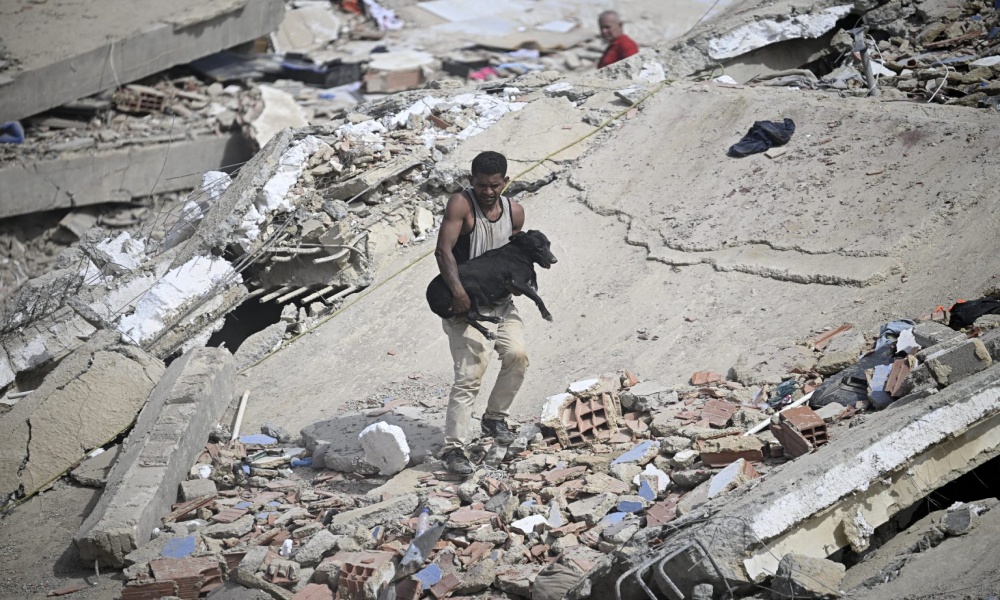
Antonio Bermúdez described hearing a young woman named Jennifer calling to him from the eleventh floor of a collapsed building. "But we have no tools, no means to help her get out," he said.
Dany Rizo, 48, appealed for heavy equipment. "We need people to come and help us. There is a little girl here, trapped since last night. We can get her out. We need a bulldozer."
Jean Alexander Capote, who lost his mother-in-law and is searching desperately for his missing daughter, made a simple appeal: "Help. Quickly."
During one aftershock, crowds gathered around already-collapsed buildings were heard shouting: "The earth is shaking, it is shaking now."
The toll climbs
Casualty figures have risen rapidly and continue to be updated. Acting President Delsy Rodríguez, who declared a state of emergency, initially confirmed at least 164 dead and approximately 971 injured. Parliamentary Speaker Jorge Rodríguez subsequently reported 1,520 injured and 200 trapped. The most recent official figures cited by authorities stand at more than 235 dead and 4,300 injured, with many people still unaccounted for beneath the debris.
The USGS, using predictive modelling to estimate the eventual death toll, stated that the figure could rise to thousands, with a significant probability of exceeding 10,000. A website set up to locate missing persons, shared on X by Venezuelan opposition figures, listed more than 10,000 people who had not been heard from as of 05:40 local time on Thursday.
Most Venezuelans were at home when the earthquakes struck, as Wednesday was a public holiday.
Looting reported in Catia La Mar
AFP journalists reported witnessing looting in Catia La Mar, where men and women were seen leaving a partially fire-damaged commercial premises carrying bags filled with food.
International response gathers pace
Acting President Rodríguez announced on television that specialist rescue teams, coordinated with the United Nations, are already on their way to Venezuela. She said she had spoken with several foreign leaders and with a senior UN official in the country.
UN Secretary-General António Guterres expressed his profound sorrow at the loss of life and the scale of the destruction. In a statement attributed to his spokesperson Stéphane Dujarric, Guterres conveyed his sincere condolences to the families of those killed and wished a swift recovery to the injured. He welcomed offers of solidarity from member states and expressed solidarity with the Venezuelan people and government.
The UN Humanitarian Country Team has been mobilised and is working closely with the government and partners to support the response. The UN Office for the Coordination of Humanitarian Affairs (OCHA) is facilitating the deployment of search and rescue teams.
Tom Fletcher, the UN's head of humanitarian operations, warned that what is needed is a "massive, collective effort." He noted that even before the earthquakes, approximately 8 million people in Venezuela were already in need of humanitarian assistance. "This disaster risks compounding existing vulnerabilities. Sustained international support for humanitarian organisations operating on the ground is essential and urgent," he said.
US Secretary of State Marco Rubio pledged that the United States would respond "quickly and effectively," sending aid and rescue teams "immediately." China, India, Iran and numerous countries across the European Union and Latin America have also offered assistance, including search and rescue teams, doctors and nurses.
Maiquetía International Airport remains closed due to infrastructure damage, but La Carlota military airport in Caracas is available for the delivery of humanitarian aid.
Historical context
Venezuela has experienced destructive earthquakes before. In 1997, a quake in Cariaco in north-eastern Venezuela killed 73 people. In 1967, an earthquake in Caracas left 236 dead. Wednesday's double earthquake, however, represents the most powerful seismic event recorded in the country in over a century.
Source: Politis / ERT / APE / AFP