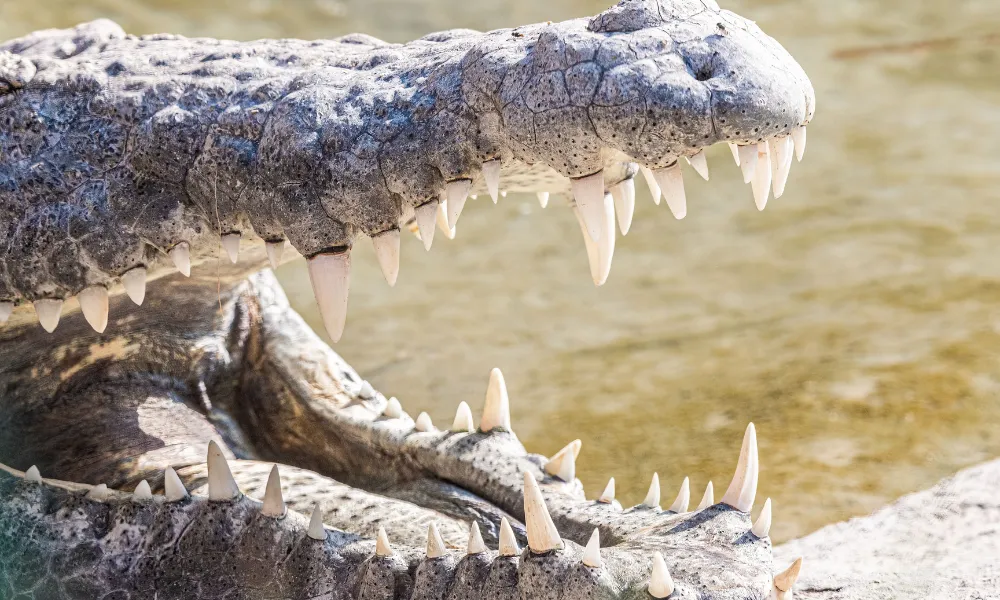

A plan by Israel's National Security Minister Itamar Ben Gvir to place crocodiles around prisons holding security prisoners, with the aim of reinforcing their guarding, has provoked strong reactions in the country.
According to the Jerusalem Post, Environmental Protection Minister Idit Silman proceeded to change the legal status of the Nile crocodile, classifying it as a "farmed wild animal" in order to facilitate the plan's implementation.
The change opens the way for the transfer of crocodiles from the Hamat Gader park to correctional facilities, with a pilot application being considered at Ktziot prison.
Objections from within the system
The initiative, however, met intense resistance from both the ministry's Legal Service and the Israel Nature and Parks Authority. The competent services argued that existing legislation permits the keeping of wild animals only for educational, research or informational purposes, and not for guarding prisons.
"We must protect the crocodiles, not have them protect us. This does not accord with the spirit of the law," officials of the Authority are reported to have told Ben Gvir and Silman.
According to the report, crocodile farming in Israel had been abandoned in the past, after recorded incidents of animals escaping into the wild created risks for public safety. The practice was discontinued following a recommendation by the Nature and Parks Authority.
No expertise, no precedent
The Environmental Protection Ministry's legal adviser, Neta Drori, warned in a letter that there is insufficient scientific or legal evidence to justify implementing the plan. As she noted, there is no modern precedent for the use of crocodiles as a security measure in prisons, while references to similar trials in the United States and South America concerned areas where crocodiles already live naturally, and were abandoned after a short time.
She also pointed out that the Israel Prison Service does not possess the necessary expertise to manage such dangerous wild animals, and that such a decision would require extensive consultation with the competent authorities as well as legislative regulation, not a simple ministerial decision.
Despite the objections, Silman chose to proceed with the change to the crocodile's status, maintaining that a precedent exists for farming the particular species and that the initiative can be implemented under specific conditions.
The case is expected to be re-examined by the plenary of the Nature and Parks Authority, while government and legal figures continue to question the plan's legality, arguing that there is no sufficient legal basis for the use of crocodiles as a security measure in Israeli prisons.
With information from the Jerusalem Post