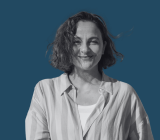
About a year and a half into deployment, 33East has backed 12 companies and committed about €7.5 million, which puts it at the upper limit of the investment pace it set for itself for mid-2026. Demetrios Zoppos, Co-founder & Partner, 33East told Politis to the Point that the team has reviewed between 1,000 and 1,200 startups to build that portfolio. He said most rejections come from a mismatch between a founder's ambition and what venture capital is designed to finance.
Investment pace against the original plan
"We are very much on track. In fact, we are at the top end of the range in terms of our original plan," he said. "Our original plan was between seven and twelve investments by the middle of 2026, and we ended up at 12."
Individual investments have ranged from a few tens of thousands of euros to just over €1 million. The size depends on the compartment, the stage of the company and the size of the funding round.
The committed capital is roughly a quarter of the fund's investable capital. The fund's target size is €37.5 million, and about €29 million will be invested in actual cash. About half of that is set aside for first tickets and the rest for follow-on investments in the companies that make the most progress.
"Setting up a company in Cyprus takes 10 days, and there is no convincing answer as to why."
"The ones that fail, you don't invest in them, and the ones that succeed, you put as much cash into them as you can," he explained.
Demetrios Zoppos said speed of deployment is not a measure of success in itself. "Investing the capital quickly is not the achievement of a VC. You have to diversify over time as well, so you don't catch only one technological wave."
A fund of this type typically invests over three to four years and holds its best companies for several years after that. It operates as a 10-year fund with possible extensions. "The failures will come early and the successes will come late," he said. "Typically, you can see the first signs of how well a VC fund is doing in the first four years of investment."
How the fund is structured and financed
The fund was set up under the Cyprus Equity Fund, which is managed by the European Investment Fund (EIF). The Cyprus Equity Fund contributed €27 million, financed primarily under Cyprus's Recovery and Resilience Plan, the Bank of Cyprus €3 million, and other private investors a further €5.6 million, which includes the David and Leventis families, a group of Cypriot individuals and the 33East partners themselves.
The EIF is the largest fund of funds in Europe, with around €140 billion in assets under management and investments in several hundred venture capital and private equity funds. It usually acts as an anchor investor in early-stage funds in countries with a market failure, in order to encourage private investment.
33East is split into two pockets: an acceleration compartment and a venture capital compartment. He said the split was not the team's own strategic choice. "The VC versus acceleration categories are set by the European Union. That was a requirement," he said. "The only thing where we had a choice is how much to put in each of them."
In larger markets such as Greece, separate mandates went to acceleration funds and to VC funds investing at slightly later stages. "In Cyprus's case, because we're a small country, there's not enough market size to separate those funds," he said. The result is a single fund with two pockets. The acceleration compartment is funded by the EIF together with the 33East partners' own commitment. The main VC compartment includes both the EIF and the private investors.
Some portfolio companies have drawn capital from both pockets. FitWise AI received an initial investment from the acceleration compartment and a further, larger investment from the VC compartment. Genie Fertility received both its initial investment and a follow-on from the acceleration compartment. Electryone AI received its initial investment and a follow-on from the VC compartment.
The timeline from selection to first close
The team was selected in 2023, reached first close in December 2024, began investment activity in January 2025 and completed its first investment in April 2025. He rejected the suggestion that this was a delay.
About 10 teams applied for the mandate. The selection involved interviews, discussions and pitches in which each team set out how it would run the fund.
Demetrios Zoppos said the timeline reflects how EIF-backed funds are set up. "Funds which are not supported by the European Investment Fund tend to follow a different process. You fundraise first, and if you're successful, you do the legal structuring," he said. "In our case, we were selected first, then came the legal structuring, then the fundraising, and then we deployed."
"The start of operations was literally 18 months after the announcement that we won the mandate."
From 1,200 startups to 12 investments
"The nature of venture investment is that a very small number of people really want to build scale businesses," he said. "Tech investment means fast growth. Many people can build notable businesses that don't grow very fast, in which case venture is not the right financing category for them."
Of the 1,000 to 1,200 startups the fund has seen, he estimated that about half were not relevant. Many sent pitch decks or had second and third conversations with the team. Around 35 reached the stage of detailed work. The fund invested in about a third of those.
Demetrios Zoppos said the most common reason for rejection at the top of the funnel is the level of ambition. "Most of the no's were a mismatch between the level of ambition and the financing instrument. In our case, VC cash is suitable only for a small subset of startups: those that are ambitious, with international markets from day one."
He added that founders often plan to build in Cyprus first and expand later to Greece or other countries. "Cyprus is never an ideal test market for initial product-market fit. It's a very small market and a peculiar one."
"We assess founders before we assess the proposition."
Zoppos gave two examples. "If you're doing something in fintech and your biggest customers are consumers in, say, the UK, you start in the UK. If your target is the US e-commerce market, there's no point starting in Cyprus and then trying to sell to US consumers. You have to be in the market where you intend to scale."
In his own words
You have encouraged Cypriot founders to focus on B2B and international validation rather than the local consumer market. Has that message landed?
"If I had spent my whole career in Cyprus, I would probably think Cyprus is the market. You tend to be very inward looking, because you don't really understand what's outside. But founders in Paris or Berlin often think their markets are too small. Even larger European markets are sometimes too small. People think in terms of America, Asia or China."
Cyprus is often promoted as an ideal test country for startups because of its size. You are saying the opposite.
"It depends on the category. In health tech, for example, if you're building a new cancer drug and there's no regulatory authority here that can approve your clinical trial in a way recognised elsewhere, why would you do it in Cyprus? You have to go into a regulated market that can be internationally passported from day one."
"If you're building a product and selling to America, you can do that from Cyprus, and many companies do. That's the Israeli model, especially for B2B software as a service: build in Israel, sell to America. But it took them around 20 years to build that connection."
You have described 33East as operating like a startup. What does that mean in practice?
"We make decisions very quickly. Yiannis Eftychiou and I are the investment committee. We have some formality: we write investment memorandums, we challenge each other and we play devil's advocate with each other. But we cannot compete with larger funds by being slow and over-structured. Moving fast means being very founder friendly."
"We assess founders before we assess the proposition. First we talk to the founders to understand why they are doing this and what drives them. Motivation is the number one thing. Then we assess the team: who is in it, how the equity is shared, how they make decisions and how they divide responsibilities."
Which company's progress has surprised you most since deployment began?
"The progress of startups is not linear. Sometimes you get very early traction and then it tails off. Occasionally you get nothing for a long time and then something takes off, because the team keeps trying new things. You cannot judge where a startup will be in six months based on the previous six months."
"We are not a grant agency."
"What you can predict is teams. Teams that start with problems end up having more problems down the line, whether it's a missing skill set, lack of clarity about who does what, or disagreement over direction. Founders can disagree and fight things out in detail, but they have to be aligned on the mission."
The portfolio spans very different sectors. Why?
"We are a generalist fund. Some funds focus on fintech or consumer apps, but as a small country we are required to place 70% of our investments in Cypriot entities."
What single policy change in Cyprus would most help your work?
"Simplification. You can start a company in America in one day, and in some European countries in two or three days. Setting up a company in Cyprus takes 10 days, and there is no convincing answer as to why. We have huge advantages: a common law system, EU membership and widespread use of English. But certain parts of our system are slower."
What is the biggest misconception about what 33East does?
"Especially with science-based startups, people tend to think we are some sort of grant agency. We are not a grant agency. We are not like the EIC grants. The state has to keep supporting categories where there is market failure."
"We are a commercial fund. We are looking for categories in which founders setting up in Cyprus can win internationally. For me, those are mainly B2B and AI categories, where you can build in Cyprus and scale into large international markets."
The companies in the portfolio
The fund has made 12 investments to date. Nine are listed publicly on its website, across renewable energy, artificial intelligence, health and financial services.
Electryone, founded by Ioannis Kassinopoulos and Yiannis Zampas, aims to make trading and profiting from renewable energy accessible to a wider range of participants. That market has traditionally been limited to its largest players. The founders are Cypriot and the company employs its development team through a Cypriot subsidiary.
Mokka AI, founded by Max Krasnykh, develops hiring tools for companies. Its first product is an AI assistant designed to remove bias from candidate screening. The company is headquartered in Cyprus and Krasnykh lives in Paphos.
FitWise, founded by Anna Kogan and Tatiana Khanova, converts ordinary video into a detailed 3D model of human body movement. It is aimed at athletes, coaches and clinicians working on performance and injury prevention. Kogan lives in Paphos, and as a result of the investment the company established a Cypriot subsidiary and plans to hire seven people over the coming months. FitWise received an initial investment from the acceleration compartment and a further investment from the VC compartment.
Squid, founded by Conor Jones and George Kolokotronis, builds AI-powered planning software for teams that design and manage electricity grids. The company is also backed by Y Combinator as part of its Winter 2026 batch.
Positronic Robotics, founded by Sergey Arkhangelskiy, independently evaluates AI models for robots on its own hardware. It also runs PhAIL, a public leaderboard for physical AI, with cloud company Nebius as founding partner. Positronic incorporated in Cyprus in July 2026 as a direct result of the investment, with its software development and its real hardware evaluation lab both run from Cyprus.
Genie, founded by Anoushka Menon and Andreas Hadjimitsis, is developing what it describes as the first non-invasive test for womb health based on menstrual blood. It sees potential to expand into conditions such as PCOS and fibroids. Hadjimitsis is Cypriot, and the company established Genie Fertility Cyprus Ltd in Nicosia in June 2025 as a direct result of the investment. Genie received both its initial investment and a follow-on from the acceleration compartment.
xmemory, founded by Alex Petrov, is building a memory layer for AI systems. Its technology converts unstructured data into structured records that AI models can reliably use.
Clove, founded by Alex Loizou and Christian Owens, is an AI-powered wealth management platform for professionals in their 30s and 40s. It combines financial advice and execution for a group the company says traditional advisers tend to overlook.
Code Maestro, founded by Limassol-based Alexander Goldybin and Max Slobodyanyuk, who develops AI tools for game developers. Its first product cuts the production of playable advertisements from days to minutes, so studios can test more ideas at lower cost.
Piney, founded by Nicolas Chrysostomou, provides services for the short term rental market. It is Cypriot from the outset: the group holding company for its five operating countries is in Nicosia, and 12 of its 24 employees are in Cyprus, including the senior management team and the entire technology function. Chrysostomou previously led Bolt's entry into Cyprus and the sale of that business to Bolt.