
In Cyprus, we want new roads, newly paved neighbourhoods, motorways without potholes and rapid completion of infrastructure projects. But when the question is raised about where the asphalt will be produced, the answer is almost instinctive: somewhere else. Far away from us. Presumably next to someone else, who will, of course, give exactly the same answer.
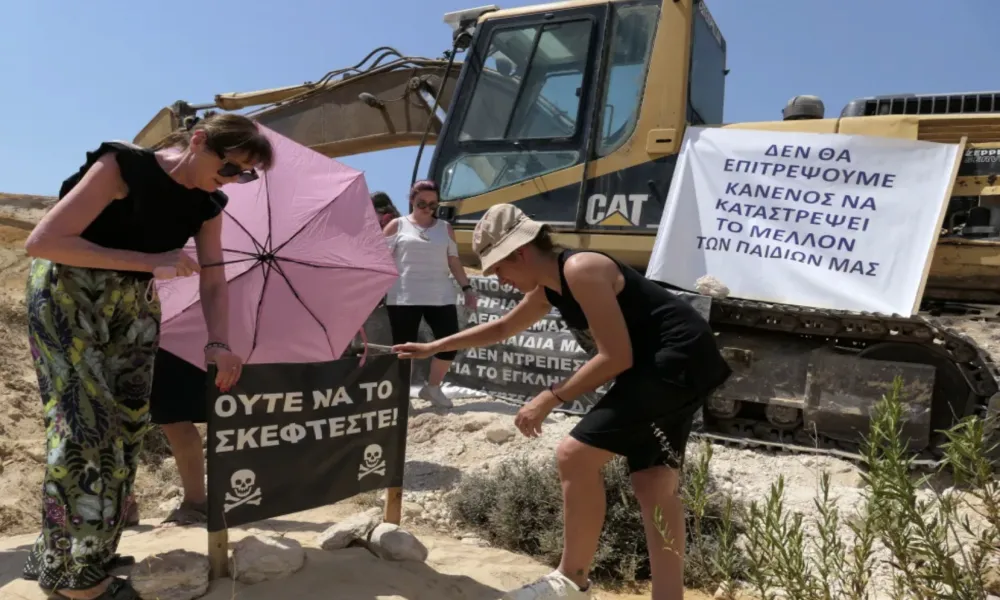
The asphalt plant issue, first in Dali and now in Mitsero, reflects this contradiction. Communities are protesting, construction works are progressing and a court ruling is still pending. In this environment, frustration is growing and the discussion risks being reduced to a clash between residents, the company and the state.
Let us be clear: residents are entitled to be concerned. The fact that they use roads does not mean they are signing a blank cheque for any industrial installation near their homes. Nor is a planning permit, on its own, enough to create public trust. Convincing answers are needed regarding location, emissions, odours, truck traffic and the overall environmental burden.
However, rights also carry responsibilities towards the common good. If every area rejects every necessary installation, the country cannot function. We cannot demand infrastructure while simultaneously treating the production of the materials needed to build it as unwelcome everywhere. A "not here" position must be accompanied by a workable answer to the question: where, then?
The primary responsibility belongs to the state. It must present a comprehensive and evidence-based plan for asphalt plants: suitable locations, comparisons of alternative options, strict operating conditions, independent monitoring and publication of results. Above all, there must be inspections with consequences. Trust is built when citizens know that a violation will lead to a real sanction.
In Mitsero, the pending court decision must be respected. At the same time, the state needs to explain its decisions in a timely manner so that the progress of works is not experienced by local communities as the creation of a fait accompli.
A solution will not emerge through mutual accusations of selfishness or indifference. It will emerge when it is demonstrated which location is appropriate, under what guarantees and who will bear responsibility if those guarantees are violated. The cost and inconvenience of necessary infrastructure must be shared fairly, through criteria that apply equally to everyone, rather than simply being imposed on the community with the least political influence.
Because everyone wants roads.
And all of us must share responsibility for producing the materials needed to build them