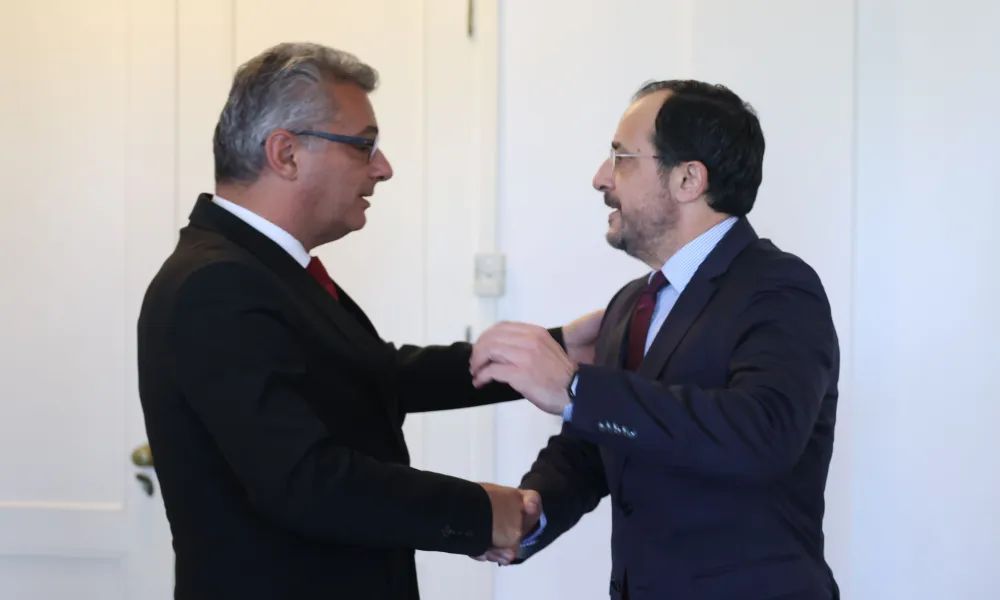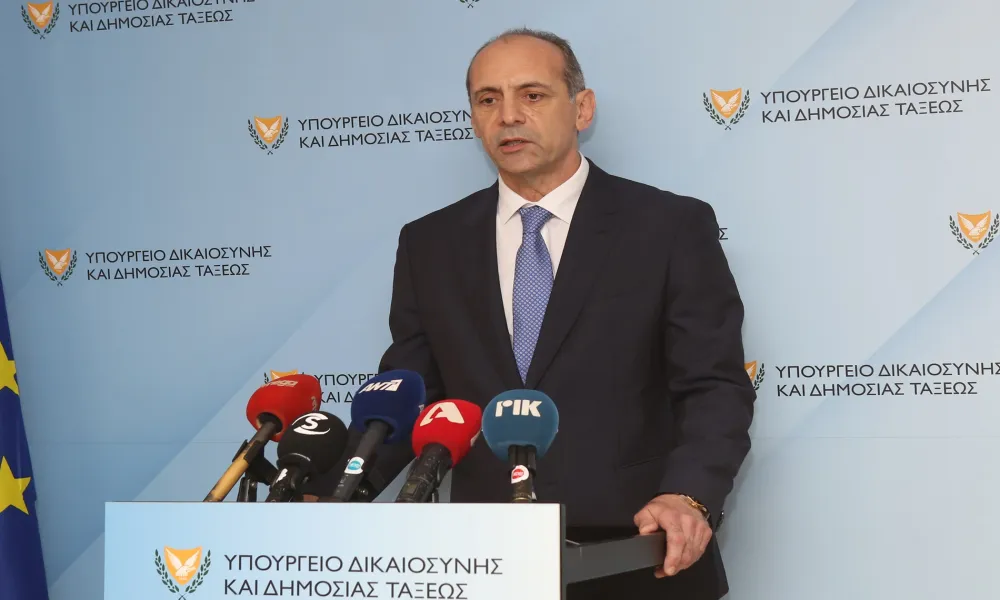



A measure to cover institutional care for the parents and spouses of missing persons is being advanced, Presidential Commissioner Marios Hartsiotis announced on Tuesday, saying the issue is moving towards an immediate resolution.
Speaking after a meeting of the House Committee on Refugees, which discussed, among other matters, developments concerning missing persons, Hartsiotis said that legislation passed in June 2026 abolished financial criteria for the provision of home care. This allows all parents and spouses of missing persons to benefit.
He said that "a small gap" remains in the legislation regarding institutional care. The issue has already been brought before the Committee and is being addressed. Hartsiotis added that he had met the previous day with the organisation representing relatives of missing persons, and that the matter was discussed.
"The necessary amendment is being advanced immediately, if it proves necessary, in order to include institutional care for the parents and spouses of missing persons," he said.
Hartsiotis also referred to care for women and men who suffered abuse during the events of 1974, saying the Government is showing the necessary discretion and sensitivity. According to him, the Permanent Secretary of the Deputy Ministry of Social Welfare briefed the Committee on specific steps already being taken by the Deputy Ministry and the State to address this issue as well.
"It was rightly said that similar care should also be provided to the other vulnerable groups, such as women who suffered abuse, prisoners and the injured," he said, adding that he would undertake to advance these requests "as quickly as possible".
Longstanding issue
He described the issues as longstanding and said the Government was working to address them. The financial cost should also be examined for the other vulnerable groups, he added. He said the cost was not such as to negate the need to provide care to these groups, which had contributed greatly to the country. «The least the State can do is finally give them what is self-evident, after 52 whole years,» he said.
The Commissioner also briefed the Committee on the register of enclaved and resettled persons, which, he said, includes about 700 people. Regarding the children of missing persons, he said an initial register had been drawn up following a proposal by the President of the Republic, and that about 1,700 people are estimated to be alive today.
'Positive development'
He explained that the aim is to complete the register to establish the exact number of beneficiaries and then calculate the cost of the relevant requests. This will be followed by discussion and consultation to determine the benefits to be provided to the children of missing persons. "We are decisively moving forward on these very sensitive and delicate issues, so that we can resolve them in the best possible way," he concluded.
Committee Chair and AKEL MP Nikos Kettiros described the development as positive, noting that the Committee had received Hartsiotis’s assurance that the issue of institutional care for the parents and spouses of missing persons had already progressed.
Kettiros said, however, that it remained open whether other groups affected by the events of 1974 would be included in the relevant framework. These include prisoners, people who suffered harm, people with disabilities, and women and men who suffered abuse.
"In addition to the studies that we understand must be carried out to determine the amount that would fund such an effort, a political decision must be taken as soon as possible that these people, who gave their lives and souls for this country, should be covered by home and institutional care," he said.
He added that the restrictions concerning deposits and income, specifically €20,000 in deposits and €23,000 in income, should be removed for this category of people.
Source: CNA