
In December 2025, the Director of Veterinary Services, Christodoulos Pippis, stated that the authorities had been placed on red alert due to the detection of foot‑and‑mouth disease cases in the occupied areas. The statements were made during visits by the Minister of Agriculture, Rural Development and Environment, Maria Panayiotou, to supermarkets ahead of Christmas.
At the time, the minister sought to reassure the public, saying that ‘we are on alert’, explaining that veterinary officers had intensified inspections. Pippis added that Veterinary Services were ready to take all necessary measures to prevent the virus from spreading to the government‑controlled areas.
Was everything under control?
On 14 February 2026, Christodoulos Pippis, on the occasion of the delivery of 500,000 vaccine doses by the European Commission to the north via the Republic of Cyprus and the Bicommunal Technical Committee on Health, assured that all appropriate checks had been carried out for potential cases in the government‑controlled areas, with test results proving negative. He added that surveillance was under way at livestock units along the buffer zone.
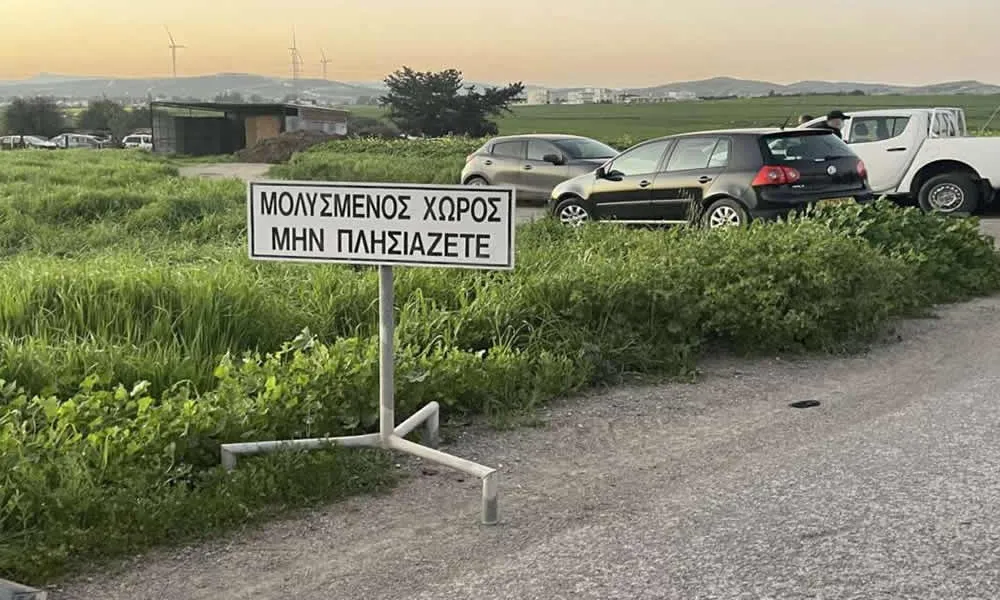
One week later, on 20 February, the first confirmed case was announced in Livadia, Larnaca district.
Three months later…
Exactly three months have now passed. And the virus continues to wreak havoc. Over the past week it breached the boundaries of Limassol – reaching a sheep and goat farm in Pachna – and continued its advance into a district which, together with Paphos, had until now been considered clean and safe.
So far:
· 117 infected units have been identified across Cyprus, 100 of them sheep and goat farms. Of these, 73 are in Larnaca, 26 in Nicosia and one in Limassol.
The remaining cases involve 14 cattle units – nine in Larnaca and five in Nicosia – and three pig farms, all in western Nicosia.
· 71,000 animals have been culled, including 43,000 sheep and goats, 3,000 cattle and more than 24,000 pigs.
The animals that have been or will be culled correspond to 11 per cent of the country’s adult sheep and goat population, 3.5 per cent of total cattle, and almost 8 per cent of the total pig population.
Control was lost
The responsible European Commissioner, Olivér Várhelyi, visited Cyprus twice between 20 February and 13 March. During his first visit, he made it clear to livestock farmers that there would be no deviation from EU directives requiring the culling of animals infected with foot‑and‑mouth disease. On his second visit, he came to assess the implementation of the measures and to ensure that all stakeholders felt reassured that the EU would provide assistance and compensation for losses.
In light of the outcome, it is clear that the Cypriot government failed to manage the crisis, despite EU guidance on biosecurity measures to limit the spread, farm inspections, laboratory testing and the appointment of a scientific advisory committee.
Responsibility of livestock farmers
Livestock farmers themselves (and livestock traders, obviously), who from the first day reacted against mass cullings and the implementation of European protocols, continue – three months later and despite the ongoing spread of the virus that now threatens the entire productive livestock population, particularly sheep and goats – along the same path of protests, mobilisations and, as widely suspected (after all, it has been said repeatedly that foot‑and‑mouth disease spreads ‘on two legs’), non‑compliance with measures.
Their responsibility cannot be sidelined, given that by spreading foot‑and‑mouth disease they act against their own interests, as well as against the interests of the milk and halloumi industries and the wider economy.
Hands… raised in surrender
On 20 May, when Cyprus froze following the appearance of the virus in Limassol district (earlier that same day it had been announced – to general relief – that no new cases had emerged for several days), the ministry’s permanent secretary, Andreas Grigoriou, once again limited himself to stating that transmission occurs via humans, animals and machinery. He again called on livestock farmers to strictly apply biosecurity measures at their units to protect their animals.
Meanwhile, the minister, Maria Panayiotou, and the Director of Veterinary Services, Christodoulos Pippis, have disappeared from the public spotlight. The only action taken by the minister concerned the reduction of the sheep‑and‑goat milk quota in halloumi from 25 per cent to 15 per cent, due to reduced milk supply.
Responsibility for this ongoing situation is enormous. It is leading with mathematical certainty to the decimation of sheep and goats across Cyprus, and consequently to the loss of hundreds of jobs, millions in investments and exports (halloumi exports reached €357 million in 2025, making it the country’s top export product), as well as the undermining of PDO halloumi, whose composition must reach 51 per cent sheep and goat milk by July 2029.
That target is now an unattainable dream, effectively returning us to the cheesemakers’ dossier of 2008, when sheep and goat milk was merely… detectable.
It is baffling why the same protocols and bans applied during the coronavirus period are not enforced now. Those with responsibility should face prosecution. Those with political responsibility should resign. And this does not concern only the minister, but also the ministry’s permanent secretary and the director of Livestock Services.