The United States and Iran are close to reaching an agreement to end hostilities, according to Iranian Foreign Minister Abbas Araghchi, with a memorandum of understanding expected to be signed within days.
The draft deal provides for the reopening of the Strait of Hormuz and the gradual lifting of the US naval blockade on Iran. However, key disagreements remain, notably over Iran’s enriched uranium stockpile.
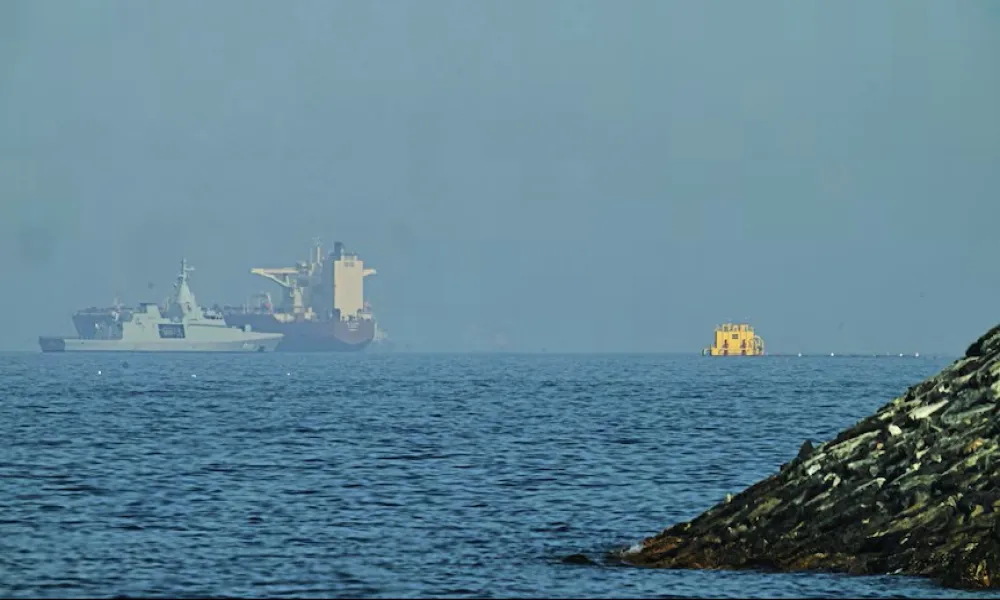
At the same time, the US Central Command (CENTCOM) said it had shot down multiple Iranian “one-way attack drones” near the Strait, which Washington says were launched to disrupt commercial shipping. CENTCOM said vessel traffic continues uninterrupted and the vital global trade corridor remains open.
Optimism in Tehran for imminent signing
Araghchi said on state television that the memorandum would be signed remotely once final negotiations conclude.
“Once the final stages of our negotiations are completed, this agreement will be signed and announced,” Araghchi said, adding that “the signing will initially be digital, with each party signing from a distance”.
He said this could happen “within the next few days” and expressed optimism about the outcome.
The minister noted the agreement has both supporters and critics within Iran’s Supreme National Security Council, and that a final collective decision has not yet been taken.
What the agreement includes
Araghchi said the lifting of the US naval blockade is the first key element of the deal.
It also provides for the reopening of the Strait of Hormuz, effectively closed since the outbreak of war on 28 February, when US and Israeli forces struck Iranian targets. Tehran retaliated by targeting Israel and US allies in the Gulf.
The Strait of Hormuz is one of the world’s most critical maritime chokepoints, carrying roughly 20% of global oil and liquefied natural gas trade.
Araghchi indicated the Strait’s operating regime would not fully return to pre-war conditions, saying its management “will no longer be the same as before”. Since imposing restrictions, Tehran has required commercial vessels to pay transit fees, a position rejected by Washington.
Renewed tension near the Strait
Despite progress in talks, tensions remain high. CENTCOM wrote in a social media post in the early hours of Saturday that US forces shot down multiple Iranian drones attempting to strike commercial ships transiting the Strait.
“U.S. forces have downed all of them in recent hours as traffic flow through the strait continues unimpeded. The international trade corridor remains open for transit,” said CENTCOM
Iran launched multiple one-way attack drones in an attempt to strike commercial ships transiting the Strait of Hormuz. U.S. forces have downed all of them in recent hours as traffic flow through the strait continues unimpeded. The international trade corridor remains open for…
— U.S. Central Command (@CENTCOM) June 13, 2026
Dispute over Iran’s nuclear programme
Significant differences persist over Iran’s nuclear programme, particularly its enriched uranium reserves.
US officials say a 60-day negotiation period will follow any initial agreement, focusing on Tehran’s stockpiles.
Washington is pushing for the destruction or removal of enriched material from Iran, while Tehran insists on diluting the stockpile within the country.
“Our position has always been that the only way to deal with enriched materials is to dilute them in Iran,” Araghchi said.
Dilution to below 5% enrichment, far below the roughly 90% required for weapons-grade material, is seen as a way to alleviate concerns over possible military use.
Tehran has consistently maintained its nuclear programme is for peaceful purposes, while Western countries fear it could be used to develop nuclear weapons.
Sanctions relief and economic reintegration
US officials made clear that no immediate financial aid or asset unfreezing is planned before the agreement is implemented.
Instead, Iran would be gradually reintegrated into the global economy, with phased sanctions relief and possible asset releases at a later stage.
Washington stressed that economic benefits will depend entirely on verifiable compliance with Tehran’s commitments.
Pakistan’s role and the Hezbollah question
Pakistan’s Prime Minister Shehbaz Sharif said the memorandum has been agreed in principle and now awaits finalisation.
Araghchi also claimed the deal includes an end to the conflict between Israel and Hezbollah in Lebanon, although US sources have suggested this issue is not part of the current framework.
Israel is not involved in the talks, which aim to extend the ceasefire and open broader negotiations on key regional security issues.