
A major programme of infrastructure works, efforts to improve financial and administrative performance, and the burden of substantial inherited liabilities are highlighted in the first two-year review of the Nicosia Municipality presented recently.
The report shows that the merger of the four urban municipalities of Nicosia, Engomi, Aglantzia and Agios Dometios has brought not only new opportunities, unified services and a broader tax base, but also a heavy legacy of financial obligations, unresolved issues and investment needs that require state intervention.
The cost of unification
The review depicts a municipality striving to operate as a single organisation while dealing with differing financial structures inherited from the former municipalities, including outstanding obligations, inadequate financial records, ageing vehicle fleets, outdated equipment and neglected infrastructure.
The municipality has already harmonised various allowances and fee structures that existed before the reform.
For 2025, the largest operating cost is payroll expenditure, amounting to €24.9 million.
Other major costs include:
- Road, street-lighting and traffic-light maintenance: €3.4 million
- Waste disposal: €3 million
- Public lighting: €2.9 million
- Vehicle and machinery maintenance, operation and purchases: €2.4 million
- Pension fund payments: €2.1 million
The 2026 budget projects expenditure of €73.8 million against revenue of €69.7 million.
The deficit has been reduced significantly and is now largely linked to pension payments being covered through the regular budget because of pension fund shortfalls.
State grants for 2025 and 2026 amount to €22.5 million.
The report also refers to unsafe and poorly maintained infrastructure, as well as unanticipated liabilities and obligations inherited from the former municipalities.
Warning over liquidity
A viability study prepared by an international consultancy has already been submitted to the Interior and Finance ministries.
The study recommends:
- €5 million in emergency liquidity support to prevent a cash-flow crisis.
- Up to €10 million in state funding for a voluntary retirement scheme.
- Measures to address €50 million in pension fund deficits.
- Greater borrowing flexibility to renew vehicle fleets and finance sustainable investments.
- A permanent increase in state funding, which is described as clearly inadequate.
Municipal authorities point to an 80 per cent reduction in the deficit, achieved through tighter revenue and expenditure controls, the elimination of non-productive spending, the termination of sponsorship schemes, revised discount policies and the abolition of 40 positions.
Growing tax base
The municipality also reports an expansion of its tax base.
Residential properties increased from 53,983 to 58,035, while commercial properties rose from 27,196 to 28,440.
Officials present this as one of the positive outcomes of the merger, enabling broader and more equitable treatment of residents and businesses across the enlarged municipality.
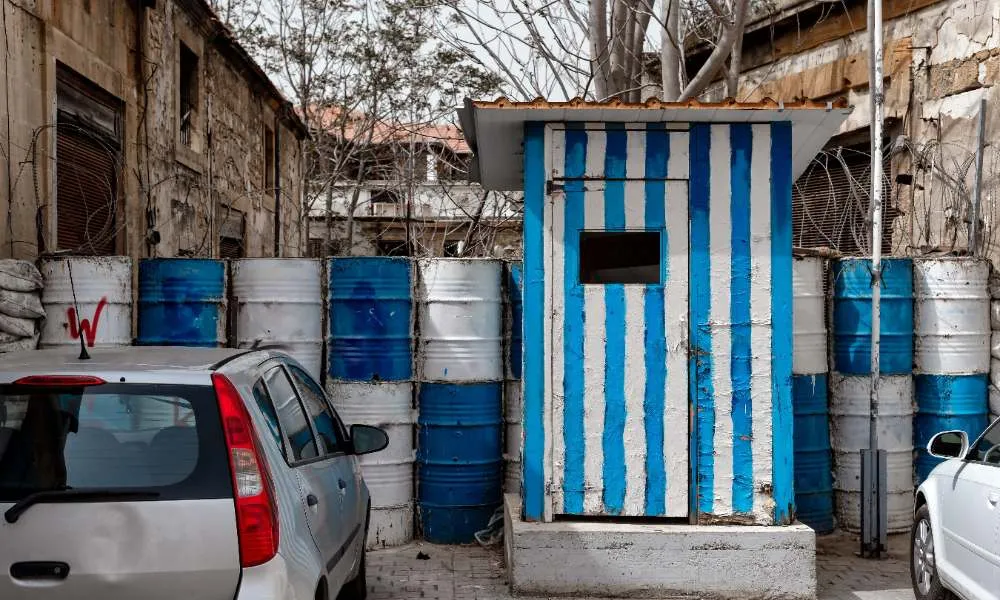
The new Nicosia Municipality covers 104 square kilometres, has a registered population of 112,000 residents, employs 690 staff members, manages 570 infrastructure assets, 1,052 green spaces and 30 kilometres of ceasefire line.
Improving services for residents
The report highlights the integration of citizen services through:
- The Novoville platform
- Five citizen service centres
- A unified call centre
- A common website and records system
A total of 22,594 requests were submitted, of which 17,457 were resolved, representing a resolution rate of 77.27 per cent. A further 4,141 cases remain in progress.
These services cover everyday issues ranging from waste collection and street lighting to parks, pavements and neighbourhood complaints.
In public health and sanitation, the municipality recorded:
- Removal of 4,585 truckloads of garden waste and bulky items
- 465 clean-ups of abandoned properties
- 150 investigations into unsuitable living conditions
- 883 inspections of food premises
- 361 drinking-water samples
- Removal of 2,199 abandoned vehicles
Green spaces and environment
Environmental initiatives included:
- 22,642 new plantings
- Maintenance of 1,052 green spaces
- Management of 177 parks, including 106 playgrounds
- Irrigation network improvements
- Installation of 80 electric vehicle chargers
- Cleaning of 4,599 plots of land
- A 50 per cent reduction in waste-management complaints
The municipality is also developing the innovative Cyprus Trees platform, which will use GIS technology to record every tree within the municipality together with planting data and carbon dioxide absorption information.
Energy community initiative
A prominent project is Lefkothea, an energy community established by Nicosia Municipality in cooperation with Latsia-Geri and Lakatamia municipalities.
The project is described as the first Cypriot energy community approved by the European Energy Communities Facility.
Citizens, businesses, public organisations and local authorities across Nicosia district will be able to participate, gaining access to collectively produced renewable energy and lower energy costs.
City centre regeneration and investment
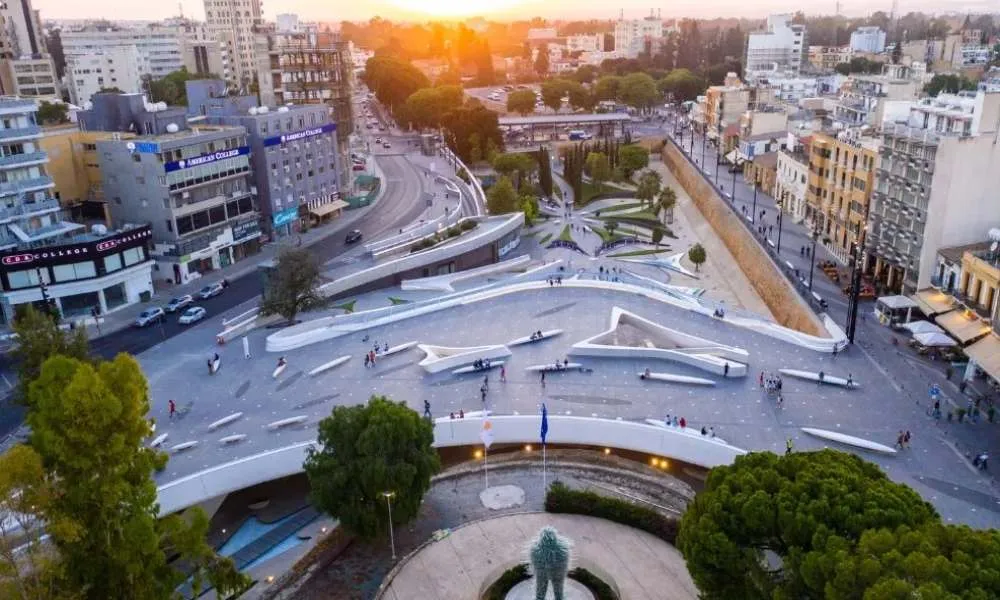
The municipality also highlights major investments aimed at revitalising the historic centre.
Projects include:
- Ledra and Onasagorou pedestrian streets: €10.5 million
- Inner ring project: €9.7 million
- Trikoupi area upgrade: €5.4 million
- Student residences on Arsinoes and Aristeidou streets
- Agios Antonios Garden improvements
- Parking and public-space upgrades
A key achievement identified in the report is the arrival of two major universities, the National and Kapodistrian University of Athens and the University of Cyprus, in the historic centre.
The municipality expects approximately 1,000 students over the next three years and around 300 student housing units by September.
Makarios Avenue remains a central focus, with proposals covering tax incentives, urban planning reforms, traffic management and increased commercial activity.
The report also notes €1.2 billion in property investments in Nicosia during 2025 and hotel developments expected to double the city's bed capacity by 2027.
Major projects ahead
The former State Fair grounds and the old slaughterhouse site (SOPAZ) are presented as transformative projects for the capital.
Plans for the State Fair envision a Metropolitan Park for Western Nicosia, creating a major green area while improving flood protection and water management.
The SOPAZ project is expected to drive regeneration in eastern Nicosia through new land uses and strategic investments.
Other important projects include:
- The redevelopment of the Pedieos Linear Park
- The new Archaeological Museum
On transport, the municipality reports:
- 13 kilometres of existing bus lanes
- Planned network expansions
- 46 kilometres of cycling routes
- A further 3 kilometres under construction
- Expansion of 30km/h zones
- Creation of 150 parking spaces for scooters and bicycles
Plans also include a provincial traffic management centre as part of the municipality's smart-city strategy.
The first two years of the new Nicosia Municipality are presented as a period of consolidation, service improvement, investment promotion and strategic planning.
The next phase, however, will depend largely on whether long-standing financial liabilities can be addressed, allowing the municipality to shift its focus from managing inherited burdens to delivering the major projects planned for the future.