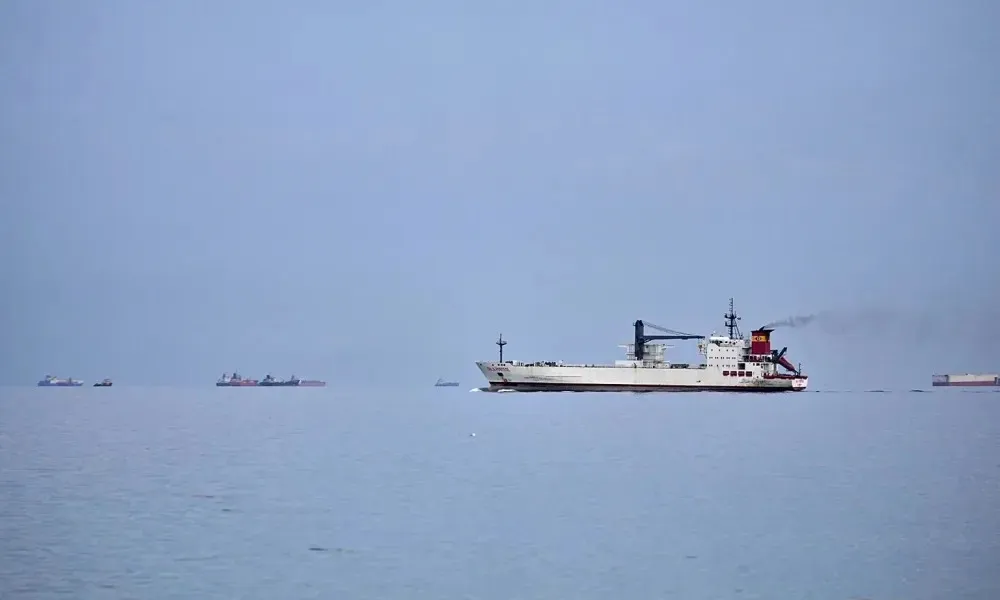

The past week was dominated by renewed tensions in the Strait of Hormuz, where disputes over shipping controls and transit fees have turned the fragile June 17 ceasefire between the United States and Iran into a new arena of strategic bargaining.
Fresh exchanges of strikes and conflicting statements pushed both sides toward technical talks in Doha, although their outcome remains uncertain.
In Israel, the US-Iran memorandum has sparked debate over whether Washington's interests still align with those of Israel, while a new framework agreement for Lebanon is widely viewed as favouring Israel.
Meanwhile, Asian economies are assessing the energy implications of the Hormuz dispute while closely watching China's efforts to position itself as a key partner in Iran's post-conflict reconstruction.
Attention is also turning to the NATO summit in Ankara on July 7-8, where Ukraine funding, defence spending and implementation of existing commitments are expected to dominate discussions.
The Western press
Writing in Newsweek, political analyst Muhannad Seloum argues that control of the Strait of Hormuz has effectively become Iran's new post-war business model.
According to Seloum, while Iran may have lost militarily, it is now seeking to monetise access to one of the world's most important shipping routes.
He argues that the June memorandum merely postponed the issue by suspending Iranian transit fees for 60 days rather than cancelling them altogether.
Seloum calls on Gulf countries to reduce their dependence on Hormuz through pipelines, strategic reserves and regional infrastructure projects while demanding a greater role in any future negotiations over the waterway.
NATO seeks a quiet summit
In Foreign Policy, Dimitar Bechev argues that NATO allies are hoping for an uneventful summit in Ankara.
Bechev suggests that European leaders have learned how to manage relations with Donald Trump and that the alliance has evolved into a pragmatic partnership that nonetheless remains functional.
He believes Ukraine remains central to NATO cohesion after Trump's earlier efforts to secure a quick agreement with Vladimir Putin failed.
Bechev also predicts that Turkish President Recep Tayyip Erdoğan will use his relationship with Trump to ensure a smooth summit while pursuing Turkish interests, including defence deals with Washington.
Confusion over US-Iran talks
According to TIME, significant confusion surrounds the Doha negotiations.
One week after the June 17 memorandum, both sides exchanged strikes around the Strait of Hormuz following differing interpretations of the agreement.
Iran imposed new restrictions on shipping lanes after an attack on a Singapore-flagged commercial vessel, prompting US military responses and Iranian strikes against bases in Kuwait and Bahrain.
While both sides have agreed to continue discussions, conflicting public statements have raised doubts about the prospects for a lasting agreement.
Cuba's economic reforms
In El País, José Andrés Rojo examines Cuba's latest economic reform programme.
The article argues that Havana is attempting to portray sweeping reforms, including private banking, currency devaluation and expanded private-sector participation, as measures designed to save socialism rather than abandon it.
Rojo questions that narrative, arguing that Cuban authorities continue to suppress dissent while presenting market-oriented reforms as a continuation of the revolutionary project.
Middle East perspectives
The New Arab reports that the new Lebanon framework agreement overwhelmingly favours Israel.
The proposal links Israel's withdrawal from southern Lebanon to the complete disarmament of Hezbollah, but critics argue that it offers Lebanon few guarantees and no clear timetable for full Israeli withdrawal.
Analysts warn that the arrangement could further destabilise Lebanon and increase domestic tensions.
Israeli debate over Trump and Iran
Writing in The Jerusalem Post, Yaakov Katz argues that many Israelis misunderstand Trump's Iran policy.
According to Katz, Washington's priorities shifted after tensions threatened shipping through Hormuz.
For Trump, securing maritime stability and protecting global energy markets became more important than pursuing regime change in Tehran.
Katz contends that Israel should focus on strategic projects such as the India-Middle East-Europe Economic Corridor rather than relying solely on military pressure against Iran.
Asian focus on Lebanon and Iran
Outlook India examines the Lebanon framework from an Asian perspective, warning that the agreement could deepen regional divisions if it fails to address the underlying conflict between Israel and Hezbollah.
Meanwhile, Nikkei Asia reports that China is preparing economic assistance for Iran's reconstruction efforts following the memorandum.
Beijing views stability in Hormuz as critical to its energy security and is seeking to strengthen ties with Tehran while maintaining good relations with Gulf states and avoiding direct confrontation with Washington.
Russian and Ukrainian perspectives
Writing in Russia's Izvestia, political scientist Nikolai Sukhov describes the latest US-Iran escalation as a test of the temporary agreement reached in June.
Although diplomatic channels remain open, he argues that negotiations are unfolding amid mutual accusations, military pressure and disputes over navigation rights in Hormuz.
Sukhov believes the most likely outcome remains a prolonged period of tough bargaining.
Meanwhile, in The New Voice of Ukraine, Demian Sevko argues that the NATO summit should not be judged by new declarations but by whether the alliance can convert existing commitments into real military capabilities.
According to Sevko, defence spending targets are important, but the true measure of success will be investments in air defence, ammunition production, logistics and the reinforcement of NATO's eastern flank.
As he concludes, implementation, rather than promises, is the currency that matters most.
Source: CNA