
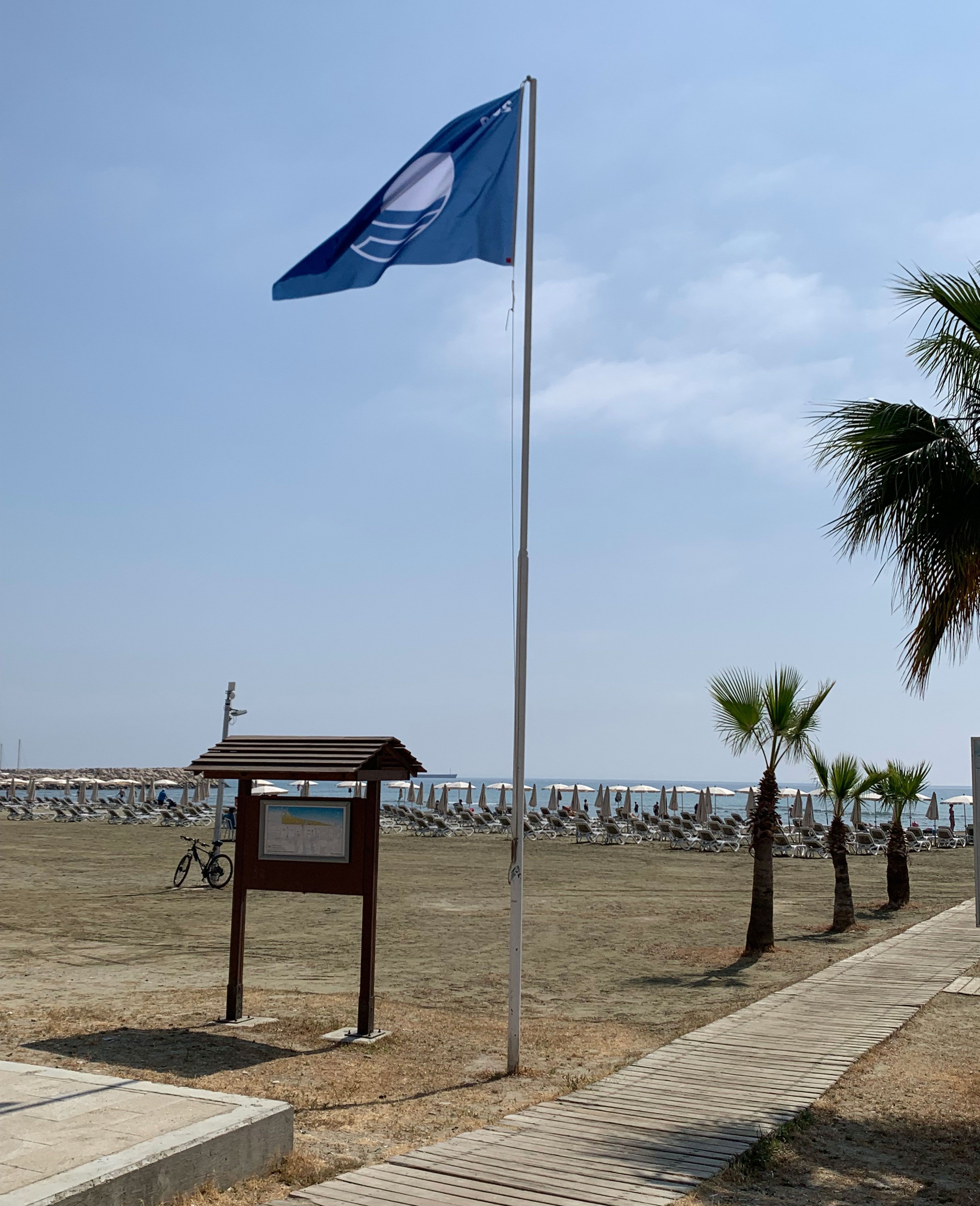
Cyprus has recorded a smaller presence in the Blue Flag programme this year compared with previous years, with a total of 56 beaches receiving the award in 2026 out of 123 designated bathing water areas.
In 2025, 64 beaches received Blue Flags, compared with 76 in 2024 and 77 in 2023.
A key factor behind this year's decline was the decision by the municipalities of Limassol and Amathounta not to submit applications following increased reports of marine pollution incidents during the previous year.
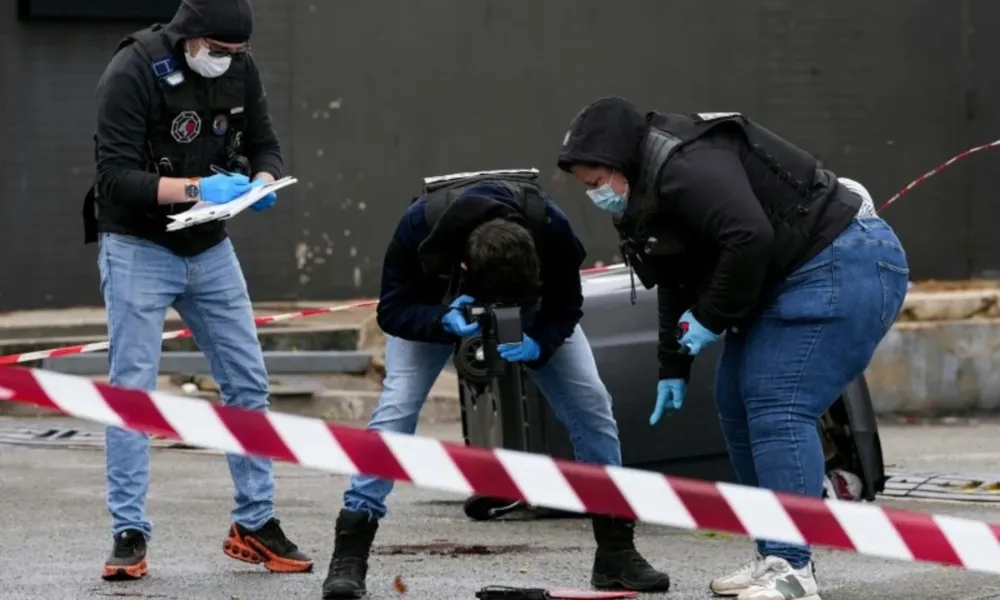
Similar complaints have begun to emerge again this year, including reports from the Limassol Winter Swimmers and Friends Club "Akti Olympion" as well as bathers in Paphos after large quantities of fragmented plastics accumulated on beaches in the district.
The threats facing the Republic's coastline, which have raised public concerns about water quality while also threatening one of the country's strongest tourism assets, have prompted the Shipping Deputy Ministry to implement a broad action plan in cooperation with other stakeholders.
No later than mid-July, a comprehensive sea and air surveillance system for marine pollution will be fully operational to ensure that offenders face the consequences of the law.
The aim is to protect Blue Flags, preserve water quality and safeguard the health of bathers.
European support
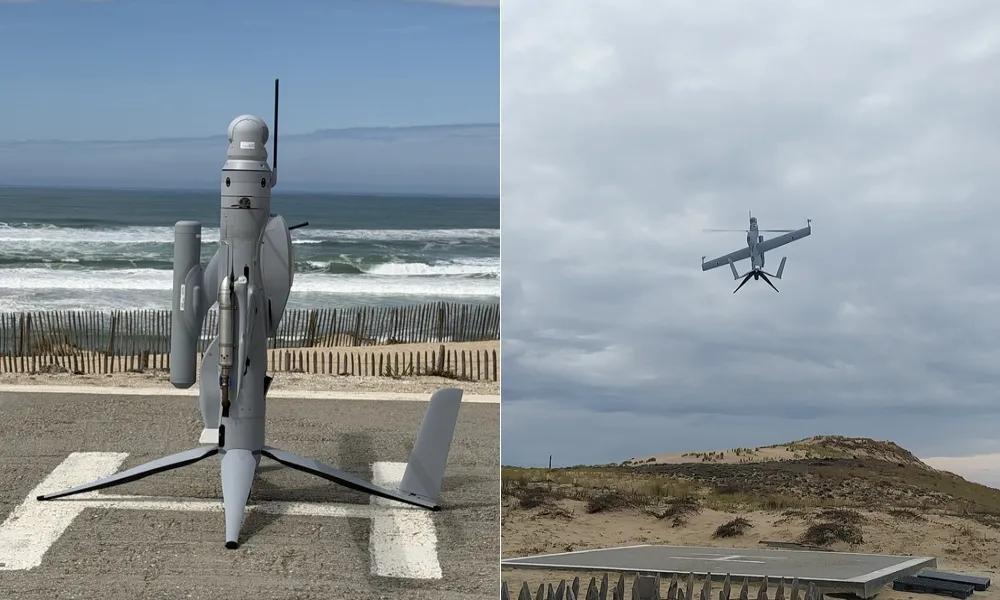
The decision by the European Maritime Safety Agency (EMSA) to send a specialised long-range drone, certified operators and a complete operational package to Cyprus for maritime surveillance, together with monitoring and intervention vessels hired by local authorities and increased water sampling, forms part of the new anti-pollution strategy.
The EMSA mission, which will remain in Cyprus until the end of the year, carries a value of €1 million, fully covered by the agency, as the European Union provides the drone service free of charge to member states.
The remaining summer measures are estimated to cost roughly €500,000 and are being funded through national resources.
The committee
All actions aimed at preventing and tackling marine pollution are based on documented findings derived from the collection, integration and evaluation of relevant data, as well as coordination among competent authorities.
This became possible through an initiative launched in 2024 by Shipping Deputy Minister Marina Hadjimanolis to establish a Committee for the Prevention and Management of Marine Pollution.
The committee includes representatives from government and academic institutions and is coordinated by Theodoulos Mesimeris, Deputy Ministry of Shipping deputy director-general.
"In order to achieve the committee's objectives, and following consultations with all stakeholders, an action plan was developed which includes additional measures for the prevention, monitoring and management of marine pollution across two timeframes," Mesimeris told Politis.
"The short-term measures have already begun to be implemented this summer, while the medium-term measures are expected to be completed within the next 16 months."
He stressed that success depends on bridging the relationship between land and sea.
The drone
This summer, coastal waters from Protaras to Lara Bay are set to gain a new airborne guardian.
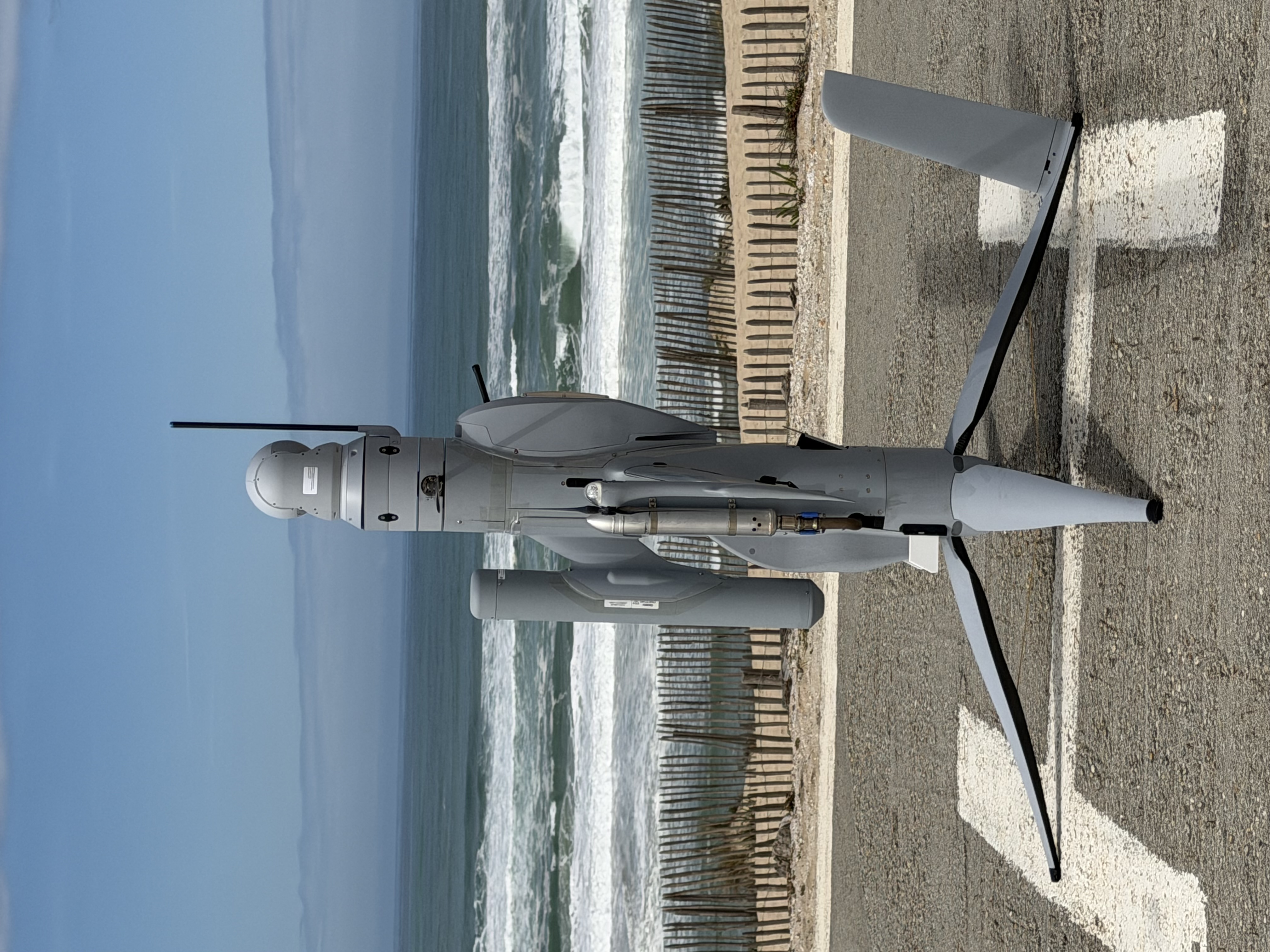
By mid-July, the Shipping Deputy Ministry is expected to deploy a long-range drone powered by an internal combustion engine.
The objective is to enforce legislation through fines against owners of passenger vessels and ships responsible for environmental degradation through sewage discharges or oil spills.
The Republic already provides infrastructure at ports and marinas for vessels to dispose of sewage, liquid waste and rubbish safely.
The project is fully funded by EMSA, the EU agency responsible for promoting a safe, green and competitive maritime sector.
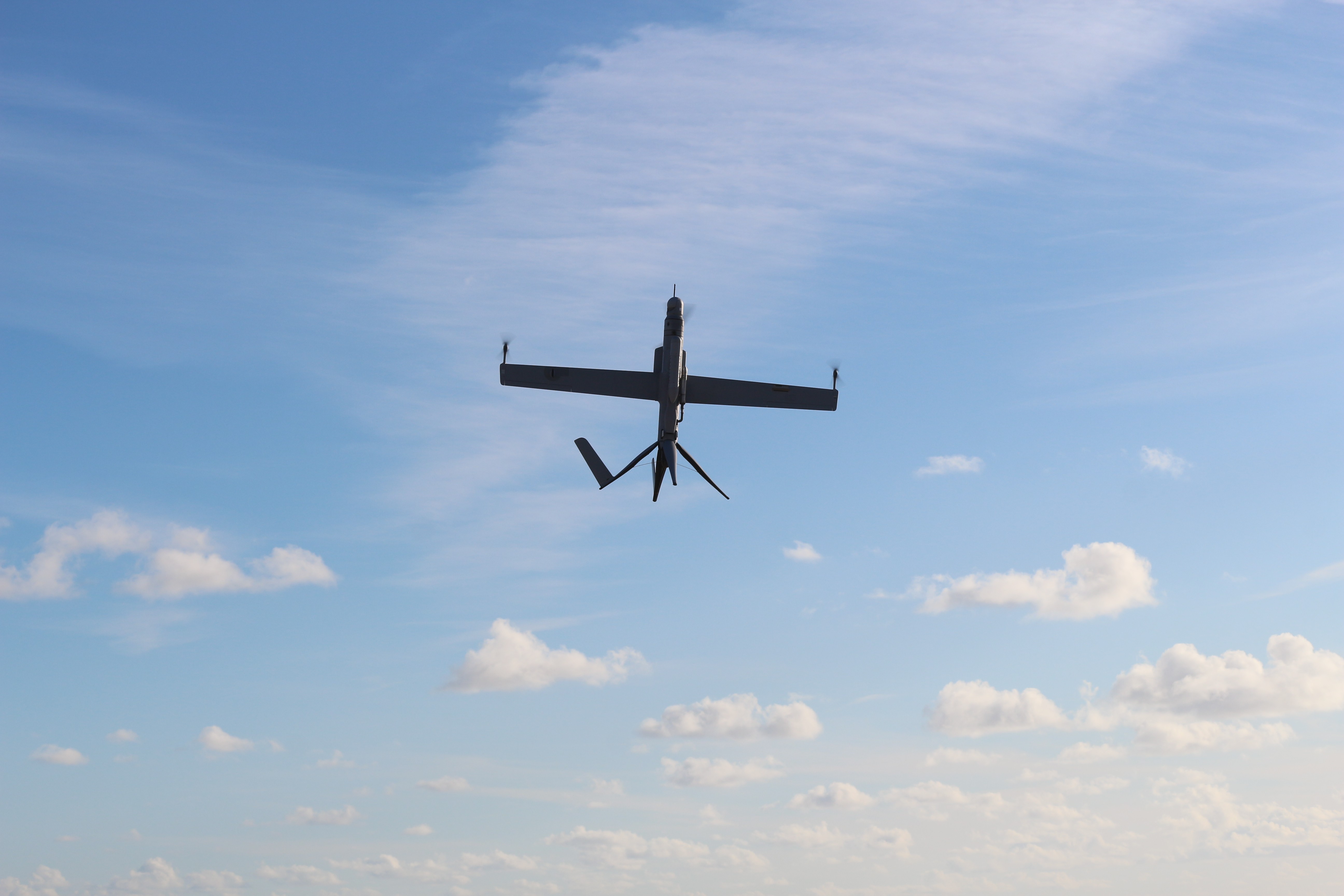
The mission includes:
- A long-range drone equipped with aerial photography and video capabilities.
- High-resolution surveillance systems.
- A command-and-control centre to be installed in Vasiliko.
- Mobile support equipment, including specialised antennas.
Complaints and fines
According to officials from the Shipping Deputy Ministry, if the drone identifies a pollution incident either close to shore or in open waters, authorities will be able to analyse the evidence together with vessel records to identify and report offenders.
The objective, they stressed, is not punishment for its own sake but enforcement of legislation and prevention of future pollution.
A strong message is being sent that those responsible will be identified and fined.
Operators will be able to deploy either from Vasiliko or Lara in Akamas, depending on operational requirements.
With a range of approximately 150 kilometres, the drone will be capable of monitoring virtually the entire coastline of the Republic's free areas.
The aircraft is a vertical take-off and landing (VTOL) drone, combining hovering and vertical launch capabilities with long-range, high-speed flight.
Flight permits have already been secured, allowing operations over areas considered especially vulnerable to marine pollution.
Surveillance vessels
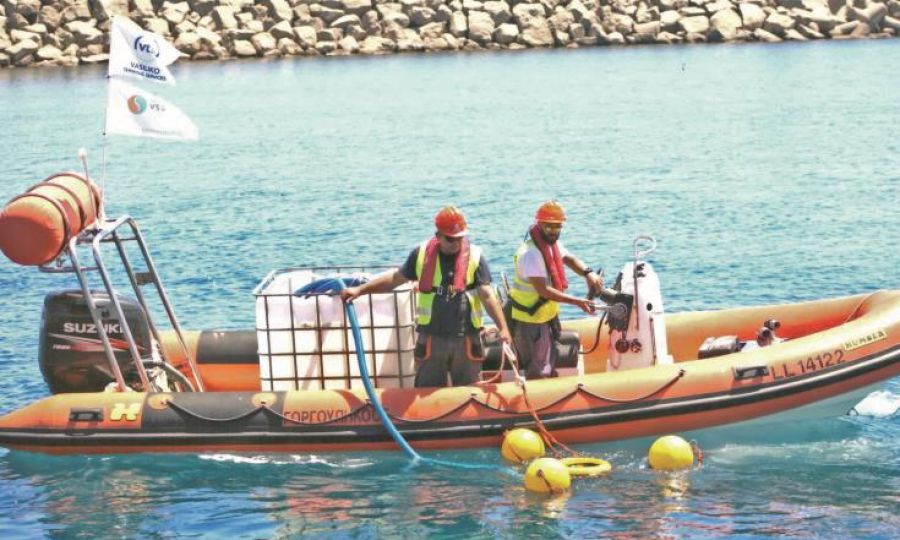
At the same time, the implementation of a programme for specialised marine monitoring and pollution-response services using vessels is under way and expected to be completed by mid-July.
The vessels will monitor designated sensitive marine zones, including port facilities.
Mesimeris explained that contracts have been awarded following tender procedures by the municipalities of:
- Limassol
- Amathounta
- Larnaca
- Paralimni-Deryneia
- Ayia Napa
- Paphos-Geroskipou
More frequent water sampling
Monitoring of bathing waters has also been intensified this year.
Sampling on Blue Flag beaches and sensitive areas such as Deryneia-Ayia Thekla, Moni-Akrotiri (Lady's Mile) and Dekeleia-Mackenzie will now take place every two weeks.
In other areas, sampling will continue monthly.
The programme is being implemented by:
- The Department of Environment
- Health Services
- The State General Laboratory
- Local government authorities
Akrotiri and sensor systems
Additional measures being implemented this summer include:
- Restoration of problematic areas that may pose a marine pollution risk, including a comprehensive cleaning and management plan for the drainage channel near Makria Lake in Akrotiri, aimed at preventing the discharge of water with high microbiological loads.
- Public awareness campaigns in coastal and port areas.
- Increased inspections of activities and facilities considered at high risk of causing marine pollution.
- Installation of monitoring systems and sensors in selected marine areas and port facilities, allowing pollution indicators to be detected in real time and transmitted immediately to the relevant authorities.
Stricter penalties ahead
Among the medium-term measures planned over the next 16 months are:
- Additional regulatory measures and best practices to improve enforcement.
- Introduction of stricter penalties for those responsible for marine pollution incidents.
- Creation of a digital platform for recording, investigating, monitoring and analysing all pollution reports.
- Development of additional infrastructure for the collection and management of waste and sewage from vessels.
- Examination of the designation of additional protected marine areas.