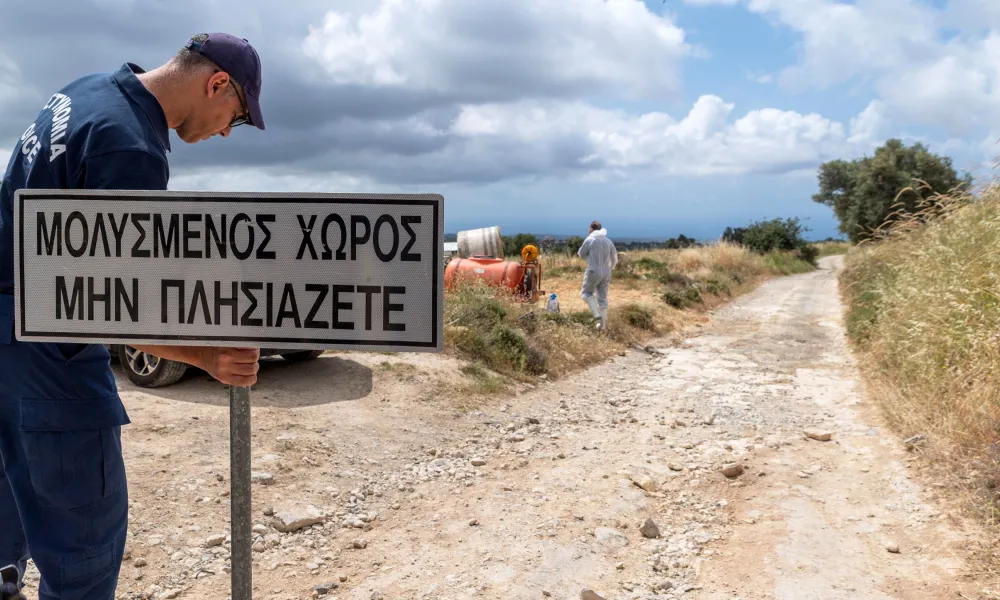

Cyprus’s foot-and-mouth disease outbreak is subsiding and the situation is now under control, according to Dimitris Epaminondas, a member of the epidemiological team and President of the Pancyprian Veterinary Association.
More than 90% of livestock units across Cyprus have completed the double-vaccination programme, while all units examined during the second phase of surveillance have tested negative apart from two that remain under investigation.
Surveillance shows encouraging results
Epaminondas told CNA that the second phase of epidemiological surveillance began in mid-June and has so far covered more than 30% of livestock units nationwide.
“This presents a very good epidemiological picture,” he said. “It shows that the outbreak is essentially subsiding and that we are managing the situation more effectively.”
He added that the high summer temperatures are helping destroy the virus and limit its spread.
Further relaxations depend on testing
Although several restrictions have already been eased to help livestock units resume operations, Epaminondas said further relaxations would require surveillance to cover a significantly larger proportion of farms.
He warned that grazing could still contribute to the spread of the virus, even during periods of high temperatures.
“It would be better to take advantage of the summer period, with around three months of high exposure, so that anything remaining in the environment can be destroyed,” he said.
Vaccinations in Paphos are also proceeding according to schedule after solutions were found to address earlier difficulties.
Livestock restructuring and winter preparations
Referring to the livestock-sector restructuring plan being prepared by Stavros Malas’s team, Epaminondas said it would strengthen biosecurity in areas where numerous livestock units are concentrated.
He said preparations for the coming winter had been carefully planned, but stressed that vaccinations and biosecurity measures would remain in place for an extended period to prevent the virus from returning.
Epaminondas also urged farmers to clean their facilities during the summer wherever possible, helping them prepare for winter and reduce the risk of further infections.
Appeal to farmers to cooperate
Farmers who refuse vaccination must understand that their decision could worsen the situation, Epaminondas said, calling on the livestock sector to cooperate fully.
“Vaccination protects not only the farmers themselves, but also neighbouring units,” he said. “We should therefore consider the common good.”
Source: CNA.