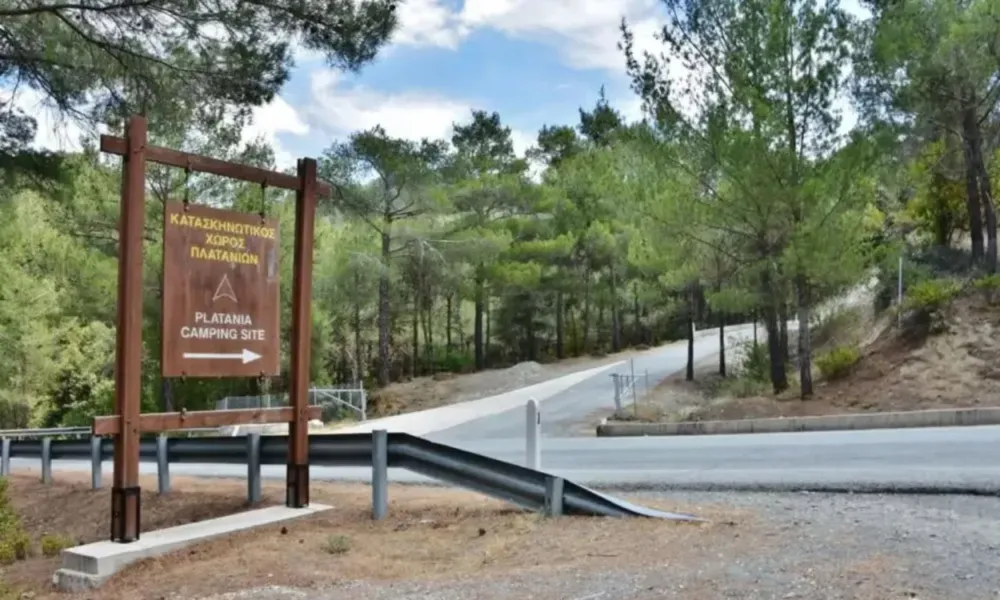

The Platania campsite in the Troodos region will remain closed for at least one year once redevelopment works begin, as authorities move ahead with major infrastructure and fire-safety upgrades and prepare a new regulatory framework for state-run camping sites.
The Forest Department, working with the Legal Service, is also drafting new regulations designed to clarify the legal framework governing public campsites, with some provisions expected to be submitted to parliament for approval.
The planned rules will cover issues including reservation procedures, length of stay, campers' obligations, safety requirements and fees, with the aim of ending the practice of permanent installations, unauthorised extensions and the effective occupation of public camping spaces by long-term users.
Platania to remain closed for at least a year
According to the Forest Department, the scope of the works means they cannot be carried out while campers, caravans and other structures remain on site.
Speaking to Politis, Forest Department spokesperson Glafkos Kyriakou said conditions at the campsite were very different when it was originally established.
"The circumstances today are different. We must protect the people using the site, but also the surrounding forest areas," he said.
Mr Kyriakou noted that visitor numbers, public needs and the challenges created by the climate crisis have significantly altered the operating environment.
Fire risk a major concern
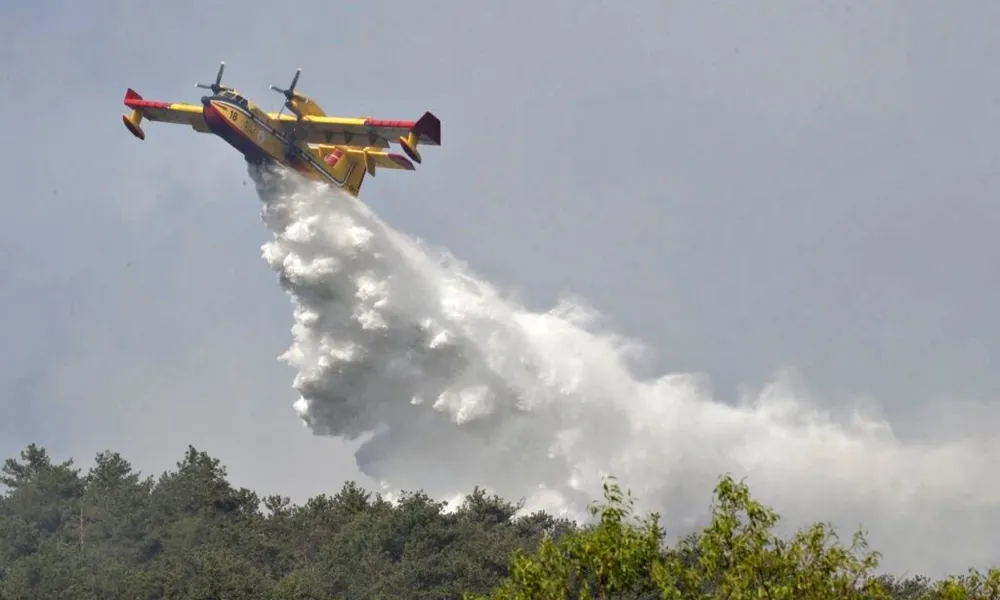
One of the main factors behind the decision is the increased risk of wildfire.
According to the Forest Department, vegetation has developed in close proximity to the forest, creating conditions under which a fire could spread rapidly into a major forest blaze.
"We cannot have a recreational area that lacks the necessary fire-safety measures," Mr Kyriakou said.
He acknowledged that previous fires had occurred in the area but had been brought under control before escalating.
Particular concern stems from the presence of a children's camping facility nearby that accommodates around 200 children, while thousands of visitors pass through the wider Troodos region every day.
"We cannot place lives at risk because of makeshift constructions and a situation that gradually transformed the site into a settlement," he said.
Caravans and unauthorised structures
According to information obtained by Politis, authorities had identified significant problems in recent years, including caravans, tents and vehicles remaining on site for extended periods and creating the appearance of permanent occupation.
Mr Kyriakou said the absence of clearly defined operating rules had allowed some users to expand caravans, construct makeshift structures, alter drainage systems and create private areas within the campsite.
"When there were no operating rules, everyone did as they wished. There were extensions, constructions and the appropriation of space," he said.
The Forest Department began sending warning letters following the end of last summer's camping season, requesting the removal of installations so that works could proceed.
Most users have complied, according to officials, though a small number remain on site and continue to claim rights over areas they have occupied.
The campsite entrances have now been closed, with access permitted only for the removal of caravans, tents and other structures.
The department stressed that forest legislation gives it authority to order the removal of vehicles, objects and illegal structures from state forest land.
Where intervention by government crews becomes necessary, the associated removal or demolition costs may be charged to the owner.
Planned upgrades
Officials say existing facilities no longer meet modern standards of hygiene, safety and accessibility.
The redevelopment project includes:
- New sanitary facilities for men, women, children, infants, elderly visitors and persons with disabilities.
- Dedicated dishwashing and water-supply facilities.
- Clearly defined parking areas.
- Designated tent pitches.
- Regulated spaces for caravans.
The department says the changes are particularly important given the site's proximity to a Natura-protected area.
Mr Kyriakou emphasised that visitors will no longer be permitted to park or place structures wherever they wish, effectively blocking access to parts of the campsite.
The reforms are also aimed at ensuring equal access for all users by preventing individuals from permanently occupying specific pitches.
New regulations under preparation
The Forest Department is working with the Legal Service to finalise new campsite regulations.
Some provisions may require legislative approval by the House of Representatives, while legal and technical aspects are being examined to ensure the new framework is fully enforceable.
The regulations are expected to define:
- Reservation procedures.
- Maximum duration of stays.
- Campers' responsibilities.
- Safety requirements.
- Applicable fees.
Mr Kyriakou stressed that authorities do not intend to transform Platania into a high-cost tourism facility.
"Our objective is not to turn it into a hotel. It must remain a very affordable form of recreation," he said.
He acknowledged that organised campsites incur expenses related to electricity, water, cleaning and maintenance, meaning some costs will need to be recovered through modest user fees.
"We are talking about very small amounts," he added.
Call for final departures
The Forest Department says no work can begin until all campers and structures have been removed.
Once the site is fully cleared, authorities will proceed with tendering, awarding contracts, establishing the worksite and carrying out the redevelopment works.
Current estimates suggest that the process will take at least one year from the start of construction.
"The sooner the remaining campers leave and remove their installations, the sooner we will be able to complete the site and return it to the public with European-standard facilities that everyone can enjoy," Mr Kyriakou said.
What about Stavros tis Psokas and Kampi?
Of the other two campsites managed by the Forest Department, Stavros tis Psokas remains open.
The Kampi campsite has been closed for some time and is expected to reopen once the new operating regulations are approved.
Although there had been indications that Kampi would reopen earlier, this has not yet been possible due to the involvement of multiple government authorities in the approval process.